SKELANI - FINAL TWITCHES OF MUSLIM CRIMINAL OPERATIONS IN THE SREBRENICA AREA
Republika Srpska - Ivanišević
01/16/2026
12:55
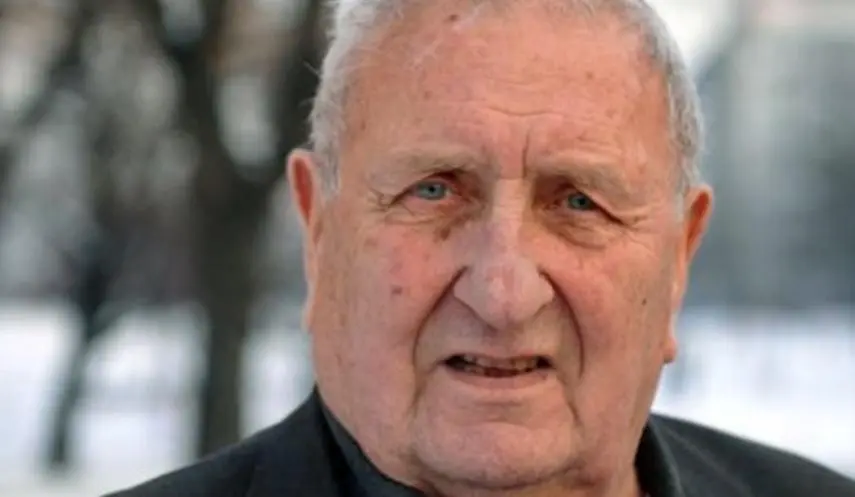
BELGRADE, JANUARY 16 /SRNA/ - Skelani represented the final twitches of criminal operations carried out by Muslims in the Srebrenica region, initiated with the intent to permanently ethnically cleanse the area of Serbs and establish an Islamic republic in the Balkans, Milivoje Ivanišević, director of the Center for the Research of in the 20th Century, told SRNA, emphasizing that this is confirmed by documents from that period which he possesses.
Ivanišević stated that after the mass killing of Serbs in Skelani on January 16, 1993, the unit commanded by Naser Orić informed the command of the Second Corps of the so-called Army of BiH in Tuzla that the Srebrenica area was "100 percent cleansed of Serbs," and Bratunac "60 percent".
"They were boasting at the time; we have a document on this, that they had reported to Alija Izetbegović that 100 percent of the Srebrenica territory, much larger than the municipality itself, had been cleansed. This was part of their concept of Islamisation. The goal was to drive out the Serbs and create space for the arrival of warriors of Islam," Ivanišević said.
He pointed out that the names of the Serb victims from Skelani, along with the names of their killers, were included in the Memorandum of the Federal Republic of Yugoslavia /FRY/, which in June 1993 was submitted, along with the names of other victims from the Srebrenica region, Bratunac, and Milići, to the UN General Assembly and Security Council. However, it turned out that the administrative staff of the Council - a Tunisian and a Moroccan - suppressed that document, while adding several zeros to the documents concerning Muslim victims.
Ivanišević pointed out that one of the key roles in covering up the truth about Serb suffering in the Podrinje region was played by former U.S. Secretary of State Madeleine Albright, emphasizing that even the Serbs themselves did not know how to fully utilize the documents they possessed, which contributed to the entire Serbian people being labeled as "genocidal".
"That memorandum of ours is still dead paper. No one knows about it, no one uses it. Our representatives go to the UN to defend themselves when the English and other enemies of the Serbs propose and adopt various resolutions there, without even mentioning that the UN archives actually contain a Serbian document about the slaughter of Serbs in Srebrenica," Ivanišević emphasized.
Ivanišević also stressed that these people would not have been killed if they had not been Serbs.
“Skelani was the last massacre of Serbs in the Srebrenica region. Afterwards, we liberated those areas and returned to our homes, yet we were declared aggressors and ‘genocidal,’” Ivanišević said.
He emphasized that media and political engineering, as well as irresponsible actions and statements by the Serbian leadership at the time, contributed to the creation of a false myth about genocide against Muslims in Srebrenica. He pointed out that it is still necessary to seriously address this and seek answers regarding the events of July 1995.
"One of the questions is why none of the exhumed Bosniak soldiers, who were later buried in Potočari, had personal documents on them? Who ordered that? My information is that the British SAS was behind it. Documents were found only on three men and one woman who were exhumed, and it turned out they were Serbs. I have thought about the fate of that woman for decades," Ivanišević said.
Ivanišević also stated that he sent reports on the suffering of Serbs in Podrinje up to 1993 to the Brotherhood of Hilandar and to the late Serbian Patriarch Pavle, who thanked him and who cared that the truth would come to light.
In his publication "Serbian Burnt Sites of the Srebrenica Region," which deals with the crime of January 16, 1993, in Skelani, Milivoje Ivanišević listed 61 victims.
The youngest among them were the Dimitrijević brothers, Aleksandar, born in 1987 and Radisav /according to other sources, Radislav/, born in 1984.
The oldest victims were Anđelko Pavlović and Ilinka Blagojević, born in 1914.
Continuing the ethnic cleansing of central Podrinje and the destruction of everything Serbian, which began in April 1992, Muslim forces under the command of Naser Orić attacked Serb villages around Skelani at dawn on January 16, 1993. On that day, a total of 69 inhabitants of the area were killed, two-thirds of whom were civilians, including several children.
One hundred sixty-five residents were wounded. Of the 30 captured, half did not survive the torture in the Srebrenica prisons, and several persons are still listed as missing.