BISHOP DIMITRIJE: THE GREATEST GRACE IS PERSEVERANCE IN THE TRUTH
FBiH - Čapljina - Culture of Remembrance
08/05/2026
21:57
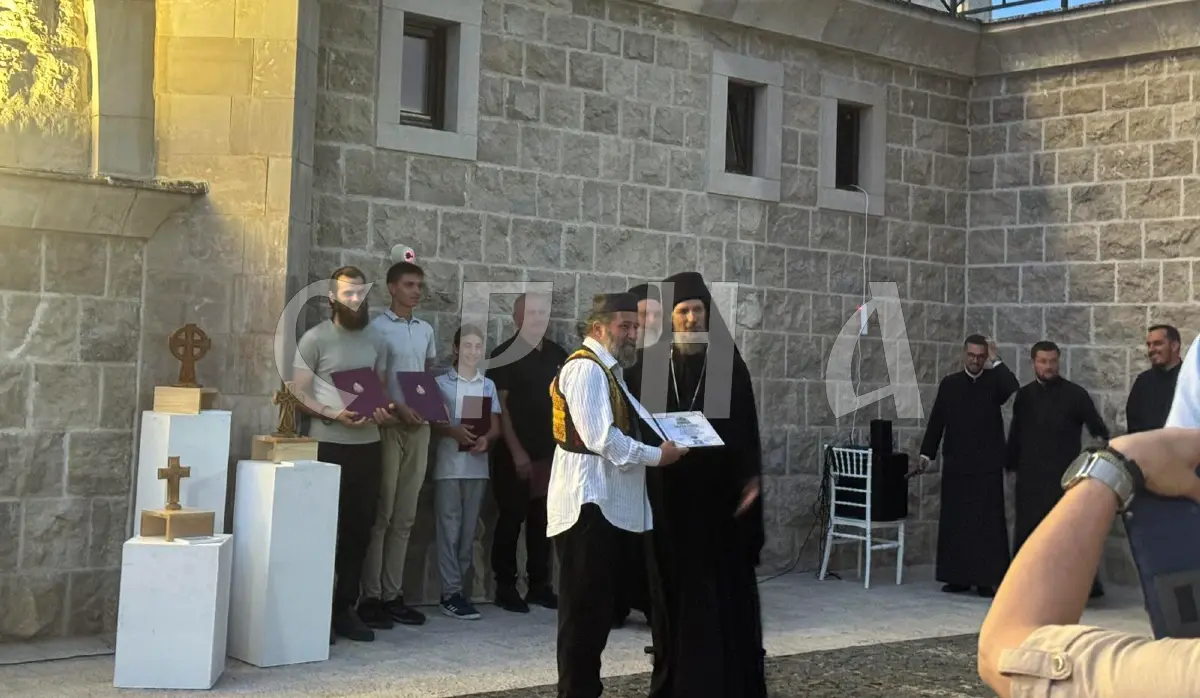
PREBILOVCI, AUGUST 5 /SRNA/ - His Eminence the Bishop of Zahumlje, Herzegovina and the Littoral, Dimitrije, stated that the temple in Prebilovci was built on a Golgotha, that Serbs and all who innocently suffer believe in the true and living God, and that the greatest grace is expressed through sacrifice, truth, and perseverance in the truth.
Bishop Dimitrije pointed out that the greatest grace is when people are ready to renounce all evil, all lies, and all hypocrisy, take up their cross, and follow the Lord.
"Thank the living God that we gather here and have assembled in this place. We have called upon God's mercy many times tonight, that the Lord may have mercy on us," Dimitrije said in his sermon after the religious service marking the 85th anniversary of the Ustasha crime against Serbs.
He noted that man was created for God's grace.
"Since this world fell into death through sin, falling away from the living God, a new creation came through our Savior Jesus Christ, so God's mercy manifests itself through suffering, sacrifice, and martyrdom," the bishop said.
Bishop Dimitrije emphasized that the Serbian people persevere in bearing witness to truth, justice, humanity, and heroism.
"These relics of the holy martyrs of Prebilovci testify that God has not forgotten us and that we will be blessed if we remain on that path," proclaimed Bishop Dimitrije.
Historical Context of the Prebilovci Massacre
Prebilovci is one of the sites of the greatest Serbian suffering in the Second World War and a lasting symbol of the martyrdom of the Serbian people in Herzegovina.
The Atrocities: Ustasha units of the NDH /Independent State of Croatia/ committed systematic crimes against Serbs throughout Herzegovina. There were about 110 execution sites, the majority of which were karst pits such as Golubinka, Korićka jama, Jagodnjača, Pandurica, Ržani do, and numerous other natural abysses into which victims were thrown, most often alive.
The Prebilovci Massacre: Under the command of Ustasha commander Ivan Jovanović Crni, 830 residents of the village were killed, mostly women, children, and the elderly.
The Method: The majority were thrown alive into the Golubinka pit near Šurmanci, not far from Međugorje, while the rest were killed in other locations. In this pogrom, 57 families from Prebilovci were completely extinguished, without a single surviving member.
The Prebilovci victims are part of the overall suffering of the Serbian people in lower Herzegovina, where the Ustashas killed thousands of civilians during 1941. The mortal remains of more than 4,000 Serbs were exhumed in 1990 and 1991 from 13 karst pits in Herzegovina and buried on August 4, 1991, in the memorial ossuary in Prebilovci.