PANČIĆ'S SPRUCE "KNOCKING ON THE DOORS" OF ALL UNIVERSITY LIBRARIES
Republika Srpska – Faculty of Forestry – Mataruga
11/08/2026
10:01

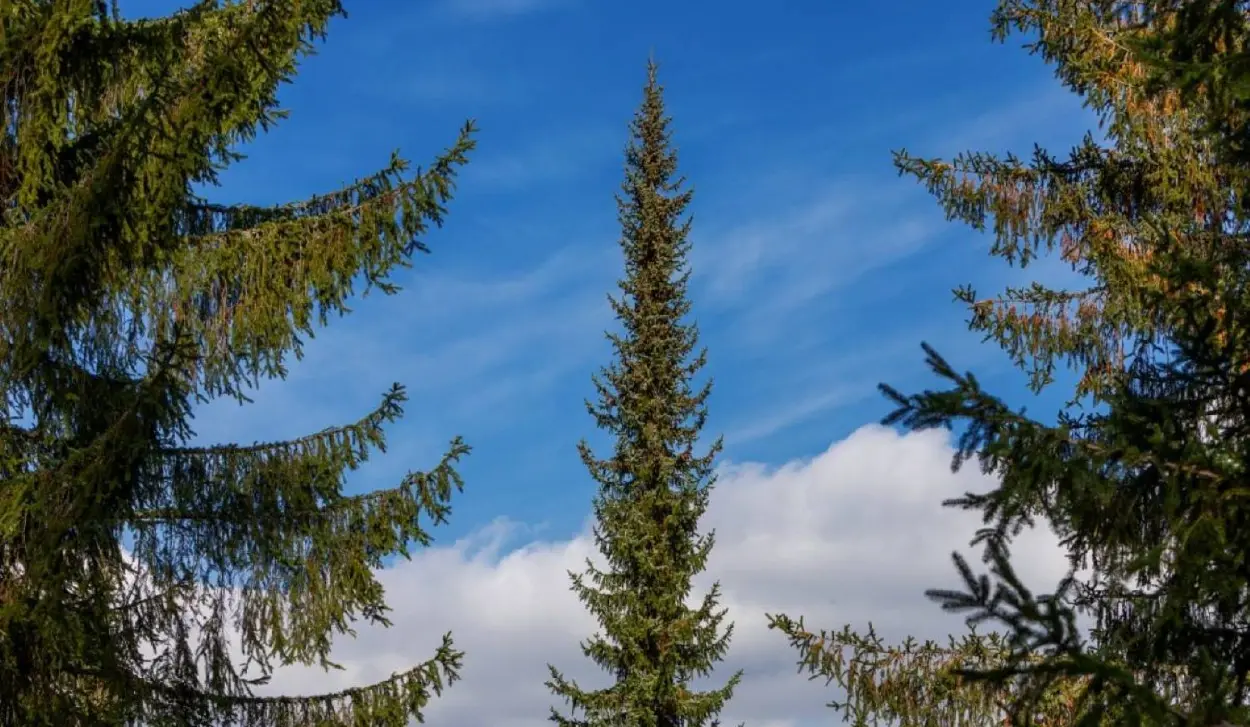
Research into Pančić's spruce has opened up opportunities for international cooperation, including collaboration between researchers from the Faculty of Forestry and scientists at Harvard University. By Nikolina DAMJANIĆ
BANJA LUKA, NOVEMBER 8 /SRNA/ - Pančić's spruce, a rare tree species that has survived for millions of years but is now facing serious threats, could soon find its way into university libraries around the world thanks to a monograph by Milan Mataruga, a professor at the Faculty of Forestry of the University of Banja Luka.
Mataruga told SRNA that the monograph, Pančić's Spruce, which received the "Charter of Achievement" award at the International Book Fair in Belgrade, has been translated into English and that he expects one of the world's leading international publishers, Springer Nature, to publish it.
"With them, I expect our spruce to knock on the doors of all university libraries," Mataruga stressed.
CLIMATE CHANGE AND FIRES THREATEN ITS SURVIVAL
He warned that Pančić's spruce has survived for millions of years, but that does not guarantee its survival today, as some natural populations are very small and isolated and natural regeneration is limited.
Climate change and forest fires pose additional threats, making it important to raise awareness of this species not only at scientific conferences but also in schools, the media and among the general public.
"We cannot expect society to protect something whose value it does not recognise," Mataruga said.
He stressed that Pančić's spruce is not merely a rare tree species, but also a natural asset that is part of the identity of this region.
"It has existed on the European continent for millions of years, and it has survived only here, carrying the identity of a small nation and a small region, showing how something small can be of global importance," Mataruga said.
MONOGRAPH BRINGS PANČIĆ'S SPRUCE INTO THE SPOTLIGHT
Mataruga said that the monograph Pančić's Spruce was presented at the Republika Srpska stand at the International Book Fair in Belgrade, and expressed special gratitude to the Representative Office of Republika Srpska in Serbia for recognising its value.
He stressed that the award held special professional and personal significance for him, but that he also viewed it as recognition of all those who had been involved in researching and preserving this species over the years.
"The greatest value of this recognition for me is that Pančić's spruce has been brought into the spotlight. If this monograph helps promote a better understanding of its value and the need to preserve it, I will consider one of my most important goals achieved," Mataruga stressed.
Speaking about the significance of the award for the Faculty of Forestry and the University of Banja Luka, Mataruga said it confirmed that even faculties with limited financial and research resources could produce publications that reach beyond local and regional boundaries.
He added that research into Pančić's spruce had opened up opportunities for international cooperation, including collaboration between researchers from the Faculty of Forestry and scientists at Harvard University.
MORE THAN 20 YEARS OF RESEARCH
He said that material for the monograph had been collected over more than 20 years, intensive research had lasted more than 10 years, while writing the book had taken a year.
He identified the need to systematise existing knowledge about one of Europe's most fascinating yet enigmatic tree species as the main motivation behind the book.
"It is paradoxical in many ways. It is a relic of ancient flora, yet it was discovered by science relatively late. It survived for millions of years, but today it is endangered. It is gradually disappearing from its natural populations, while thriving in many habitats outside its natural range," Mataruga explained.
According to him, the monograph provides the first comprehensive account of the history of its discovery, distribution, biology, ecology, genetic diversity and natural regeneration, as well as the contemporary threats it faces and opportunities for its conservation.
It is of particular importance that the book describes all the habitats of this species, regardless of whether they are located on the left or right bank of the Drina River.
"The book is not only about what we know about Pančić's spruce, but also about who we are and what we need to do, based on that knowledge, to preserve it," Mataruga stressed.
Speaking about the next steps, Mataruga said that the priority was to preserve the three conservation plantations established in 2024 with the support of the United Nations Development Programme /UNDP/ and domestic institutions.
Two scientific papers are also being prepared to summarise the findings of ten years of research, and Mataruga expects them to be published in leading international journals.


PANKIN: ANTI-RUSSIAN SANCTIONS ARE NOT WORKING

SERIOUS ADVANCE OF ISLAM IS LEADING TO EXISTENTIAL STRUGGLE FOR CHRISTIANS

THE PRNJATOVIĆ FAMILY – PATRONS OF THE CHAPEL OF THE VIDOVDAN HEROES

REALISATION THAT SERBS HAVE BEEN UNFAIRLY DEMONISED OPENS UP MANY OPPORTUNITIES TO TELL THE STORY OF REPUBLIKA SRPSKA