THE PRNJATOVIĆ FAMILY – PATRONS OF THE CHAPEL OF THE VIDOVDAN HEROES
FBiH - Sarajevo - property of Serbs and SOC
11/08/2026
10:45

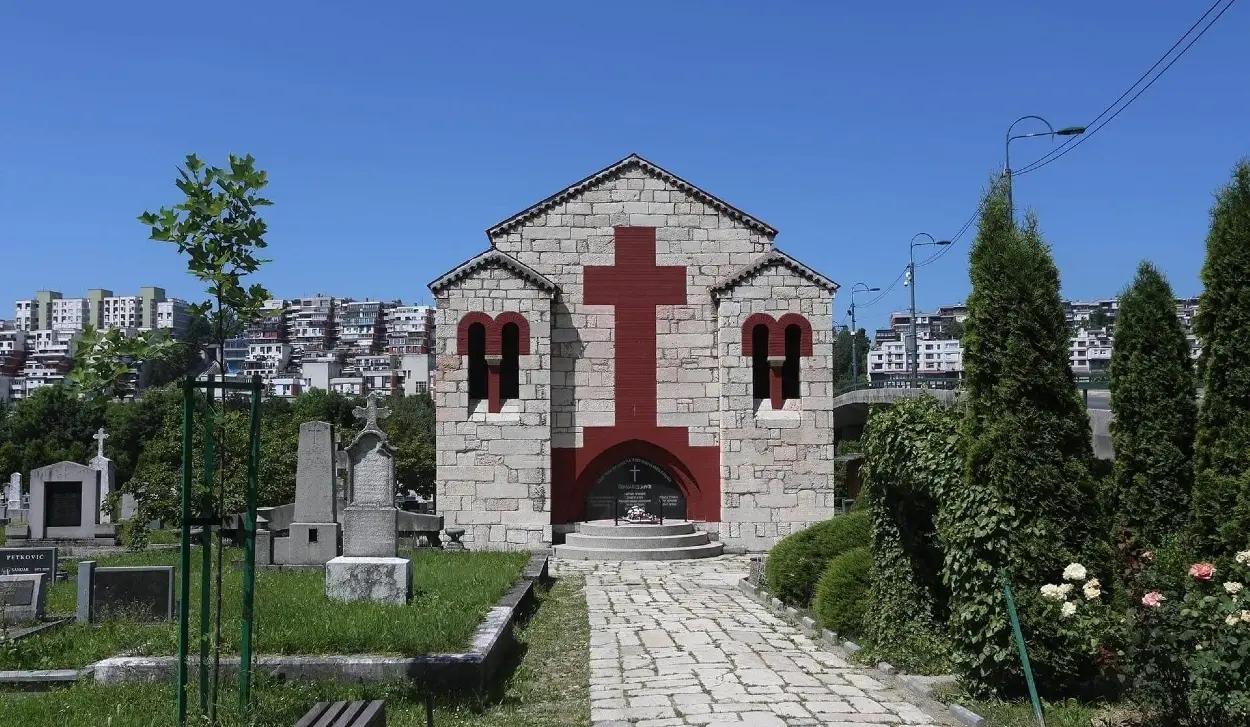
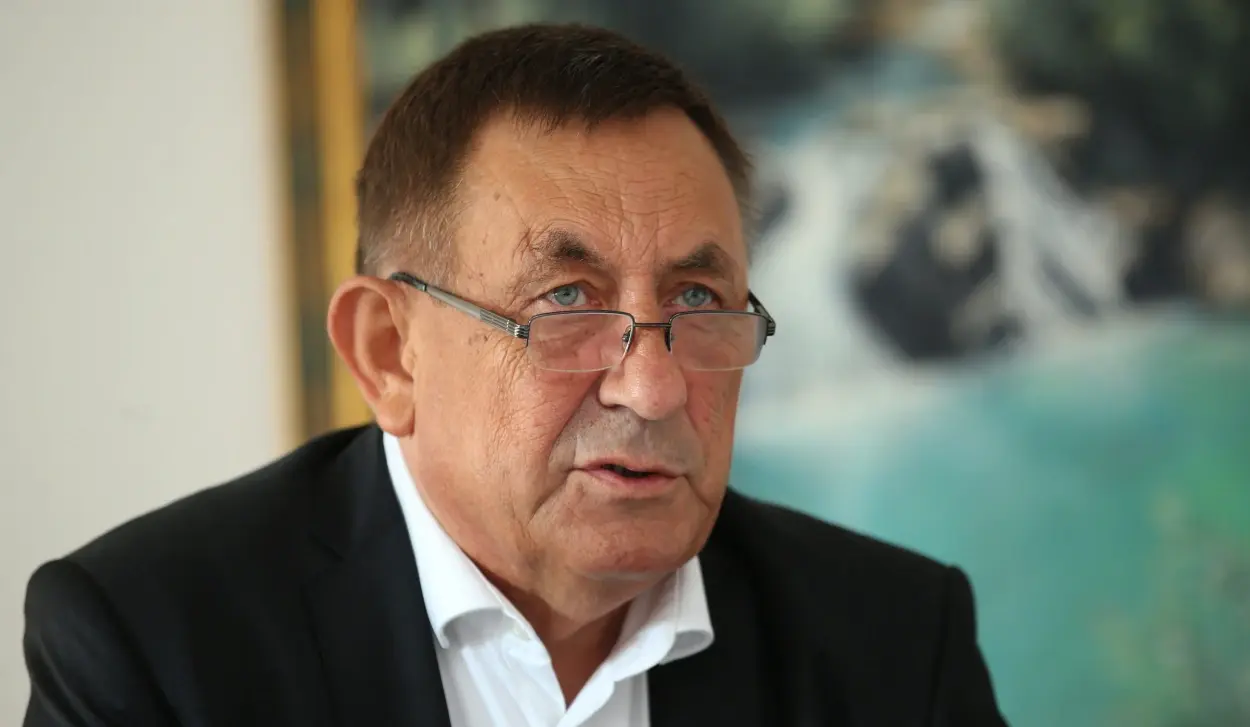
SARAJEVO, NOVEMBER 8 /SRNA/ - The patron of the Chapel of the Vidovdan Heroes at Koševo is Stevo Prnjatović, president of the Sarajevo Church Municipality, whose patriotic act at the time earned widespread praise. He responded modestly, saying, "For the glory of God, we are simply fulfilling another duty." By Željka DOMAZET
Publicist Dragan Mijović told SRNA that the Prnjatović family, originally from the Derventa area, was among the largest benefactors and donors to the Serbian Cultural and Educational Society Prosvjeta. He said that Stevo had launched an initiative and rallied his friends to contribute funds for the purchase of beautiful, costly stained-glass windows depicting Orthodox saints for the Sarajevo Cathedral Church.
He noted that a report on the completion of the chapel's main construction works was presented at a meeting of the Church Municipality Board on October 22, 1939.
"It was built in 100 days by the company Progres, at the considerable cost of 175,000 dinars, although the total cost will come close to 200,000 dinars, given some additional work," he said.
Prnjatović, who also oversaw all the work related to the exhumation of the cemetery at Carina and the construction of the chapel, then formally asked the Board members to accept his gift as its founder and benefactor. He declared that he and his wife Jula would cover the entire cost of building the chapel, which he was donating in memory of his parents, Sima and Daša, and his brother Rajko.
"He also stated that he had commissioned the casting of a massive bell in memory of his son-in-law, Dušan Davidović, former Ban of the Drina Banovina, while his wife Jula was donating a large icon of St. Archangel Michael in memory of her father, Dimitrije Kočović. They also donated other items needed by the church, including liturgical books, priests' vestments, and the like," Mijović said, citing documentation in his possession as the basis for these claims.
Mijović says that the Board members received the offer with great approval and gratitude, congratulating their chairman on this generous gesture.
"Later, Mihajlo Trebić would also donate a polyeleos chandelier with two candlesticks, made according to a design by Professor Deroko," Mijović added.
Mijović said that immediately after the chapel was completed, "the remains of Gavrilo Princip, Nedeljko Čabrinović, Trifko Grabež, Danilo Ilić, Miško Jovanović, Bogdan Žerajić, Vladimir Gaćinović, Veljko Čubrilović, Jakov Milović, Mitar and Neđo Kerović, and Marko Perin were transferred to sarcophagi in the crypt."
THE VIDOVDAN MARTYRS
"Metropolitan Petar /Zimonjić/, later canonised as Saint Petar of Dabar-Bosnia, conducted a prayer service for the twelve Vidovdan martyrs. Everything was carried out quietly and with deep reverence, with the consecration of the chapel and the memorial service to be held at a later date," Mijović explained.
Mijović says that this moment had been awaited for 19 years, as the remains of Princip and his comrades had been buried there at Koševo Cemetery as early as June 7, 1920, in a major official state ceremony, after being exhumed and brought from Terezín, Möllersdorf, Dachau and other locations.
He said that the memorial chapel and its bells were consecrated on October 29, 1939, and a funeral service was held for the Vidovdan heroes.
"The service was led by Metropolitan Petar, assisted by 14 priests, while the choir of the Sloga Society provided the singing. In addition to relatives and friends of the Vidovdan heroes, the ceremony was attended by a large crowd and Sarajevo's most prominent citizens, including Deputy Ban Panto Aranđelović, Army Commander General Bogoljub Ilić, and Mayor Muhamed Zlatar," Mijović said.
ANOTHER DUTY FULFILLED FOR THE GLORY OF GOD
Mijović said that Metropolitan Petar also performed a memorial service over the remains of the deceased transferred from the cemetery at Carina and buried there in a common grave.
He said that Metropolitan Petar then formally accepted, on behalf of the Church and the people, the generous gift from the Prnjatović family. On that occasion, Prnjatović remarked very modestly: "For the glory of God, we are simply fulfilling another duty."
"His Eminence, who had given his episcopal blessing and strong support for the construction of the memorial chapel from the very beginning, delivered a very warm and inspiring speech on this occasion, stressing the duty of all patriots to show the deepest respect for the sacrifice of those who laid down their lives on the altar of freedom," Mijović stressed.
Mijović said the entire event was conducted with great dignity and profound respect, but without elaborate ceremonies, as the circumstances of the time required.
"World War II was already raging across Europe, while political relations within the Kingdom of Yugoslavia were extremely tense, as separatists increasingly openly undermined the foundations of the state, spewing anti-Serb hatred. With the establishment of the NDH /Independent State of Croatia/ and its authorities in Sarajevo two years later, that hatred would be unleashed against Metropolitan Petar, who shared the tragic fate of his flock. Like many Serbs from Sarajevo, he was brutally tortured before being killed in a Ustasha camp," Mijović said.
THE PRNJATOVIĆ FAMILY MANAGED TO ESCAPE THE USTASHA MASSACRE
Mijović points out that, unlike Saint Petar of Sarajevo, the Prnjatović family managed to escape the Ustasha persecution by fleeing Sarajevo for Požarevac in 1941, where Stevo died during the war.
"Needless to say, the Ustashas looted his extensive property, including houses, shops and warehouses full of goods, while what remained of his real estate was nationalised by the communist authorities – or, more accurately, confiscated. It should also be mentioned that the press in the Kingdom of Yugoslavia at the time devoted considerable attention to the construction of the chapel and the burial of Princip and his comrades," Mijović said.
Mijović says that influential Belgrade newspapers such as Vreme, Politika and others had nothing but praise for the Prnjatović family's philanthropic and patriotic gesture, as well as for Professor Deroko's architectural work, highlighting the architectural novelty of combining old and new elements.
"The Sarajevo press, particularly Bratstvo, the newspaper of the Brotherhood of Saint Sava, provided extensive, chronological coverage of everything related to the memorial chapel. The event also received widespread publicity in Belgrade's artistic and intellectual circles," he said.
Mijović notes that art historians, archaeologists, writers, painters and others enthusiastically praised the chapel, recognising it as an act of profound aesthetic and philosophical significance.
"It was said that Deroko's chapel was a perfect expression of national identity in architecture, demonstrating that material cultural heritage could be transformed into a modern memorial form, and that the chapel was not an ordinary church, but a monumental stone sculpture," Mijović concluded.