NUŽDIĆ: CRIMINAL OPERATION STORM CARRIED OUT ETHNIC CLEANSING OF SERBS
Republika Srpska - War Research Centre
08/02/2026
11:12
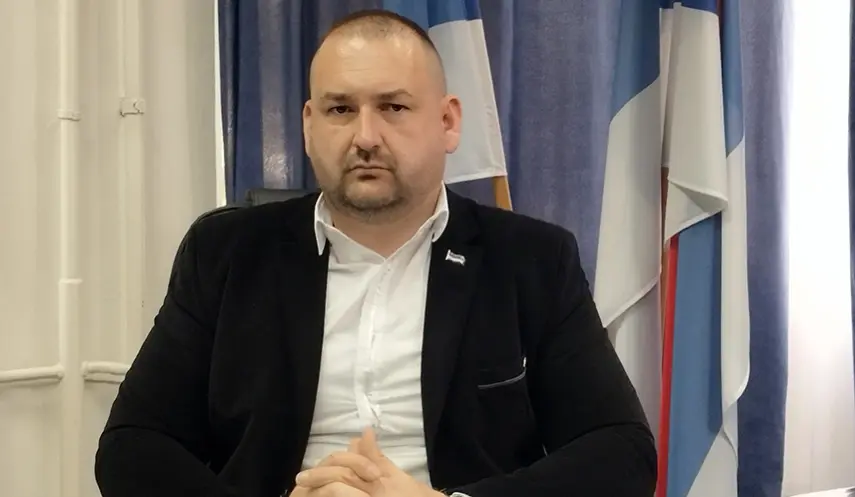
BANJA LUKA, AUGUST 2 /SRNA/ – Acting Director of the Republika Srpska Research Centre of War, War Crimes and Tracing Missing Persons Viktor Nuždić said that the 1995 military Operation Storm irreversibly changed the ethnic composition of Republika Srpska Krajina territory, while Serbs were prevented from returning for years afterward and traces of their centuries-long presence were erased.
"Ethnic cleansing of the Serbs from Republika Srpska Krajina was carried out, Nuždić told SRNA ahead of the upcoming commemoration of the Day of Remembrance for All Serbs Killed and Expelled in the Croatian-Muslim pogrom against the Serbs of Republika Srpska Krajina and Republika Srpska in 1995, to be held in Mrkonjić Grad.
Nuždić recalled that the Serbs from Republika Srpska Krajina and Bosanska Krajina are one people, united by a shared history and destiny.
"With the criminal Operation Storm, followed by the fall of 13 municipalities in western Krajina, one people from two Krajinas once again experienced the same tragedy – expulsion, the loss of their homes, property and homeland," Nuždić said.
He stressed that this was not merely the loss of territory, but an attempt to erase an entire people from the area they had inhabited for centuries.
"What is particularly devastating is the fact that justice has still not been served for the crimes committed against the Serb people. The Hague Tribunal, which was supposed to symbolize justice, sent the message by acquitting Croatian generals that no one has to be held accountable for the killing and expulsion of Serbs," Nuždić emphasized.
He recalled that during the 1990s the Serb people were once again forced to defend themselves against ideologies that had previously left behind Jasenovac, Jadovno, Kozara and many other sites of the suffering of Serbs.
According to him, 1995 represented the final stage of that process, which had begun during the time of the Independent State of Croatia /NDH/, with the aim of removing Serbs from the territories where they had lived for centuries.
He said that, with NATO support and the tacit approval of the West, the Croatian Army launched Operation Flash in May 1995, followed by Operation Storm in August, which brought about the end of Republika Srpska Krajina.
"Shortly afterward, with NATO support and in coordination with units of the so-called Army of BiH, aggression against Republika Srpska was carried out through operations Southern Move and Maestral," Nuždić said.
He added that it is the duty of Republika Srpska institutions to preserve the truth from being forgotten, concluding that although Republika Srpska Krajina no longer exists, the memory of its victims and those who suffered must not be allowed to fade.
The Day of Remembrance for All Serbs Killed and Expelled in the Croatian-Muslim pogrom against the Serbs of Republika Srpska Krajina and Republika Srpska in 1995 will be commemorated in Mrkonjić Grad on Tuesday, August 4.
The commemoration of this historical event of republic significance is being jointly organised by the governments of Republika Srpska and Serbia.
The criminal Operation Storm began on August 4, 1995, with an offensive by the Croatian Army, police forces and Croatian Defence Council /HVO/ units in the regions of Banija, Lika, Kordun and northern Dalmatia, during which more than 220,000 Krajina Serbs were expelled from their centuries-old homes.
According to the updated records of the Veritas Documentation and Information Centre, 1,904 Serbs were killed or went missing during and after the operation, including 1,250 civilians, three-quarters of whom were over the age of 60.
The victims also included ten children under the age of 14 and 566 women, about four-fifths of whom were over the age of 60 - representing particularly grim record of the 1990s civil war in the former Yugoslavia, Veritas points out.
In its February 2015 ruling, the International Court of Justice characterised Operation Storm as ethnic cleansing, but not genocide, although experts in the field have argued that the operation displayed all the characteristics of genocide.