MEMORIAL SERVICE HELD FOR SERB VICTIMS ON 85TH ANNIVERSARY OF USTASHA MASSACRE
Croatia - Glina - commemoration
05/13/2026
16:46
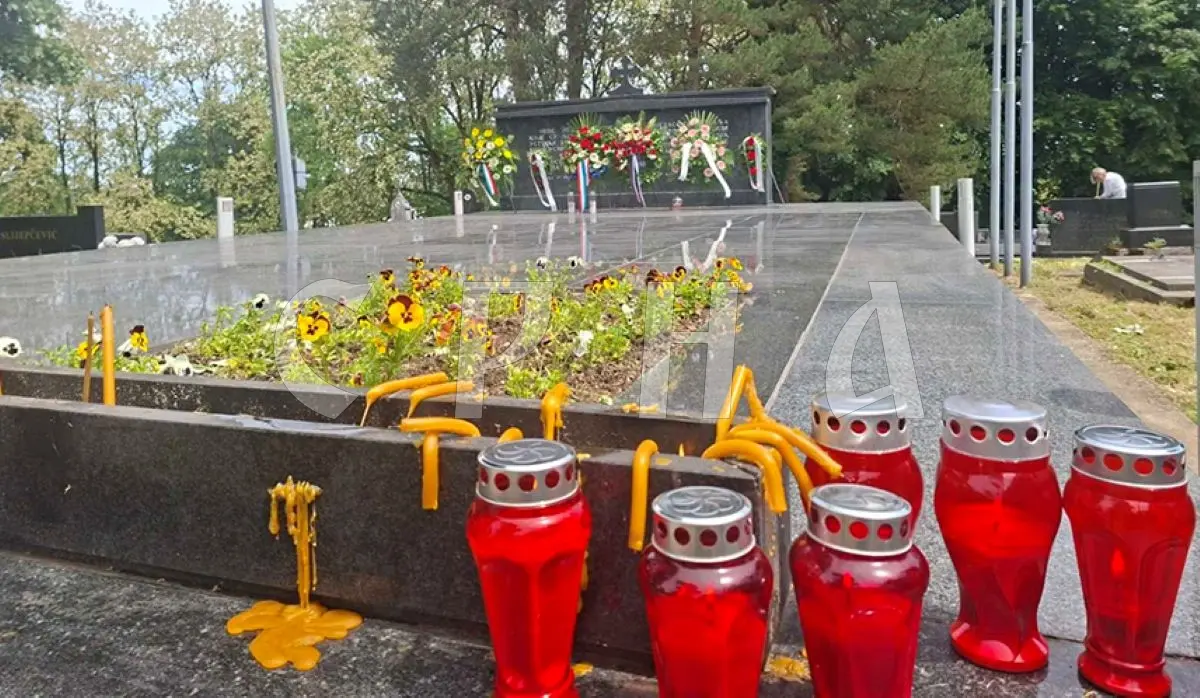
BANOVINA/GLINA, MAY 13 /SRNA/ – A memorial service was held today at the memorial ossuary at the Orthodox cemetery in Glina, Croatia, marking 85 years since the brutal Ustasha massacre of more than 2,000 Serbs from Kordun and Banija in May and August 1941.
Vladimir Kokanović, director of the Administration for Cooperation with the Diaspora and Serbs in the Region within Serbia's Ministry of Foreign Affairs, said all Serbian victims must be respected, especially those who lost their lives in such a manner.
"We do not want any divisions, nor do we wish such crimes upon any other people. We must all, individually and through institutions, support the Serbian people in the region, especially in these areas where life is difficult and where so few Serbs remain. We must help ensure a peaceful and normal life for everyone", Kokanović said.
The president of the Committee for Aid to Serbs in Kosovo and Metohija, Milorad Arlov, told SRNA this was one of the first mass crimes committed by the Ustashas against Serbs, driven by the ideology of the Independent State of Croatia /NDH/ at the very beginning of World War II.
"The NDH sided with fascist Germany and committed numerous crimes against the Serbian people. That ideology is well known to all - that one-third of Serbs in Croatia should be killed, one-third expelled and one-third converted and assimilated into Croats", Arlov reminded.
Arlov said he addressed the gathering today as a close descendant of victims, among whom were four of his close ancestors.
"Our ancestors, then uneducated and uninformed, could not believe that one human being could do such things to another. Had they known, they certainly would not have come peacefully and without resistance to be brutally murdered. We are obliged before our origins, our ancestors and God never to forget their suffering, pain and sacrifice simply because they were Serbs. We cannot blame today's generations for that, but we can demand respect and ensure that this never happens to anyone again," Arlov said.
He expressed hope that such crimes would never again be committed against the Serbian people or anyone else.
"Here in Kordun and Banija there is enough space, sunlight, air, water, fields and forests for everyone. No one needs deserted land. Even after those crimes, we Serbs want to live in peace with everyone and seek no revenge against anyone. That is what our holy Serbian Orthodox Church teaches us," Arlov said.
He thanked the Republika Srpska Government for accepting an initiative by the Serbian National Minority Council and himself in 2021 to finance the complete restoration of the memorial ossuary.
In addition to Kokanović and Arlov, wreaths were laid by representatives of the Serbian Embassy in Zagreb, Glina Mayor Ivan Janković and Deputy Mayor from the Serbian community Branka Mitić Bakšić, the leadership of the Serbian National Minority Council of Glina, representatives of the Committee for Preserving the Tradition of Kordun Descendants in Belgrade, the Association of Banija Natives from Belgrade and descendants of Serbian victims killed in 1941.
The Ustashas carried out the atrocities in two waves. The first targeted more than 400 Serbs and members of the Serbian intelligentsia from Glina and Banija in May 1941. The second took place from July 29 to August 3, 1941, when around 1,600 Serbs from the then district of Vrginmost in Kordun were brutally murdered in the Serbian Orthodox church and courthouse in Glina.
Following the massacres, the victims' bodies were thrown into pits around Glina, from where their remains were transferred to the memorial ossuary in 1951.
The memorial service, organized by the Serbian National Minority Council of the City of Glina, was attended by around one hundred Serbs and was officiated by Glina parish priest Goran Kalamanda.