NUŽDIĆ: SEARCH FOR MISSING SERBS REMAINS POLITICAL, RATHER THAN HUMANITARIAN, ISSUE
FBiH - Vozuća - culture of remembrance
09/10/2026
14:35

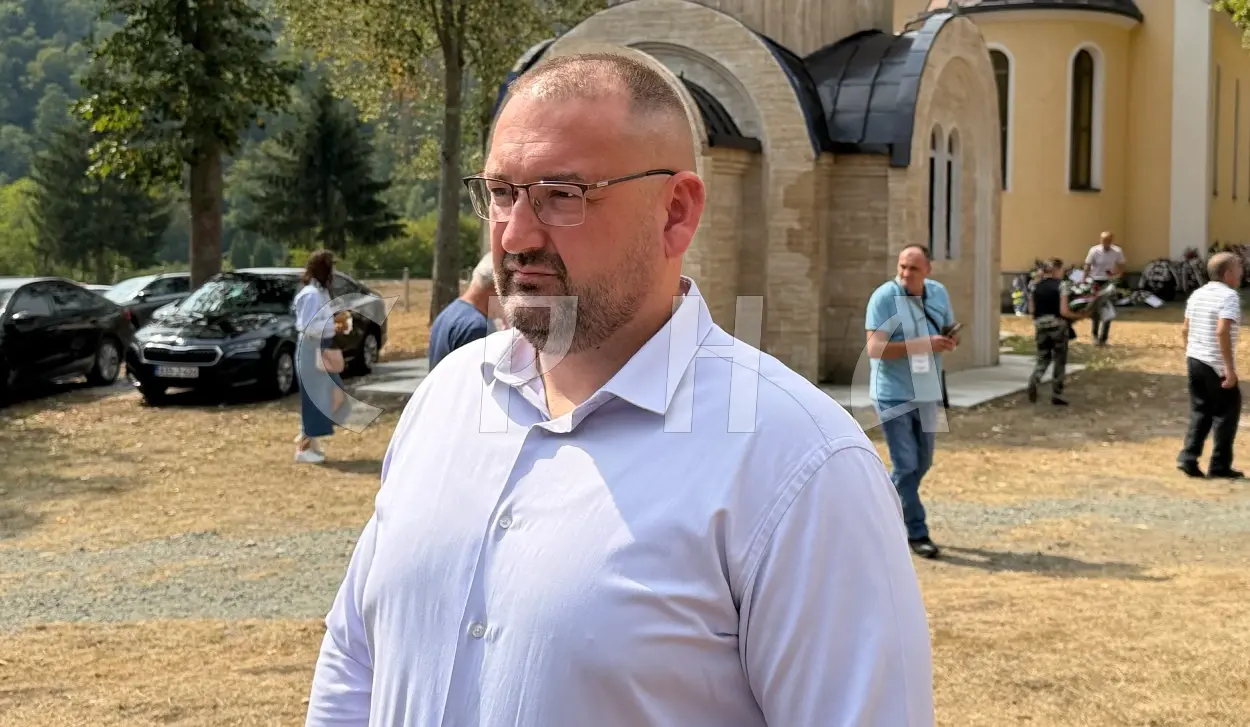
ZAVIDOVIĆI, SEPTEMBER 10 /SRNA/ – The issue of locating the remains of Serbs remains political rather than humanitarian and is closely linked to the prosecution of war crimes in which Serbs were the victims, said Viktor Nuždić, acting director of the Republika Srpska Research Centre of War, War Crimes and Tracing Missing Persons.
Nuždić stressed that judicial institutions in BiH are not seriously addressing this issue.
He noted that, even after 31 years, there are still very few convictions for the horrific crimes committed against Serbs in the Ozren and Vozuća areas, apart from some miserable sentences that have not been enforced, as well as those handed down to wartime generals of the so-called Army of BiH, Rasim Delić and Sakib Mahmuljin.
"The most painful and tragic is that, to this day, the remains of dozens of Serb civilians and soldiers who remained here on eternal guard after September 1995 have not been found," Nuždić told the press in Stog, the destination of the Paths of Exodus march, organised to mark 31 years since the expulsion of Serbs from Vozuća, settlements in the Krivaja valley, and the southern part of Ozren.
He said it was simply impossible that, after so many years, despite testimonies and other evidence, the location of their remains was still unknown, adding that this was clearly a case of concealment.
Serbs from Vozuća were expelled from their centuries-old homes during an offensive by the so-called Army of BiH, which, depending on the unit and direction of the enemy forces’ attack, was known as "Hurricane 95," "Farz 95," and "Badr al-Bosna".
The mass suffering of the people of Vozuća lasted from September 10 to 24, 1995, as a result of an offensive involving 23,000 Muslim soldiers from the Second and Third Corps of the so-called Army of BiH and the El Mujahideen Detachment, as well as NATO bombing supported by their rapid-reaction units and a Pakistani contingent of international peacekeeping forces.
During that period, 30 Serb villages were burned, 1,920 Serb families comprising 7,680 people were expelled, and 459 Republika Srpska Army soldiers and civilians were killed, while the whereabouts of many others remain unknown.
The fall of Vozuća brought to an e