CHAPEL OF HEROES OF VIDOVDAN - GUARDIAN OF SERBIAN CENTURIES-OLD HERITAGE
FBiH - Sarajevo - property of Serbs and SOC
11/07/2026
10:38

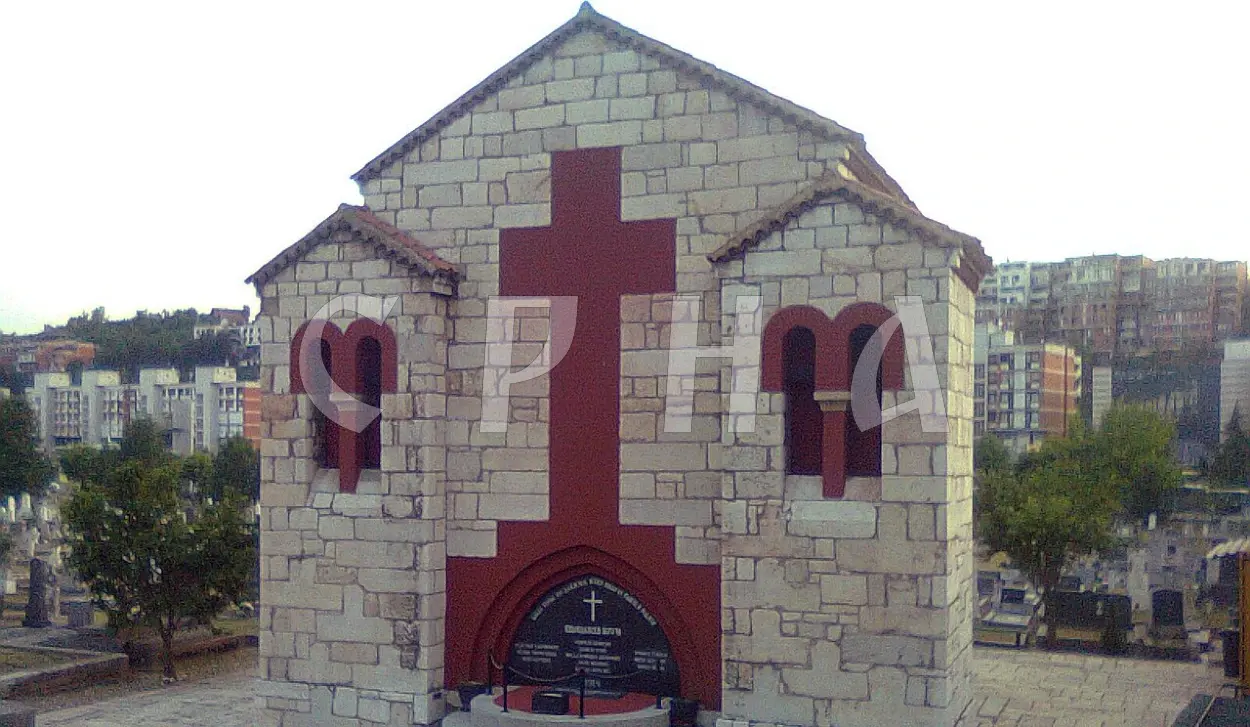
SARAJEVO, NOVEMBER 7 /SRNA/ - Architect Aleksandar Deroko designed the Chapel of the Heroes of Vidovdan in Koševo, incorporating crosses and monuments from Sarajevo's oldest city cemetery at Carina to preserve them as a testament to the centuries-long Serbian presence in Sarajevo, publicist Dragan Mijović told SRNA. By Željka DOMAZET
Mijović says that, after years of delays and various difficulties, the old Serbian cemetery at Carina, located in the Marijin Dvor area, was finally exhumed on March 12, 1939, with the approval of church authorities.
"On that occasion, around 1,500 graves that had not been exhumed by relatives by the deadline were dug up on the cemetery grounds, which covered an area of nearly 18 dunums. This cleared the site where the Assembly building and the Executive Council of the Socialist Republic of BiH would later be constructed," Mijović recalled.
Mijović says that workers excavated thousands of cubic metres of earth under the supervision of Uroš Bogdanović, while the professional documentation and descriptions of the graves and monuments were carried out by renowned Serbian scholar Vladislav Skarić.
He says it was decided that the remains from those graves would be reburied in a common crypt at the Koševo cemetery of Sts. Archangels Michael and Gabriel, which people at the time called the New Cemetery, even though it had opened 55 years earlier, after the Austro-Hungarian authorities banned burials at Carina.
"However, the Serbian Orthodox Church Municipality of Sarajevo faced the difficult question of what to do with more than 1,700 monuments and various stone fragments, witnesses to centuries of history, which held great historical and symbolic value for Serbs," Mijović says.
ALEKSANDAR DEROKO IN SARAJEVO
Mijović points out that it could rightly be considered fortunate that the renowned Serbian architect and academic Aleksandar Deroko frequently visited Sarajevo during those years, as he was designing the new Church of the Transfiguration in Novo Sarajevo.
"The completed church was solemnly consecrated in 1940 by His Holiness Serbian Patriarch Gavrilo, in the presence of tens of thousands of Serbs from Sarajevo and the surrounding area. Deroko was also consulted at the time about the planned memorial chapel dedicated to the Heroes of Vidovdan at the Koševo cemetery. Its construction had been planned since the liberation in 1919, with the aim of providing a dignified burial place for the remains of the Young Bosnia members. It would be built on the site of an old, dilapidated wooden chapel, which had been erected in 1896 by prominent Sarajevo deputy mayor and merchant Petrakija Petrović at his own expense," Mijović says.
Agreeing to design the new chapel in the Serbo-Byzantine style, Mijović said, the great artist came up with an ingenious solution.
"With the aim of ensuring the permanent preservation of the tombstones from Carina, he proposed incorporating them into the chapel's walls. This would also preserve a highly compelling testament to the historical continuity of the Serb Orthodox people on the banks of the Miljacka, who for centuries represented a significant, and in some areas even dominant, segment of the city's population in terms of its economic, cultural and political development," Mijović says.
Mijović says that, for this purpose, Skarić selected the finest examples of crosses, slabs and various fragments with rustic textures, setting aside around 600 pieces with preserved reliefs and symbols.
"Most were shaped like an inverted letter 'T', which was one of the important characteristics of the monumental heritage of Sarajevo's Serbs. Made predominantly of slate and local Hreša stone, many of the monuments were outstanding examples of the craftsmanship of the time, produced by skilled Sarajevo 'smiths' — as stonemasons were known in the past," Mijović says.
He points out that all of this was transported to Koševo Cemetery with great care.
"Deroko created a kind of collage from the various forms of these tombstones, carefully arranging the monuments into the chapel's façade using the technique of spolia, symbolically linking the bones of the Vidovdan martyrs with the ancient stone heritage," Mijović says.
COFFINS OF YOUNG BOSNIANS
Mijović notes that the monuments built into the walls, bearing the carved names of the deceased, are still clearly visible today. He explains that this gave the façade a certain roughness and patina, reminiscent of monastic side chapels.
"The chapel, with its crypt, has the character of a mausoleum, as the coffins of the Young Bosnians are placed beneath the crypt, under the altar. The architect thus emphasised its solemn, commemorative character. In this way, Deroko conveyed a striking message that the chapel is a double monument: in addition to preserving the memory of Princip and his comrades, it also safeguards Serbian material heritage from previous centuries," Mijović points out.

RUSSIAN FORCES TARGET MILITARY AND ENERGY INFRASTRUCTURE IN KYIV

CHINESE ROBOT TIANGONG FASTER THAN USAIN BOLT, RUNS 100 METRES IN 8.64 SECONDS

KECMANOVIĆ: OHR MUST BE ABOLISHED IMMEDIATELY AND UNCONDITIONALLY
GIRL FROM BiH KILLED AFTER SCHOOL BUS OVERTURNS, DRIVER FELL ASLEEP AT THE WHEEL