NEIL ARMSTRONG STEPPED ON THE MOON
Space - mission - anniversary
07/19/2026
11:57
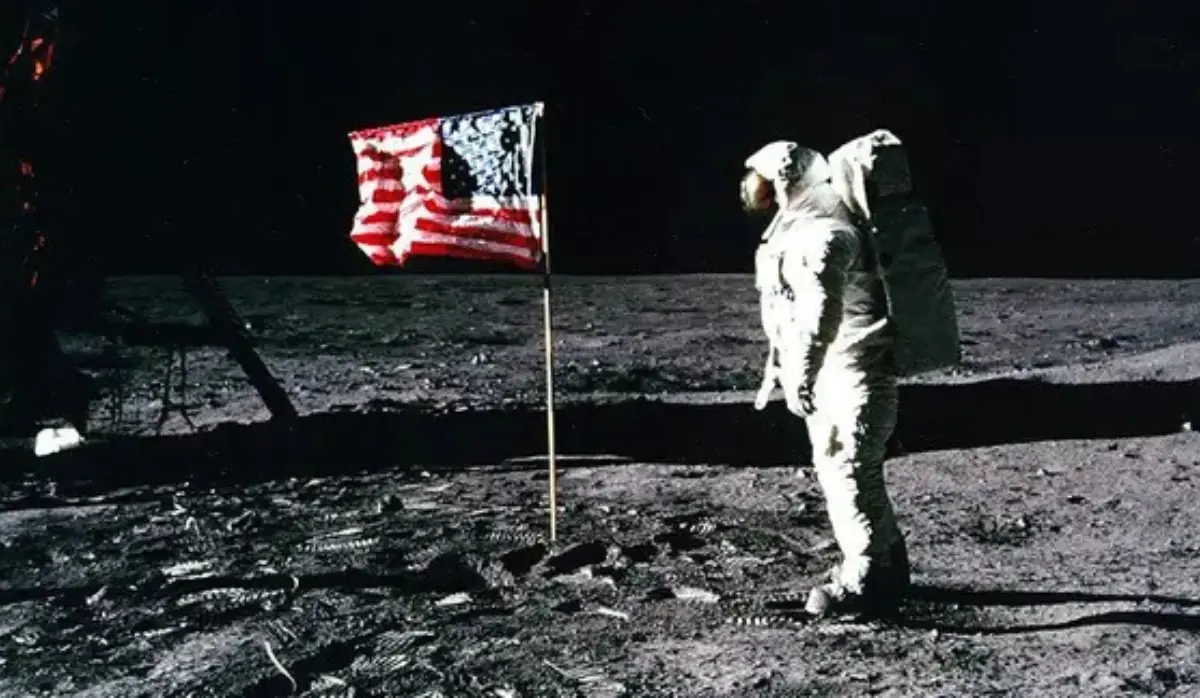
BIJELJINA, JULY 19 /SRNA/ - American astronaut Neil Armstrong set foot on the Moon on July 20, 1969, becoming the first person in history to do so.
The mission began on July 16 with the launch of the American spacecraft "Apollo 11."
Neil Armstrong and Buzz Aldrin had the honor of becoming the first humans to walk on Earth's natural satellite, while the third crew member, Michael Collins, remained aboard the "Columbia" command module and waited for their return.
The first four days of the mission went according to plan, but 20 minutes before the Moon landing, the crew encountered a series of problems.
Radio contact with the control center in Houston was briefly lost, and an alarm sounded in the "Eagle" lunar module, which Armstrong and Aldrin were using to descend to the Moon.
Mission Control in Houston instructed them to continue the mission, explaining that the issue was caused by an overloaded computer.
The astronauts switched to manual control and landed on the Moon's surface. As Armstrong stepped out of the "Eagle", he uttered the famous words: "That's one small step for man, one giant leap for mankind."
During their two-and-a-half-hour walk on the lunar surface, Armstrong photographed piles of rocks, while Aldrin set up a seismometer and two other scientific instruments.
The two astronauts planted the US flag and left behind several items, including a medal honoring the first man in space, Russian Yuri Gagarin.
Aldrin later recalled that, at the beginning of the mission preparations, Armstrong told him that he would "use his higher rank and be the one to take the first step onto the Moon's surface."
"I decided to keep quiet; I tried not to be angry with Neil," Aldrin wrote in his memoirs.
Many people doubted the success of the first attempt to land on the Moon, but not Armstrong, an experienced military pilot.
"I felt we had a 90 percent chance of returning safely and about a 50 percent chance of making a successful landing on the Moon," Armstrong said afterwards.
"Of the 857 black-and-white photographs and 550 color photographs, only four show Armstrong, while most feature Aldrin. "He is much more photogenic than I am," Armstrong joked.
Collins spent that time waiting in orbit for 22 hours, fearing throughout that, if things went wrong, he might have to leave his colleagues behind on the Moon and return to Earth alone.
"If they fail to lift off from the Moon's surface or crash, I don't plan to kill myself, but I know I will live with a target on my back for the rest of my life," Collins said.
Armstrong, Aldrin, and Collins returned to Earth on July 24, when the capsule briefly turned into a fireball in the sky before three parachutes opened and safely brought it down into the Pacific Ocean.
The human landing on the Moon continues to be accompanied by various controversies and claims by skeptics that the entire mission was "faked", arguing that it was technically impossible to land on the Moon at the time due to limited technological capabilities, while also pointing out that humans have not returned to the lunar surface or approached it for decades after those missions.
Various conspiracy theories have cited allegedly suspicious photographs from the Moon, certain technological inconsistencies, and the flag appearing to wave despite being in an environment where this should not occur /the vacuum of space/.
However, no one with serious scientific credentials has, to this day, challenged the fact that humans landed on the Moon, which remains one of the greatest achievements in the history of humankind.
Tag s


SWIMMING SENSATION 13-YEAR-OLD YU ZIDI WINS GOLD IN 200M

MEDIA OUTLETS ANNOUNCE LAWSUIT AGAINST TRUMP

SRNA WILL SOON BEGIN OPERATING FROM NEW REPRESENTATIVE PREMISES AT ITS SEAT IN PALE

METROPOLITAN HRIZOSTOM: MAY WE BE COURAGEOUS AND DETERMINED LIKE THE MOTHER OF GOD