METROPOLITAN HRIZOSTOM: MAY WE BE COURAGEOUS AND DETERMINED LIKE THE MOTHER OF GOD
FBIH - Sarajevo - Serbian Orthodox Church
09/21/2026
12:58
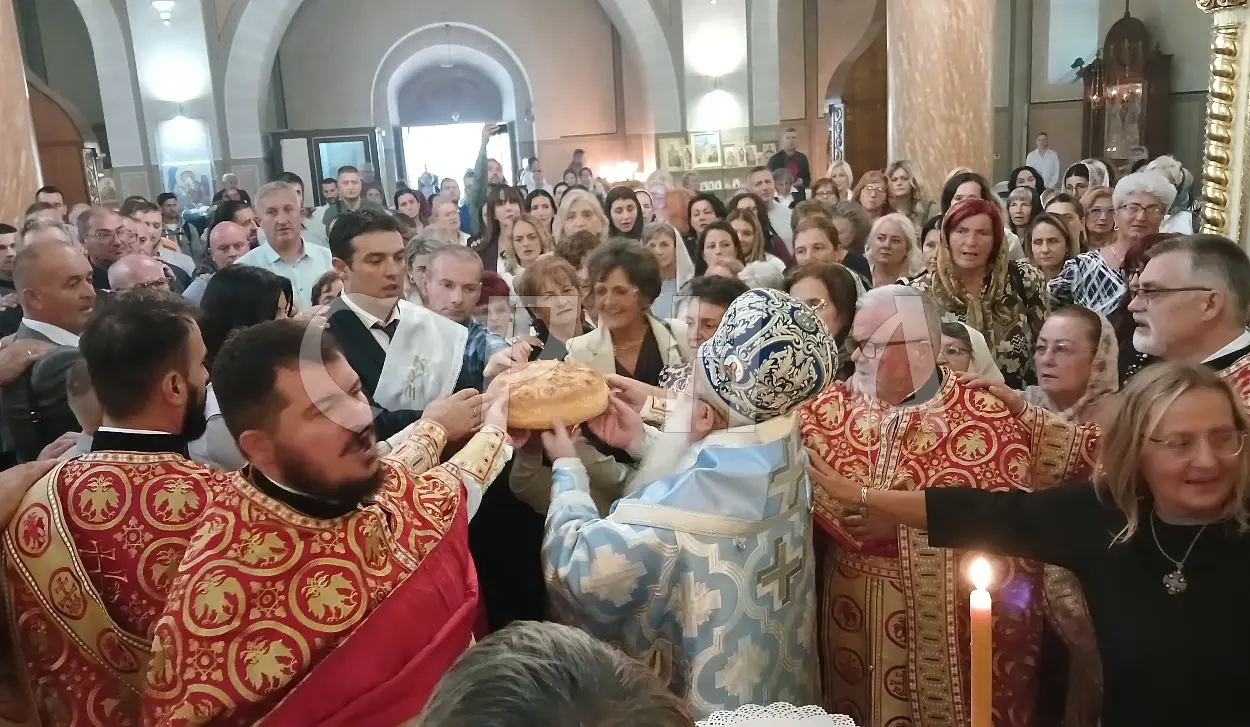
SARAJEVO, SEPTEMBER 21 /SRNA/ – His Eminence Metropolitan Hrizostom of Dabar-Bosnia wished the gathered faithful at the Cathedral Church of the Nativity of the Most Holy Theotokos in Sarajevo that God, through the prayers of the Most Holy Mother of God, would always strengthen them in faith, freedom, courage, and determination.
Metropolitan Hrizostom, who served the Divine Liturgy at the church on the occasion of its patron saint's day, the Nativity of the Most Holy Theotokos /Mala Gospojina/, said in his sermon that this world is a great garden of God's grace, which develops and multiplies, noting that everything blessed by God bears fruit.
"May the patron saint's day of this holy church be blessed! May we be good witnesses of God in this world, but even more so, may we be courageous and determined, just as the Mother of God was when she was a little girl and received God’s blessing to become the Mother of God," Metropolitan Hrizostom said.
His Eminence emphasized that God has entrusted human being everything to govern wisely and produce the fruits of their work, which the Lord will recognise and reward.
"God gives everyone what is most needed by that person and by humanity in general. This is the great role that God gives to each of us. May we all be alive and healthy, God willing, may we meet here again next year in health and joy!" Metropolitan Hrizostom said.
The patron sponsor of the celebration was Darko Berjan from Istočno Sarajevo.
The decision to build the Cathedral Church of the Nativity of the Most Holy Theotokos in Sarajevo was made in early 1859. By 1862, land and construction materials had been purchased, and construction began in 1863, when the foundations were consecrated.
Construction lasted 11 years, until May 1, 1874. The church was consecrated on July 20, 1872, almost two years before construction was fully completed, by the then Metropolitan of Dabar-Bosnia Paisije.
Permission to build the church was granted by Sultan Abdulaziz, reportedly in an effort to ease criticism from Europe over religious intolerance.
The church was built through voluntary donations from residents of Sarajevo and surrounding areas, as well as from merchants from Dubrovnik, Belgrade, Trieste, and Vienna. There is also a record stating that the sultan himself was among those who made a contribution.