SHE SHIELDED HER DAUGHTERS WITH HER BODY; OUT OF FEAR, SHE DID NOT EVEN FEEL THAT HER BACK WAS FULL OF SHRAPNEL
Republika Srpska - Bijeljina - testimony
05/31/2026
10:47
Today, this is not spoken by the child of a fallen soldier, but by an adult, accomplished woman, a wife and mother, the descendant of a hero. It happened on July 19, 1992, at the very beginning of the war. I was nine then, and my sister was thirteen.
Interview by: Zorica Simeunović
BIJELJINA, MAY 31 /SRNA/ - Branislava Marković lost her father Miroslav in 1992 when he and his brother were killed by a shell in the barracks in Misoča near Ilijaš. She and her sister miraculously remained uninjured in an attack on a military minibus they were taking to the funeral, in which many people were killed or wounded.
"It is hard for me to talk about this, but not out of a desire for pity, nor because I want any benefit from it. I am telling this for the sake of my parents, for the people who created Republika Srpska, and for their families who forever remained witnesses to a difficult time," Marković tells SRNA.
She was born in 1983 in Sarajevo, and everything, she says, happened on July 19, 1992, when she was nine and her sister was 13.
"When the war started, my father moved my mother, sister, and me to Pale, along with my uncle's family and grandmother. On that day, my father and uncle were in the barracks in Misoča. It was my uncle's birthday. While they were issuing food from the warehouse for the army, a shell fell behind them," she recalls.
She notes that both were reserve officers of the JNA /Yugoslav People's Army/, that her uncle died on the spot, and that her father passed away during transport to Pale.
"I remember every detail of that day. It was a Sunday. My youngest uncle came to tell us what happened. I was making pancakes, which have never tasted the same since," says Branislava, adding that the feeling of pain, emptiness, and helplessness has remained forever etched in her memory.
They set off for her father's and uncle's funeral in Ilijaš in a military minibus. Driving in front of them was her other uncle with the six-year-old son of his deceased brother.
In the minibus, her mother, sister, and she sat behind the driver, and in Sumbulovac, they were joined by people who had no transportation.
She states that near Ljubina, close to the "Ranč" tavern, they encountered an obstacle made of sand and rocks, and that the uncle who was driving ahead managed to pass, but when the minibus approached, shooting started from all sides.
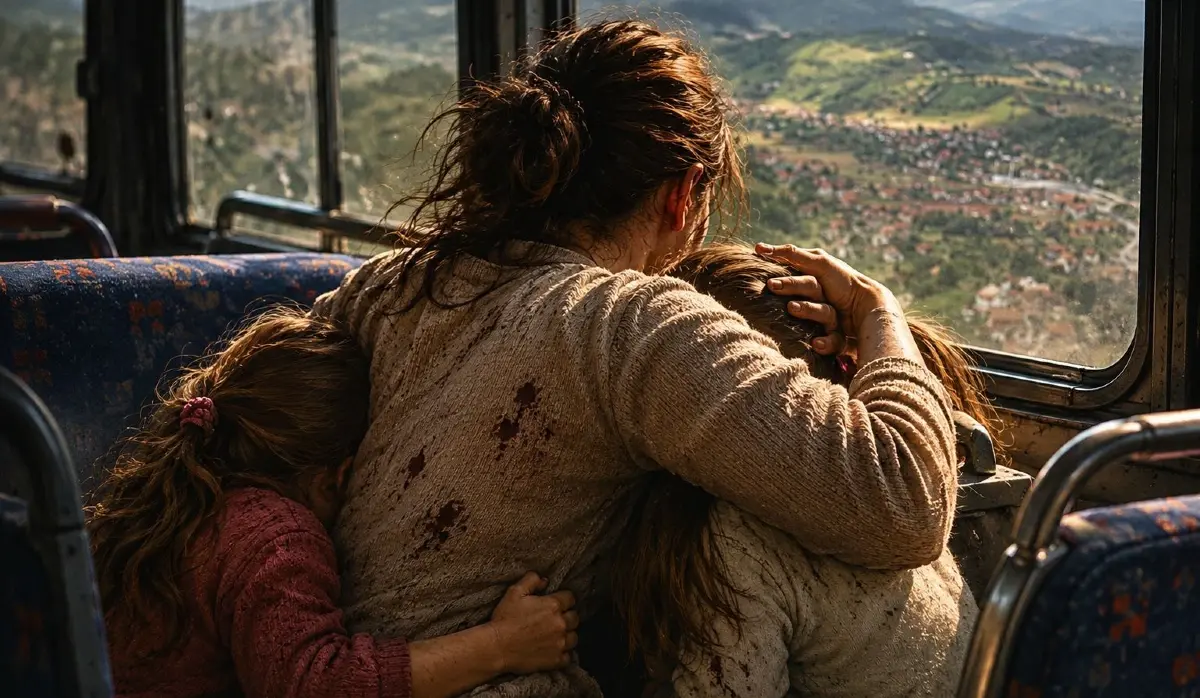
"Bursts of gunfire, detonations, rifle grenades. I don't know how long it lasted, but it felt like an eternity. My mother instinctively pushed my sister and me down across the seats and shielded us with her body. Out of fear, she didn't even feel that her back was full of shrapnel and that a bullet had gone through the arm she was using to cover my head," she recounted.
The driver, she points out, did not stop but continued driving, practically on the rims because the tires were shot out, while constantly repeating, "Is anyone alive?"
He managed to get them out to Serbian territory, and when they stopped, the sight was horrific.
"The people from the minibus were either dead or wounded. The soldiers who were escorting us didn't even have time to return fire," says Branislava Marković.
She emphasizes that her mother, grandmother, and aunt were wounded, and that only she, her sister, and the driver remained uninjured.
"My hair and t-shirt were completely bloody. They thought I was wounded, but it was the blood of my mother, who saved me with her body," notes Marković.
The entire minibus was riddled with bullets, except for the seats where she and her sister were sitting.
"There wasn't a single bullet hole on them. It was simply God's will. My grandfather and youngest uncle went to bury my father and uncle, while my grandmother, mother, and the other wounded were transported to the hospital in Pale," recalls Marković.
Her grandmother, who was wounded, told the doctors at the time, "Save the children, let me go." She was transferred to Belgrade but passed away soon after. She was buried next to her sons.
"My grandfather lived until 2000. Faith kept him going. When things were the hardest, he would say: 'Only God knows why this happened to us,'" emphasizes Branislava.
Overnight, she and her sister grew up; the most important thing to them was that their mother survived. When she recovered from her wounds, they returned to Ilijaš, where combat operations were still ongoing.
"Life in shelters, fear, and the struggle for bare survival became everyday life. And then, just a year after my father's death, my mother's brother was also killed, at only 24 years of age," adds Marković.
After the signing of the Dayton Agreement, during the exodus of Sarajevo Serbs, they went to Brčko, into alternative accommodation, a new environment.
"Today, when I have my own children, I completely understand the strength my mother had. What a fighter she was. As much as my father is a hero to me, my mother is no less of a hero," points out Marković.
She says that her mother lived quietly and with dignity, without help and without a break, solely for her daughters, without her own desires, without her own life.
"My sister and I graduated from state universities, but not because she forced us, but because we didn't want to betray her sacrifice," notes Branislava.
She proudly emphasizes that they have succeeded today, that they are accomplished women both in terms of family and career, and that their mother now enjoys life alongside them.
"Hard times create strong people. A mother is often the quietest, yet the greatest hero of a family. When everything is collapsing, when support disappears, a mother finds the strength she didn't even know she had to protect, raise, and set her children on the right path," points out Branislava Marković.
Once wounded, tired, and broken inside, her mother pushed forward for the sake of her children's future, and Branislava now advises others not to underestimate their own strength.
"Maybe today you think the burden is too great and that no one sees you, but your struggle leaves a mark that your children will carry their whole lives. When better days come, children won't remember how hard it was, but how brave their mother was," says Branislava, who lives with her family in Bijeljina.
No matter how hard it was—and it was, as she points out, extremely hard—they never thought of leaving Republika Srpska.
"Our father participated in its creation, and it is up to us to contribute through our work and lives to make it a better place for our children. I believe we owe him that much," says Branislava.
She mostly remembers her father from photographs, but the pride has never faded.
"If this story helps even one child going through loss, fear, or difficult life circumstances to realize that hope exists, then it had a purpose. No matter how impossible it may sometimes seem, a person can survive even what they think they cannot. After the greatest darkness, the light still comes, and that is why we stay here," concluded Marković.