REJECT THREE CHALLENGES TO PROVISION BANNING DISPLAYING ARMY OF BiH FLAGS AND SYMBOLS
Republika Srpska - National Assembly - Constitutional Affairs Committee
09/30/2026
13:39
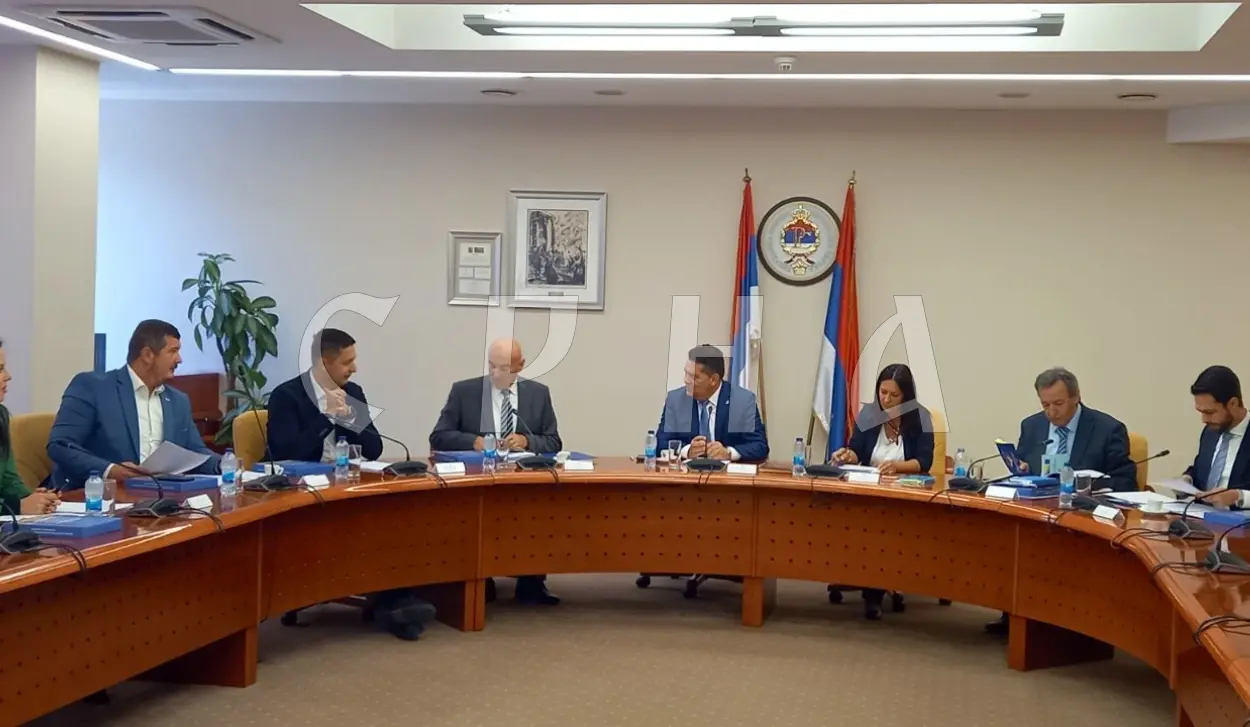
BANJA LUKA, SEPTEMBER 30 /SRNA/ - The Constitutional Affairs Committee of the Republika Srpska National Assembly has asked what the incomplete BiH Constitutional Court to reject all three requests challenging the constitutionality of a Criminal Code provision that makes the public display and promotion of flags and symbols of the so-called Army of BiH a criminal offense, arguing that the challenges are unfounded.
The Committee said the use of the flag and symbols of the so-called Army of the Republic of BiH in Republika Srpska was deeply discriminatory toward members of the Serb people because those symbols evoke emotions and convey messages that have negative consequences for one people, creating fear and distress.
It also argued that there was no positive justification for displaying the flag and symbols of the so-called Army of the Republic of BiH in Republika Srpska, saying instead that they had a provocative effect and were intended to incite interethnic conflict.
The Committee said a flag should command the respect of all citizens, in this case the citizens of an entity as a constitutional unit of BiH.
In the responses adopted for submission to the BiH Constitutional Court in three cases challenging the constitutionality of the relevant provision of the Republika Srpska Criminal Code, the Committee said the requests were substantively unfounded and should be rejected in full.
It said the requests filed by 11 members of the House of Representatives of the BiH Parliamentary Assembly, BiH Presidency Chairperson Denis Bećirović and First Deputy Speaker of the House of Representatives Denis Zvizdić had not been submitted in accordance with the BiH Constitution or the Rules of the BiH Constitutional Court.
The Constitutional Affairs Committee said it was undisputed that the flag covered by the law represented one of the three warring armies in what it described as the previous civil and interethnic war in BiH, and was therefore identified with only one army and one wartime objective.
It also said the flag had been present during the commission of war crimes against Serb civilians.
The Committee rejected what it described as tendentious challenges to the Republika Srpska National Assembly's authority to adopt legislation, saying the law had been enacted formally on the basis of the Republika Srpska Constitution and in accordance with the BiH Constitution.
The National Assembly said the law treated all citizens of Republika Srpska equally and that the individual perceptions of members of constituent peoples regarding the continuity of BiH and their own collective identity could not determine whether the national interest of an entire people had been violated.
It said the contested provision clearly prohibited the display of wartime insignia of the Army of the Republic of BiH and argued there was no basis for claims that it established dominance by one constituent people or diminished the rights of another, since neither the provision nor the law as a whole applied specifically to members of any one constituent people.
The contested provision, it said, sanctions only the actions of individuals who violate the prescribed ban, regardless of ethnicity, and does not target the Bosniak people as a collective.
The ban was universal, applied to everyone and was not discriminatory, the Republika Srpska National Assembly said.
In light of these arguments, the Committee said Article 359b of the Republika Srpska Criminal Code did not violate the BiH Constitution and proposed that the BiH Constitutional Court reject all three requests for constitutional review, as well as requests for interim measures in the cases.
Following the session, Committee Chairperson Nenad Stevandić said the conclusion was that the provision under review had been adopted in accordance with both the Republika Srpska Constitution and the BiH Constitution.
He said the Committee had proposed rejecting both the constitutional challenges and the requests for what he called interim measures, arguing that any attempt to impose a different solution would be the final nail in the coffin of the incomplete BiH Constitutional Court.
"There are already constitutional frameworks and decisions defining the use of Republika Srpska symbols. The BiH Constitutional Court, or any delegate, cannot place itself above that constitutional framework and try to impose solutions that would elevate the symbols of the so-called Army of BiH above everything else," Stevandić said.
He described the requests as extreme and as an attempt to compete over who could go further in attacking Republika Srpska.
"We now have a situation in which, toward the end of the mandate, there is another attempt to reopen the issue of Republika Srpska laws, while these requests represent one of the most problematic forms of pressure on Republika Srpska. Once again, there is an attempt to impose something that has no basis in the constitutional framework and that further deepens divisions," Stevandić said.
He argued that such moves, rather than solving problems, generated hatred and destruction, and said these attempts would fail just as, in his words, Christian Schmidt and others seeking to undermine Republika Srpska and the Dayton Peace Accords had failed.
"Imagine the kind of aggressive anti-Serb narrative involved when you seek to deny the Serb people the right to have flags, an anthem and a coat of arms representing their historical identity. We are talking about symbols with historical foundations that predate modern political and state constructs," Stevandić said.
He also alleged double standards regarding the symbols of the so-called Army of BiH.
"They are trying to deny us the Nemanjić coat of arms, while at the same time symbols of the so-called Army of BiH are displayed on the territory of Republika Srpska. We have never allowed ourselves to carry the flag of the Army of Republika Srpska in the Federation of BiH or impose its symbols there," Stevandić concluded.

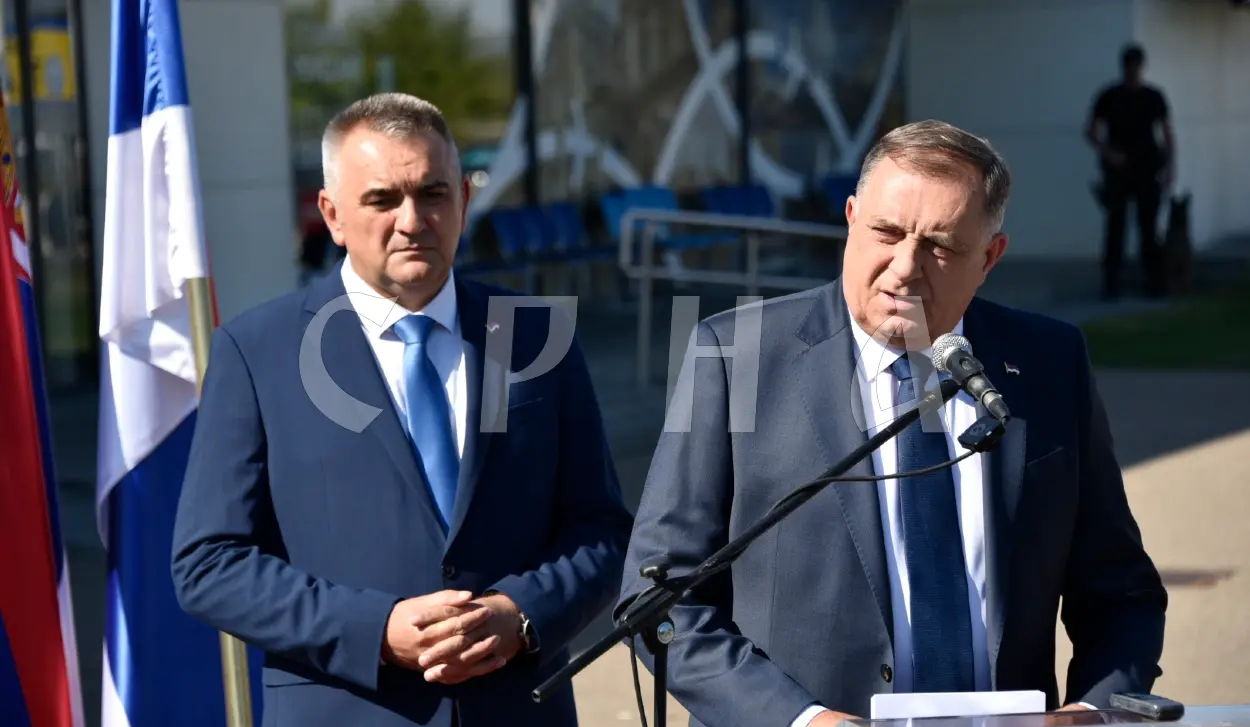
RUSSIAN TEAM THAT DEVELOPED CANCER DRUG MAKES ITSELF AVAILABLE TO SRPSKA
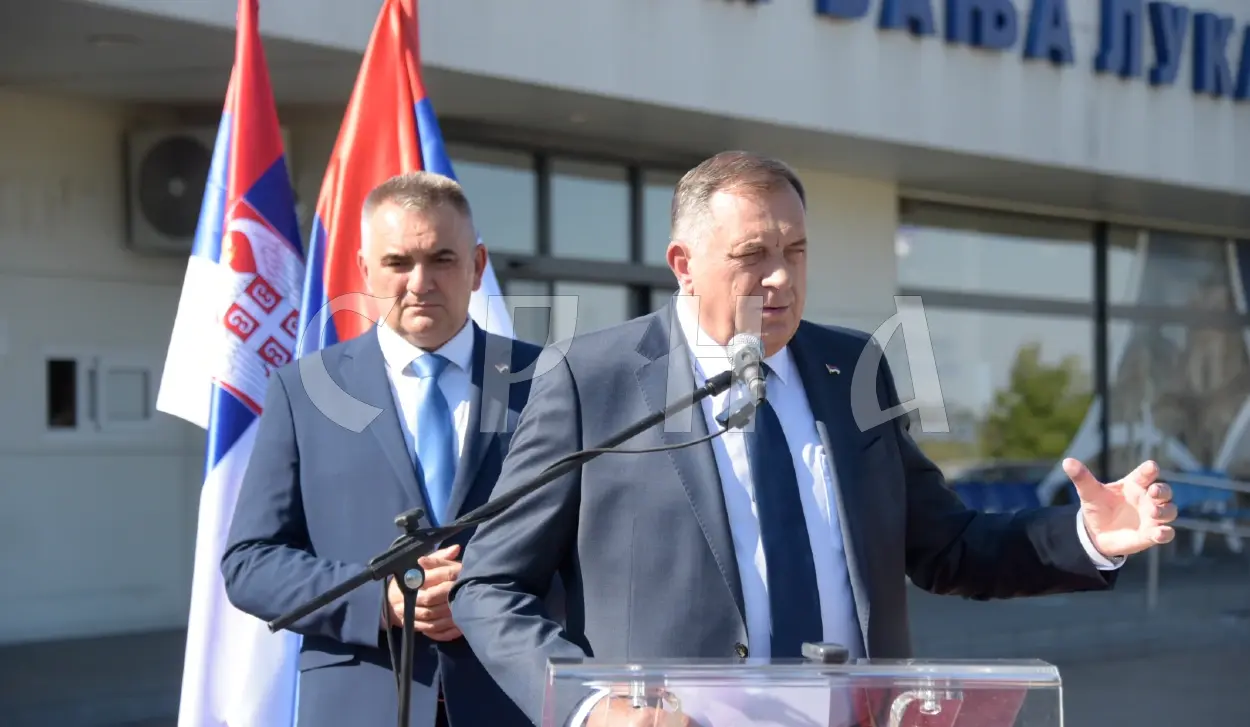
DODIK PROPOSES HIGH-LEVEL ADVISORY TEAM TO REVIEW STRATEGIC TIES
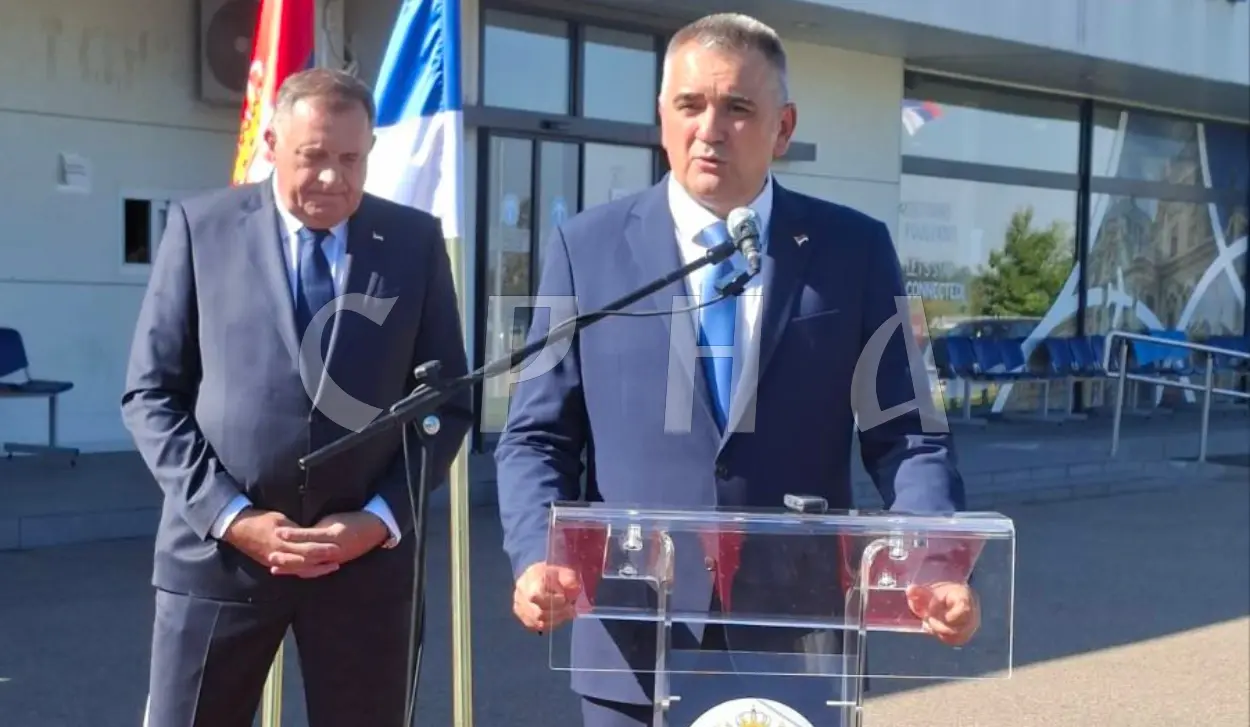
MINIĆ: INITIAL AGREEMENT REACHED ON COOPERATION INVOLVING ORAO COMPANY
DODIK: SRPSKA MUST REMAIN COMMITTED TO ITS RIGHTS, STABILITY AND INTERESTS OF ITS PEOPLE