PEER VIOLENCE IS ADDRESSED REACTIVELY
Republika Srpska - conference
09/29/2026
10:55
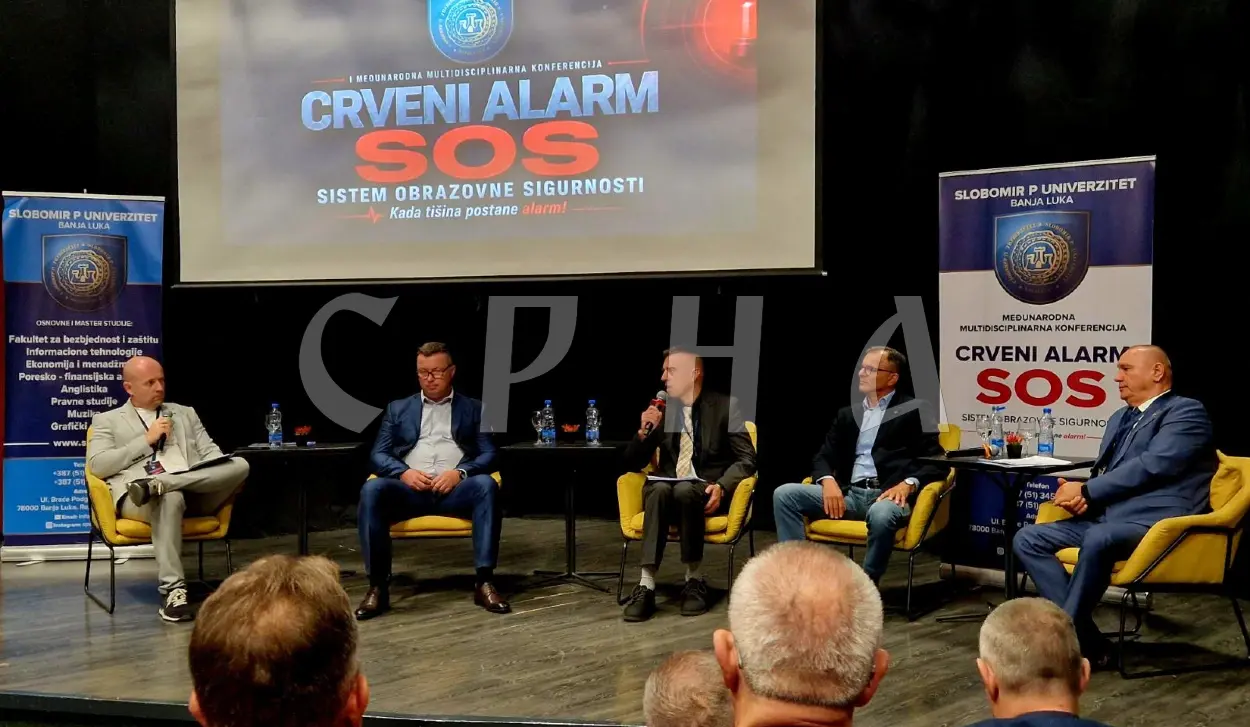
BANJA LUKA, SEPTEMBER 29 /SRNA/ - Peer violence in educational institutions is generally addressed reactively, while broader coordinated preventive action by all actors in the chain of responsibility is lacking, according to one of the conclusions of the first multidisciplinary scientific conference titled "Red Alert - SOS Educational Security System".
Participants at the conference said that peer violence was a serious security problem that had emerged at the global and regional levels and was having a strong impact at the local level.
Slobodan Župljanin, organizer of the international conference in Banja Luka, told SRNA that there was a real need to create and establish a security system in educational institutions and an integrated model for managing the risks of peer violence, in which rights, obligations and responsibilities would be clearly defined.
"Individuals, families, schools, educational institutions, social groups, and the narrower and broader community, that is, all actors in the chain of responsibility, must become involved in this increasingly pressing issue in order to act proactively and preventively," stressed Župljanin, who is also rector of Slobomir P University.
Župljanin said that this problem had taken on the characteristics of a security challenge and risk, which could always escalate into a security threat and incident.
Speaking about Republika Srpska and BiH, it was assessed that the security situation was stable but also fragile, as there were real possibilities for incidents of this kind, particularly given frequent attempts to exploit young people for political purposes and manipulate this population.
Proposals for comprehensive conclusions and measures that the relevant actors should undertake to reduce peer violence to the lowest possible level will be submitted to key actors and competent institutions and organizations.
The conference presented 35 scientific papers in this field, with the participation of numerous authors from Russia, Bulgaria, Italy, Austria, Croatia, Serbia, North Macedonia and Montenegro, as well as Republika Srpska and BiH.