MEMORIAL SERVICE FOR 20 SERBS KILLED IN HRANČA HELD
Republika Srpska - Bratunac - Culture of Remembrance
07/25/2026
12:43
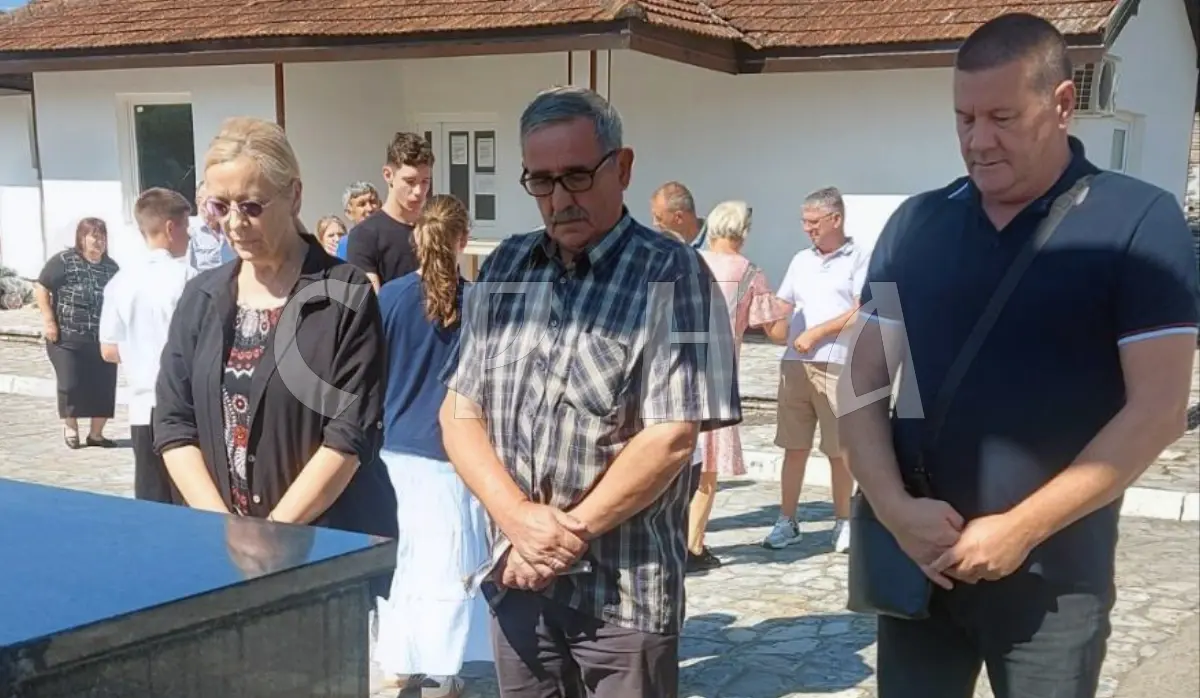
BRATUNAC, JULY 25 /SRNA/ – Flowers were laid and a memorial service was held today at the central memorial cross in the Bratunac town cemetery for 20 Serbs from the village of Hranča who were killed during the Defensive-Patriotic War, seven of whom were killed on this day in 1992 when Bosniak military forces raided the village.
In Hranča, as well as in other villages around Srebrenica and Bratunac, Bosniak military formations killed residents they encountered, looted movable property, and burned houses and other immovable property.
Among the Serb civilians killed in Hranča 34 years ago were three women: Živanka Lukić, Dostana Cvjetinović, and Ljubica Mirković.
Local resident Dragomir Mitrović disappeared 10 days before the attack and has never been found. He was captured by Bosniak soldiers while tending sheep, no trace of him has been found since.
Survivors say the attack began at around 3:30 p.m. with gunfire coming from several directions and that attackers entered the village shouting and yelling, killing people indiscriminately while shouting: "Capture them alive, save ammunition."
Seven villagers were killed in their own yards, while most residents managed to escape through the bed of the Glogovska stream toward Bratunac.
Radojka Filipović, the head of the Bratunac Organisation of Families of Captured and Fallen Soldiers and Missing Civilians, said that no one has been prosecuted for the killings of civilians or for numerous mass crimes committed against Serbs in the Bratunac and Srebrenica area, asking where the justice is.
"A horrific crime took place in that village on this day 34 years ago. Seven villagers were killed, including three women at their homes. The case related to this crime is before the Prosecutor's Office of BiH, but no indictment has yet been filed. The Prosecutor's Office is waiting for the witnesses and perpetrators to die so the case can be closed as if nothing had happened," Filipović told SRNA.
According to her, this is the standard pattern of the Prosecutor's Office of BiH when investigating crimes committed against Serbs.
Filipović emphasizes this clearly demonstrates the judiciary's injustice toward the Serb people.
She further argued that the judiciary of BiH administers justice selectively by shielding perpetrators of crimes against Serbs while obstructing their prosecution, while prosecuting Serbs even in unproven cases.
Filipović recalled that attacks were carried out over several consecutive days on Zagoni, Gornji Magašići, and Hranča.
She also noted that eight Serb civilians were killed in Gornji Magašići on July 20, 1992, and referred to the suffering of Serbs in four villages on St. Peter's Day that year, as well as in many other villages where between 10 and more than 50 residents were killed in a single day without anyone being held accountable.
"It is uncertain whether indictments will ever be filed, and even if they are, whether there will still be surviving witnesses to testify about what happened, who committed the crimes, and how, or whether any perpetrators will still be alive. That proves there is no justice for Serbs in BiH," Filipović said.
She added that the victims' families are deeply dissatisfied with the work of the country's judiciary, its selective handling of war crimes cases, and unequal justice, as for years the Prosecutor's Office and Court have prosecuted Serbs while obstructing indictments and proceedings against those accused of crimes against Serbs, which can be characterized as judicial dictatorship and terror against the families of Serb victims and the Serb people that has lasted for more than two decades.
"We will continue speaking about these crimes and preserving the memory of our victims by passing on the truth about Serbs’ suffering and judicial injustice. Through such selective and biased work, with the support of internstionals, the Bosniak side seeks to write a false history that is unacceptable to the Serb people," Filipović said.
Hranča resident Milenko Mlađenović was seriously wounded today in 1992.
"I suffered a gunshot wound through my lungs, and while I was still conscious I kept asking for water. I thought I was dying and that these were the last moments of my life. Fortunately, no one gave me water in that chaos, and I survived after a long recovery," Mlađenović recalled.
He said the attack on the village came from all directions amid loud shouting, banging, and yelling, creating the impression that there were a very large number of attackers.
"After the war, some Bosniak acquaintances told me that 600 members of Bosniak military formations from Srebrenica and surrounding villages took part in the attack, led by Naser Orić," Mlađenović said.
Gordana Stevanović said her mother, Ljubica Mirković, was shot in the back about 200 meters from her house while fleeing toward Bratunac.
A group of men resisted until reinforcements arrived from Bratunac, allowing several seriously wounded villagers to be rescued, since the attackers did not spare any Serbs they caught, regardless of whether they were civilians or children.
In Hranča, in addition to those killed on this day, 21 Serbs were wounded and 50 Serb-owned housed were burned.


DODIK: FLIGHT BAN FOR PRIME MINISTER MACUT - ATTACK ON ALL SERBS

OFFICE WORKERS INCREASINGLY BRING LUNCH FROM HOME TO SAVE MONEY
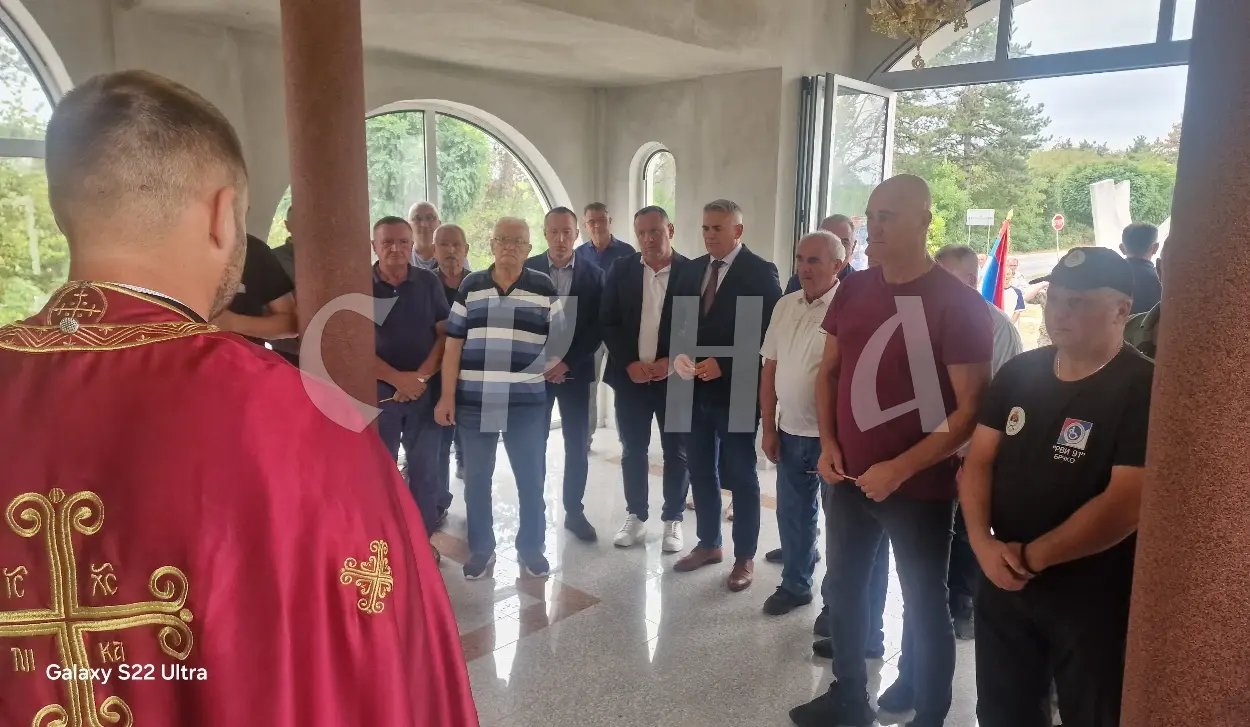
MILIĆ: BUKVIK - ONE OF LARGEST SITES OF MASS KILLINGS OF SERBS

MACUT: FLIGHT BAN IS REGRETTABLE, WILL NOT PREVENT ME FROM COMING TO BANJA LUKA