KARAN: STABILITY OF SRPSKA RESTS ON STRONG INSTITUTIONS, DAYTON AGREEMENT AND THE WILL OF THE PEOPLE
Republika Srpska - president - interview
08/18/2026
12:34
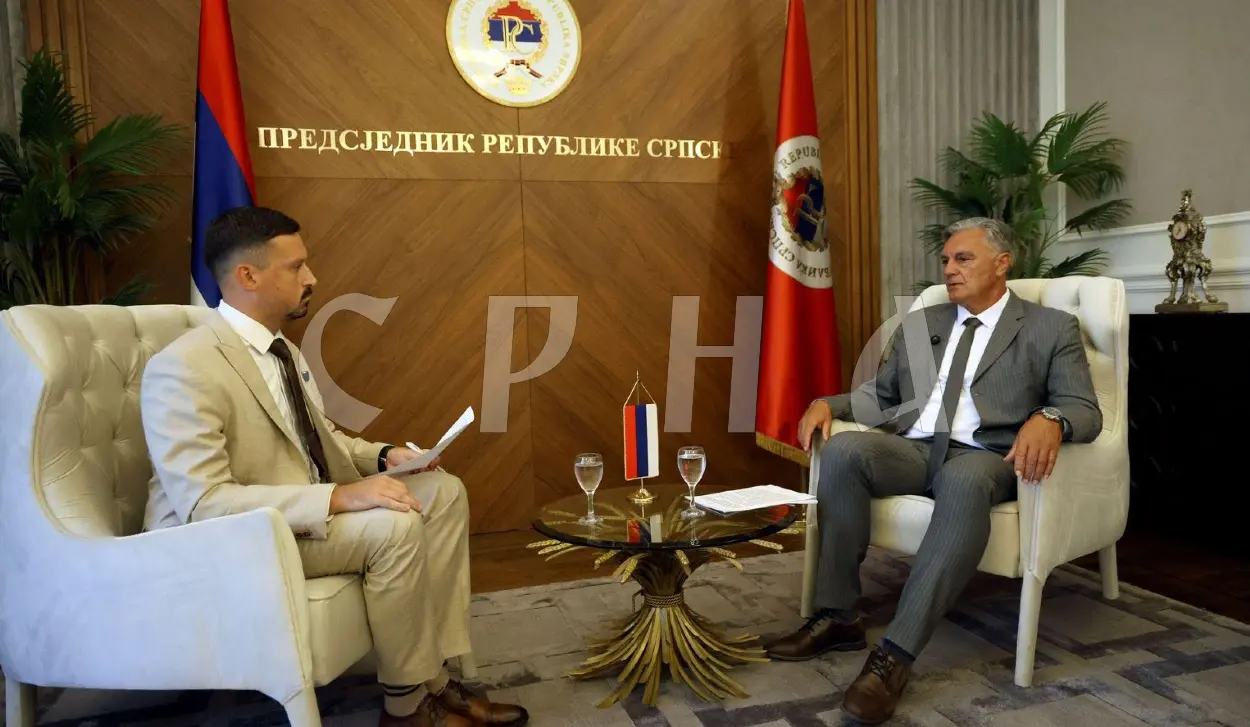
Republika Srpska is stable today, primarily thanks to institutions capable of responding to all challenges… It is also of great importance that Srpska's arguments are reaching the international public, including the US academic community, to an ever greater extent… The government, headed by Prime Minister Savo Minić, is doing an excellent job, tackling problems head-on
Interview by: Darko ŠAVIJA
BANJA LUKA, AUGUST 18 /SRNA/ - In an interview with SRNA, Republika Srpska President Siniša Karan said that the overall situation in Srpska should be viewed in terms of its strength, institutional capacity, and ability to face problems and find the best solutions.
"Generally speaking, we can say that the situation in Republika Srpska is stable politically, economically and in terms of security, and that this stability is based precisely on the stable institutions of our system," Karan stressed.
He said that the stability of the institutions primarily refers to their capacity and ability to fulfill their constitutional and legal responsibilities in all respects.
"When we talk about the legislative branch, the National Assembly of Republika Srpska, its institutional capacity has enabled it to provide legal responses to all the challenges facing Republika Srpska. At the same time, the Government of Republika Srpska, as the primary bearer of executive power, has provided fully adequate responses in these turbulent times through its legislative initiatives and subsequently through the implementation of those laws," Karan stressed.
He assessed that the institutions of Republika Srpska have found answers and solutions in all areas of society, adding that it is particularly important that these solutions are systemic and long-term.
"The solutions are already evident in areas ranging from veterans' rights and workers’ rights to certain social rights for all groups - women, children, school-age children - and extending to all segments of our society," Karan said.
STABILITY OF SRPSKA RESTS ON PEOPLE'S WILL AND DAYTON AGREEMENT
The President of Republika Srpska stressed that the stability of Republika Srpska, both today and throughout its more than three decades of existence, rests on the electoral will of the people, based on which the institutions of Republika Srpska are formed.
He emphasized the importance of Republika Srpska's economic and political stability and self-sufficiency, as well as preserving its constitutional and legal position within BiH under the framework of the Dayton Agreement.
"The basic principles we seek to uphold and affirm, and which I believe are the only possible ones, are parity, consensus and the division of powers when it comes to BiH as a whole," Karan said.
He added that Republika Srpska insists on preserving its constitutional position, as well as the status of the constituent peoples and the two entities.
"We can conclude that all these aspects affirm the statement that Republika Srpska is today a strong entity economically, politically and institutionally," Karan said.
AMERICAN ACADEMIA IS INCREASINGLY HEARING SRPSKA'S ARGUMENTS
Speaking about a recently published paper by American authors in a Harvard academic journal that raises questions about the effects of US engagement in BiH after Dayton, Karan stressed that it is significant that questions that Republika Srpska has been raising for years are now being discussed in US academia.
"First of all, we must say that for all these 30 years, Republika Srpska has faced unjustified pressure and unjustified attacks," Karan said.
He pointed out that for most of this period, Republika Srpska has been accused of undermining the Dayton Peace Agreement, even though it has fought to uphold its principles and the Dayton Constitution.
"Consequently, a completely wrong and negative perception and narrative developed that was directed against Republika Srpska," Karan said.
According to him, a stereotype about Republika Srpska was created, but papers by American authors show that the situation is changing.
"It is changing in the sense that Republika Srpska’s arguments, the key arguments we have been repeating for 30 years, are beginning to be heard and reach other places, including the United States, leading to a different understanding of what is happening in BiH," Karan stressed.
He emphasized that the efforts of Republika Srpska officials on the international stage have helped ensure that Republika Srpska's arguments are heard beyond BiH.
"This is a major achievement for Republika Srpska. All of our arguments, both today and throughout all these years, have always been grounded in and based on the Constitution and the Dayton Peace Agreement, and nothing beyond that," Karan stressed.
He said this contributes to the affirmation of Republika Srpska's policies and greater recognition of its positions.
INTERVENTIONISM BY HIGH REPRESENTATIVES UNDERMINED DAYTON AGREEMENT
Commenting on criticism of the role of the Office of the High Representative /OHR/ published in a Harvard academic journal, Karan stressed that these are precisely the issues Republika Srpska has been highlighting for years.
"We have concluded that over the past 30 years, through the unconstitutional and anti-Dayton actions of all the high representatives, including the one who was not a high representative and who operated here without being invited and without any authority, their interventionism has in fact sought to create an anti-Dayton concept of BiH," Karan said.
According to him, interventionism undermined the principles of the Dayton Agreement - parity, consensus and the division of powers - and moved BiH towards unitarization.
"Personally, I believe that over all these 30 years, the main dispute and fundamental disagreement among the political elites in BiH, representing the Bosniak, Serb and Croat peoples, has been precisely over how BiH is structured as a state," Karan said.
He explained that, under the Dayton Peace Agreement, BiH has a federal structure with strong elements of confederation.
"In this regard, I believe that the interventionism identified by the American authors has produced no results over the past 30 years. On the contrary, after 30 years, we are facing the same problems we had 30 years ago, even compounded in certain respects by attempts to undermine the sovereignty and strength of the entities and the three constituent peoples," Karan said.
He added that interventionism has moved in the direction of undermining the established Dayton-based structure of the state and steering it towards a unitary and civic model.
"Today, they have realized that this concept is not good. Republika Srpska does not accept it. At least two of the constituent peoples do not accept it," Karan stressed.
BONN POWERS ARE FABRICATED; UNITARIZATION OF BiH IS DENIAL OF DAYTON AGREEMENT
Speaking about the views of the American authors on the need to abolish the Bonn powers, Karan stressed that these are "fabricated powers".
"The very fact that they arrived at such a conclusion through their analysis means that, directly or indirectly, they have already rejected the Bonn powers, which in fact do not exist," Karan pointed out.
He said that the Bonn powers, introduced after the Dayton Peace Agreement in 1997, originated from an invented body - the Peace Implementation Council.
"They were precisely intended to give some form of legitimacy to a process that began immediately, and that process is called unitarization," Karan said.
Stating that the unitarization of BiH is a denial of the Dayton Agreement, the President of Republika Srpska stressed that those advocating a civic, unitary state are directly undermining the Dayton Peace Agreement.
He said that BiH is a multi-ethnic country with three constituent peoples and two entities, and that its unitarization would amount to a denial of the state itself, its Constitution and the Dayton Peace Agreement.
HIGH REPRESENTATIVES' DECISIONS ON SRPSKA'S POWERS ARE NULL AND VOID
Karan also addressed the American authors' view that high representatives have never had the authority to enact laws and that such acts are therefore null and void, stressing that Republika Srpska's principled policy recognized all these processes from the outset as anti-Dayton and unconstitutional.
He said that high representatives have issued more than 900 different decisions aimed at changing the country’s constitutional structure in the direction of unitarization.
"I often say that there are happy and unhappy federal states. The happy ones are those that have managed to resolve these three principles on which the United States and all modern federations in the world are based," Karan said, stressing that these principles are parity, consensus and the division of powers.
He said that the greatest harm caused by the interventions of the high representatives was their attack on Republika Srpska’s powers.
"Republika Srpska's powers were taken away without following the constitutional procedure prescribed by Annex 4," Karan said.
He stressed that the Constitution provides for the possibility of additional powers, but only with the consent of all sides, namely the constituent peoples and the entities.
"From a procedural, substantive, constitutional and Dayton perspective, all those acts issued by the high representatives outside the scope of Annex 10 are null and void," Karan said.
COOPERATION WITH NEW U.S. ADMINISTRATION OPENS UP ECONOMIC AND POLITICAL SPACE
Regarding the possibility of closer cooperation between Republika Srpska and the administration of US President Donald Trump, Karan told SRNA that the world is changing rapidly and that the previous unipolar order no longer exists.
According to him, Republika Srpska has recognized the current moment and is seeking, amid global changes, room to advance its interests.
"One of them is cooperation with the new US administration, which President Milorad Dodik has worked to build over an extended period of time," Karan said.
He said that SNSD leader Milorad Dodik, Serb member of the BiH Presidency Željka Cvijanović, and acting director of the Republika Srpska Office for International Cooperation Ana Trišić-Babić have made major efforts to promote Republika Srpska's positions.
He added that the goal is to create a favorable position for opening up economic and political space for dialogue and cooperation, and for Republika Srpska to be recognized as such a place, rather than having a false narrative about it propagated.
He assessed that an excellent foundation has been created for Republika Srpska to further strengthen its position through talks and agreements, primarily in the economic sphere.
Speaking about his most important task as President of Republika Srpska, Karan said that the key responsibility, not only of the President but of all institutions, is to reflect stability in Republika Srpska and, within their constitutional powers, deliver what citizens expect from them.
He stressed that the strength of institutions must have a direct impact on people's lives.
INFRASTRUCTURE PROJECTS - MOST VISIBLE RESULT OF COOPERATION WITH SERBIA
Regarding cooperation with Serbia, Karan said that relations between Republika Srpska and Serbia are characterized by numerous historical, national and identity-based ties.
"We are one people. There are identity characteristics that define us as one. That is essentially what we are," Karan stressed, also recalling the Declaration of the All-Serb Assembly and the Agreement on Special Parallel Relations between Republika Srpska and Serbia, which covers the economy, social affairs, healthcare, sports, culture and other areas.
As the most visible result of the cooperation, he highlighted infrastructure projects.
"Perhaps the most visible and significant aspect is the large number of infrastructure projects and facilities being built throughout Republika Srpska, as well as in the Federation of BiH, where the Serb population lives," Karan said.
He assessed that the relationship between Serbian President Aleksandar Vučić and President Dodik has contributed to making the cooperation visible to citizens, and that it is best reflected in concrete projects, whether it is a school, a bridge, a road, a motorway or any other infrastructure project.
Karan also spoke positively about the work of the current Republika Srpska Government, headed by Prime Minister Savo Minić, saying that it is doing an excellent job, not only in cooperation with Serbia but also in other areas, where, as he put it, it tackles problems head-on rather than shying away from them and finds excellent and effective solutions.
REPUBLIKA SRPSKA'S VOICE IS BEING HEARD AGAIN AROUND THE WORLD
Speaking about the misconceptions about Republika Srpska that persist among parts of the international community and the public, Karan pointed out that a negative narrative that has been built over decades still exists.
According to him, part of the international community that supported the interventionism of the high representatives had to create a narrative portraying Republika Srpska as being under attack in order to maintain that approach.
"Thirty years on, there has been a complete clash between the Dayton and anti-Dayton approaches. Republika Srpska represents the Dayton approach. The others represent the anti-Dayton approach," Karan said.
He assessed that the situation has changed because Republika Srpska's arguments are now being heard more widely.
"It would have been unimaginable five or ten years ago to read something like what the American authors have now written, but today it has become a reality, both our reality and theirs," Karan stressed.
The President of Republika Srpska concluded that affirming the principles of the Dayton Agreement, Republika Srpska's constitutional position, and the principles of constitutionality and legality is the way to counter unconstitutional and anti-Dayton actions.

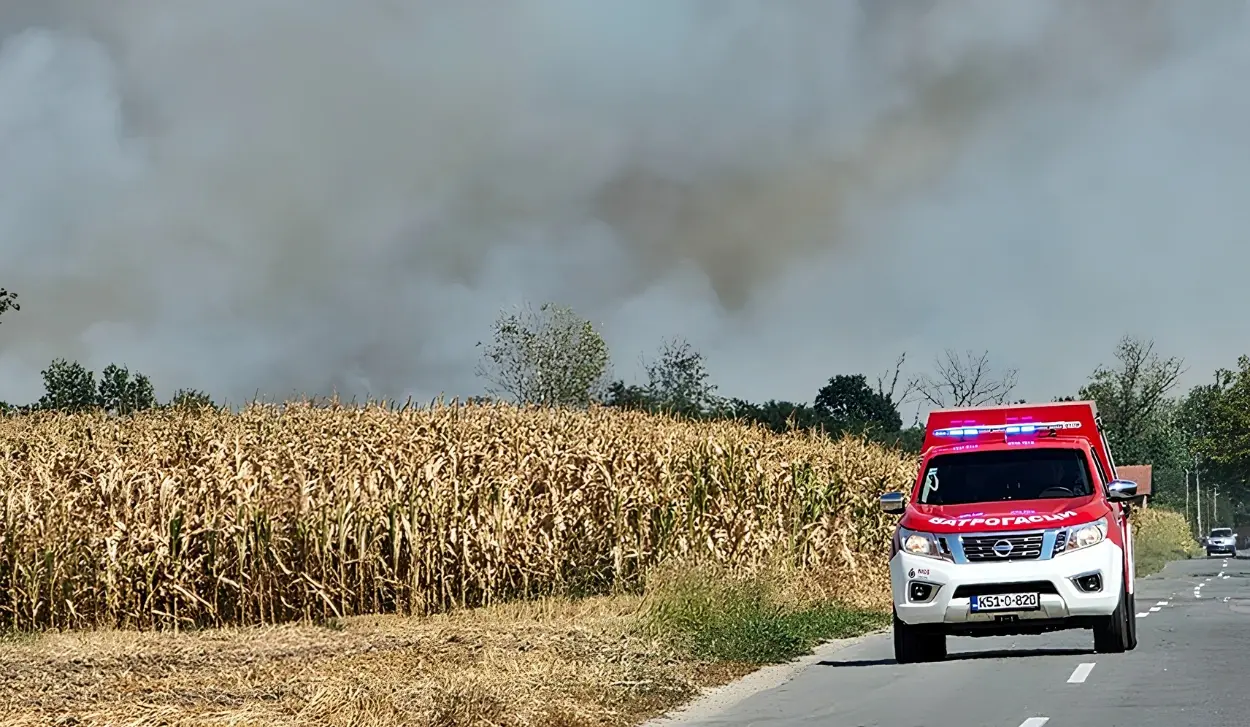
TRNINIĆ: RAIN EASED PROBLEMS CAUSED BY WILDFIRES
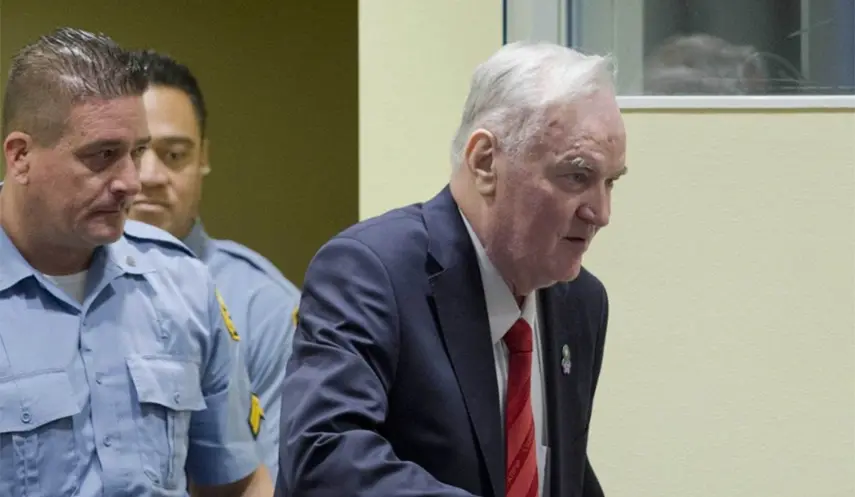
VUČIĆ: INHUMANE TREATMENT OF GENERAL MLADIĆ, WHO IS DE FACTO ON HIS DEATHBED
AMIDŽIĆ: IT IS A LIE THAT GROWTH PLAN FUNDS ARE FREE FOR SRPSKA
COOPERATION WITH INTERNATIONAL CREDIT INSTITUTIONS - PROOF OF SRPSKA'S SOLVENCY AND CREDIBILITY