DODIK: PREBILOVCI - HERZEGOVINIAN VILLAGE THAT LIVES ON, DESPITE ITS EXECUTIONERS' INTENT TO ERASE IT FROM THE FACE OF THE EARTH
Republika Srpska - culture of remembrance
08/04/2026
18:07
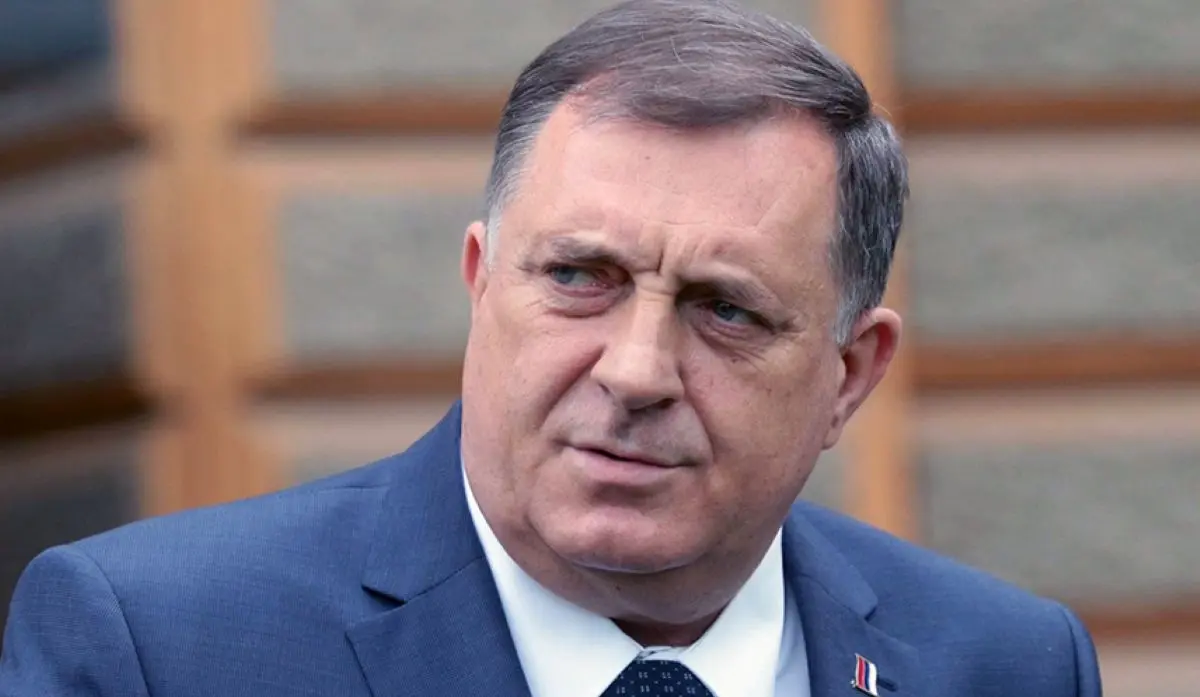
BANJA LUKA, AUGUST 4 /SRNA/ – President Milorad Dodik says Prebilovci is a Herzegovinian village that obliges, warns, and calls upon us never to forget, despite the fact that the Ustasha executioners intended to destroy it completely and extinguish all life there, so that the sound of farming tools, the songs of Serb Herzegovinian peasants, children's laughter, wedding celebrations, and church bells would never again be heard.
Ahead of the commemoration marking the 85th anniversary of the Ustasha massacre of Serbs in Prebilovci, near Čapljina, to be held over the next two days, Dodik told SRNA that Ustasha forces under the command of Ivan Jovanović, AKA Crni/Black, carried out an unprecedented massacre in the village between August 6 and 11, 1941, killing 826 ethnic Serbs, mostly women, children, and the elderly, out of a total population of 994 at the time.
He pointed out that 54 Serb households, families that had lived there for centuries, were wiped out in the massacre.
"After entering the village, the Ustasha began searching homes, rounding up residents, raping women, young women, girls, and looting property. Their orgy of sadism and brutality against defenseless women, especially girls between the ages of 12 and 15, lasted for hours," Dodik said.
He recalled that the only person who survived the massacre was Mara Bulut, who later testified that the Ustasha took babies from their cradles and smashed their heads against walls in front of their mothers.
According to Dodik, the scale of the atrocity is reflected in the fact that the first child in Prebilovci reached school age only in 1956, while the first young man from the village was called up for military service in 1967.
"It is difficult to find words capable of describing the magnitude of this suffering of Serbs, which shocked even Benito Mussolini's generals. One of them, Alessandro Luzana, sent a report stating that schoolteacher Stana Arnautović had been raped in front of her pupils, that girls as young as eight, twelve, and fifteen had also been raped, and that Herzegovina, Bosnia, Lika, and Dalmatia were full of Serb villages like Prebilovci," Dodik recalled.
He said that Prebilovci is not only a place of the suffering of Serbs but also an example of the abyss to which humanity can sink when hatred overcomes compassion and empathy.
"When we say word Prebilovci today, we all think of the Herzegovinian pits filled with the bodies of innocent Serbs, whose blood the soil itself could no longer absorb, so that the water from nearby springs ran red for days. But what the dark minds of Ivan Jovanović Crni and the Ustasha never understood, and never will, is the nature of the Herzegovinian Serb - his defiance, pride, and dignity. Whoever does not understand what Prebilovci is, what Herzegovina is, and who the Herzegovinians are, cannot understand the Serb people - proud, defiant, and dignified, ready to rise from the ashes," Dodik stressed.
He noted that on August 4, 1991, the remains of 4,000 Serbs from Herzegovina who were victims of the Ustasha genocide during the Second World War, including those killed in Prebilovci, were interred in a memorial ossuary, but, he added, even the dead bothered them, so in June 1992, descendants of the killers blew up the memorial ossuary.
"After Serbs returned to Prebilovci following the year 2000, the remains of the Prebilovci New Martyrs were gathered and buried in the crypt of the Church of the Resurrection of Christ, built in the style of the Church of the Holy Sepulchre in Jerusalem, a symbol of the Resurrection and of life," Dodik stressed, noting that the church was built with, among other support, his assistance.
He emphasized that from the shattered bones and the ruins of the destroyed memorial ossuary rose the Church of the Resurrection of Christ, standing as a monument to the triumph of life over death and to the victory of the people of Prebilovci over Ustasha evil.
"To visit Prebilovci today means to visit a place where death was defeated and life was resurrected. Every stone in that village reminds us that we must be as steadfast and strong as the Herzegovinian karst and that we must never forget this holy place, because forgetting kills for a second time.
"It is our patriotic duty to regard Prebilovci as a covenant, a warning, and a source of pride, and to teach our children about the holy martyrs of Prebilovci, because as long as their memory lives within us, no one can erase us. This is the example of a small but great village that others wanted to wipe from the face of the earth, yet it has become one of our brightest and holiest places," Dodik told SRNA.
He stressed that remembrance is not revenge, but a debt owed to ancestors who never had the chance to grow old, raise children, or dream of the future. It is also a debt to history, which teaches that forgetting opens the door to the repetition of crimes.
"Today we have our own republic - Republika Srpska, with strong and stable institutions that guarantee our existence and survival, where we are on our own home, and that is how it will remain. Only through unity, courage, and clear policies can we preserve Srpska, and with it our present and our future," Dodik said.


TRUCKS CARRYING VIDEO BILLBOARDS DRIVE THROUGH NEW YORK SHOWING LIVES OF SERBS IN KOSOVO AND METOHIJA
CHILDREN - THE GREATEST VICTIMS OF ADVANCES IN MILITARY TECHNOLOGY

NEW GREENLAND AGREEMENT TO BE SIGNED TOMORROW

BROTHERLY CONGRATULATIONS TO UNITED RUSSIA, MEDVEDEV AND PUTIN ON ELECTION RESULT