BOSNIAK ATTEMPTS TO UNDERMINE REPUBLIKA SRPSKA THROUGH JUDICIAL INSTRUMENTALIZATION
Republika Srpska - UN Security Council - report
05/06/2026
09:10
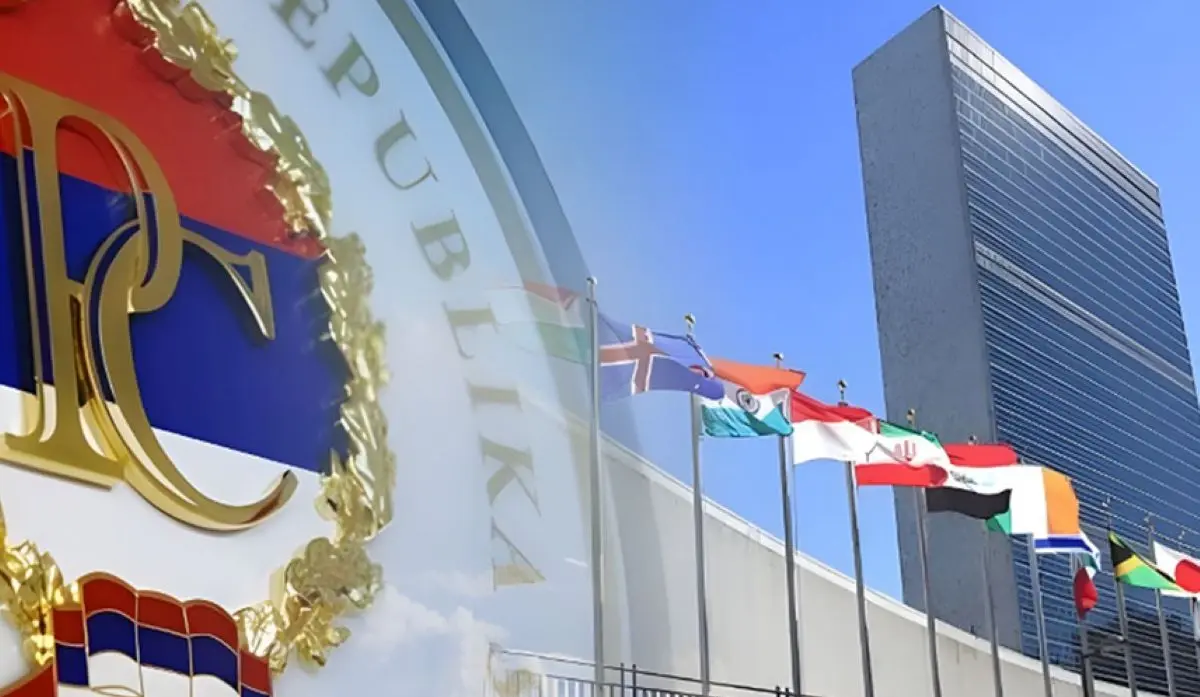
BANJA LUKA, MAY 6 /SRNA/ – The Bosniak political establishment disputes the autonomy guaranteed to Republika Srpska by the BiH Constitution and therefore continuously seeks to delegitimize the democratic will of citizens and, in other ways, destabilize and harm Republika Srpska, it is stated in the 35th report of the Government of Republika Srpska to the UN Security Council.
The Report points out that, on the other hand, there are no similar attempts by Republika Srpska to interfere in the governance of the Federation of BiH.
"A politicized judiciary dominated by Bosniak personnel last year prosecuted and convicted the democratically elected President of Republika Srpska on the basis of a fictitious 'law' that was never adopted by the Parliamentary Assembly of BiH, as explicitly required by the Constitution", the Report states.
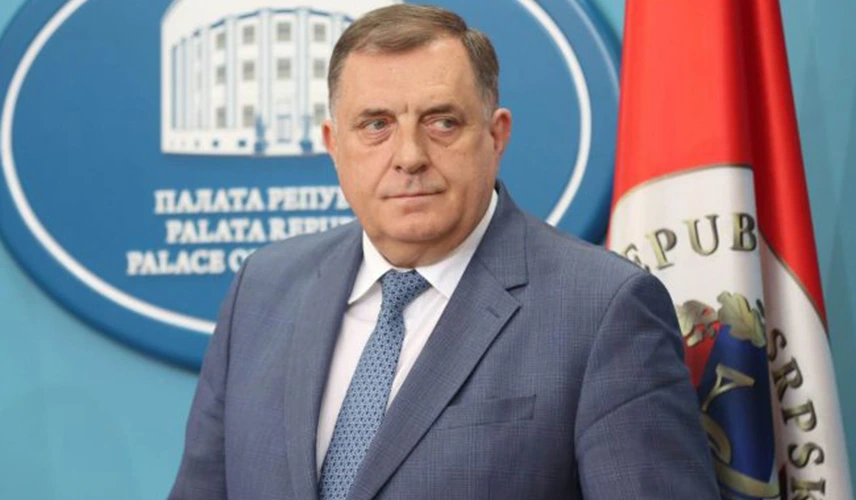
The document says that the politicized Central Election Commission /CEC/ of BiH ignored the unlawfulness of that verdict and ordered that the then President of Republika Srpska, Milorad Dodik, be stripped of his mandate and that early presidential elections be held in Republika Srpska.
In the early presidential elections held in Republika Srpska in November 2025, Siniša Karan won a convincing victory, but such an outcome caused significant dissatisfaction among Bosniak officials in Sarajevo, given that he comes from the same party as Dodik.
"Despite the fact that there was not a single preliminary report indicating irregularities on election day, and that only 13 formal complaints were submitted by observers and polling boards, the CEC of BiH, in the days following the elections, under pressure from Bosniak media and political structures, refused to allow the newly elected president to assume office", the Report reminds.
The document states that, in an attempt to change the election result, as many as 77 days after the early elections, the CEC of BiH annulled the results at 136 polling stations due to "irregularities" and ordered repeat voting at those locations.
The Report notes that Karan also won the repeat vote by an even larger margin, which ultimately forced the CEC of BiH to allow him to take office.
The document emphasizes that the persistent interference of the CEC of BiH in the electoral will of the citizens of Republika Srpska fueled tensions, deepened the political crisis in BiH and undermined its democratic order.
The CEC of BiH also came under criticism from the broader public due to irregularities related to the procurement of voting technology that potentially threatens the integrity of the electoral process.
CHALLENGING THE SRPSKA GOVERNMENT
The Report informs the UN Security Council that the Bosniak political establishment on several occasions attempted to provoke a crisis in Republika Srpska by seeking to annul the formation of the Srpska Government.
Bosniak politicians first claimed that the formation of the Government of Republika Srpska in 2025, during President Dodik's mandate, was illegitimate, referring to his conviction under Schmidt’s "law" and requested that the BiH Constitutional Court challenge its appointment.
In order to prevent the creation of a legal vacuum, that Government of Republika Srpska resigned, after which it was reappointed by the then acting President of Republika Srpska.
Bosniak politicians then requested that the BiH Constitutional Court also declare that government illegitimate.
To once again avoid the creation of a legal vacuum, the Report reminds, the Government of Republika Srpska resigned once more and was reappointed, this time proposed by the new President of Republika Srpska, Siniša Karan.
ACTIONS OF UZUNOVIĆ AND THE HJPC OF BIH - EXAMPLES OF BOSNIAK INSTRUMENTALIZATION OF THE JUDICIARY
The Report points to the actions of BiH Court Judge Sena Uzunović and the High Judicial and Prosecutorial Council /HJPC/ of BiH in efforts to challenge the SNSD leadership as examples of attempts by the Bosniak political establishment to instrumentalize the judiciary in order to achieve its political goals and control political processes and governance in Republika Srpska.
Judge Uzunović, who convicted Republika Srpska President Milorad Dodik, after the termination of her jurisdiction in that case, abused her position by conducting a personal and extra-institutional campaign against him, the 35th report of the Government of Republika Srpska states.
Despite Dodik's conviction and removal from the position of President of Republika Srpska, the Bosniak political establishment was not satisfied, particularly because he remained at the head of SNSD, the leading party in the ruling coalition in Republika Srpska.
In October 2025, after the CEC of BiH refused to remove Dodik from the position of SNSD president, Uzunović, acting completely outside court procedures and her jurisdiction, sent a letter to this commission, presenting herself as if addressing it on behalf of the BiH Court and demanding that the decision be altered.
"In the letter, she ignores the fact that the Appellate Division of the BiH Court had already decided that Dodik could remain at the head of the party, as well as that in any case the CEC has no authority regarding the internal organization of political parties. After the attempt to pressure the CEC of BiH failed, in March this year Uzunović sent a similar letter to the Court of General Jurisdiction in Banja Luka, again unfoundedly claiming that Dodik must be removed from the position of SNSD president", the Report states.
The Report of the Government of Republika Srpska emphasizes that it is extremely unusual and inappropriate for a judge to make such demands outside formal court proceedings.
The continuous campaign by Uzunović, the Government of Republika Srpska warns, clearly indicates her political bias and calls into question her impartiality in the proceedings themselves.
The body responsible for discipline in the judiciary - the High Judicial and Prosecutorial Council /HJPC/ of BiH - did not react to the unprecedented letter sent to the CEC of BiH. On the contrary, acting outside its legal authority, the HJPC itself sent a letter to the Court of General Jurisdiction in Banja Luka asking what had been undertaken regarding the 'removal /of Dodik/ from the register of political parties'”.
The Report points out that this was highly inappropriate, given that the HJPC of BiH is explicitly prevented by law from influencing individual court proceedings or expressing views on the merits of cases.
The actions of the HJPC represent a clear example of attempts by the Bosniak political establishment to instrumentalize the judiciary in order to achieve its political goals and control political processes and governance in Republika Srpska, it is stated in the Report of the Government of Republika Srpska submitted to the UN Security Council.


TENNIS PLAYER SARA TRIPIĆ HAILED AS ONE OF THE MOST PROMISING TALENTS

ŠTRBAC: CROATIA GOT WHAT IT ASKED FOR - IT HAS BECOME EUROPE’S DUMPING GROUND
ŠPIRIĆ: NEW TECHNOLOGIES AND OLD MISCONCEPTIONS
SUPPORT FOR FAMILIES, VETERANS, SPORTS AND YOUTH SHOWS SRPSKA IS MAKING PROGRESS