SON OF VOJVODA MIŠIĆ, CHILDREN OF DRAŽA MIHAILOVIĆ, ACTOR VLASTA VELISAVLJEVIĆ WERE AMONG THOSE HELD ON GOLI OTOK
Former Yugoslavia - gulag
07/08/2026
09:19
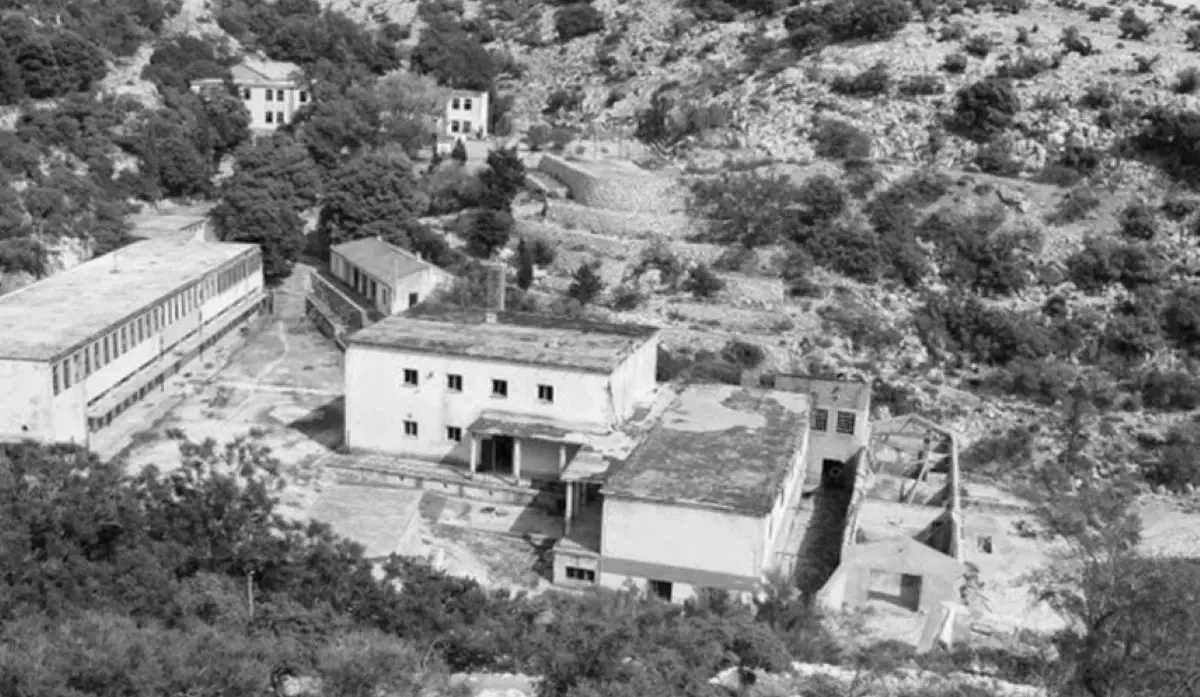
BIJELJINA, JULY 8 /SRNA/ - The Goli Otok system of Yugoslav gulags, one of the most brutal measures in history for dealing with political opposition, was established in 1949, and the first prisoners began arriving on 9 July.
Among the prisoners of the Goli Otok camp system were not only communists and Stalinists, partisan national heroes, Spanish Civil War veterans, and state officials, but also prominent figures such as Vojislav Mišić, the son of the renowned Serbian Duke Živojin Mišić, as well as Gordana and Branko Mihailović, the children of General Dragoljub Mihailović, commander of the Yugoslav Army in the Homeland.
One of the prisoners was also actor Vlastimir Vlasta Velisavljević, who was imprisoned for attempting to flee to America.
The brutality of this camp system was evident not only in the widespread physical abuse inflicted on inmates, but also in the psychological torture that pushed the humiliation of human dignity to unimaginable limits.
Goli Otok represented the death of human dignity.
This political prison camp was established after the model of Stalin's "Solovki" Gulag system for punishing those who were disobedient.
Goli Otok was designed as a gladiatorial arena in which the then UDBA, or OZNA, organized mutual torture and killings among starving and exhausted prisoners, applauding such spectacles.
SERBS MADE UP MORE THAN 80 PERCENT OF INMATES
Between 1948 and 1956, around 16,000 political prisoners passed through Goli Otok, arriving there without trial or the right to a defense.
The Goli Otok camp system also included the women’s camp on the island of Sveti Grgur, as well as the camps at Ugljan, Bileća, Stolac and Ramski Rit; prisons in Požarevac and Stara Gradiška were also incorporated into the system. After 1956, Goli Otok was transformed into a prison.
The average age of Goli Otok prisoners was 36, and geographically, most were from Montenegro, Serbia, and BiH. More than 80 percent of them were Serbs.
The mortality rate was extremely high, and according to testimonies, 260 prisoners died in a single year.
A large number of prisoners also died from a typhus epidemic in 1951.
No records were kept on the causes of death, but the fact remains that many also took their own lives as a result of unimaginable torture.
FIVE CATEGORIES OF INMATES
There were five categories of prisoners on Goli Otok.
The first category consisted of old communists, Spanish Civil War veterans, and participants in the Soviet October Revolution. The second included officials of the Communist Party of Yugoslavia, while the third consisted of lower-level political prisoners.
The fourth category was made up of people who had no connection whatsoever with politics or communism and knew nothing about it, but who were convicted based on someone’s report or, rather, false accusation.
It happened that completely innocent people ended up in that darkest place of torture for telling jokes or making a comment, watching a Russian film, or writing a school essay.
The fifth category consisted of prisoners placed there by the police as spies, and their role was not known even to the interrogators.
"SPANISH WATER" AND OTHER METHODS OF TORTURE
Torture and beatings began immediately upon arrival. New prisoners were forced to pass through a "welcome" gauntlet made up of already "re-educated" inmates who beat them to prove that they had changed their views. Those who had not yet "revised" their stance were only allowed to spit on the newcomers, shouting: "Boo, gang!", "Down with the traitors!", "Kill Stalin's servants!"...
The gauntlet usually consisted of 2,500 people. Goli Otok prisoners were tortured using various methods - starvation, thirst, and carrying stones from one side of the island to the other under the scorching sun.
The so-called "Spanish water" method is also well known - with the prisoner lying down, water was poured over a blindfold covering the eyes, nose, and mouth, causing the person to feel as though they were dying and making them ready to confess to anything.
Prisoners were tied by their genitals and dragged along the ground, while the peak of psychological torture was the deprivation of sleep.