KOVIĆ: SERBS SHOULD MAKE PREBILOVCI A CORNERSTONE OF THEIR IDENTITY
FBiH – Čapljina – culture of remembrance
08/06/2026
09:40
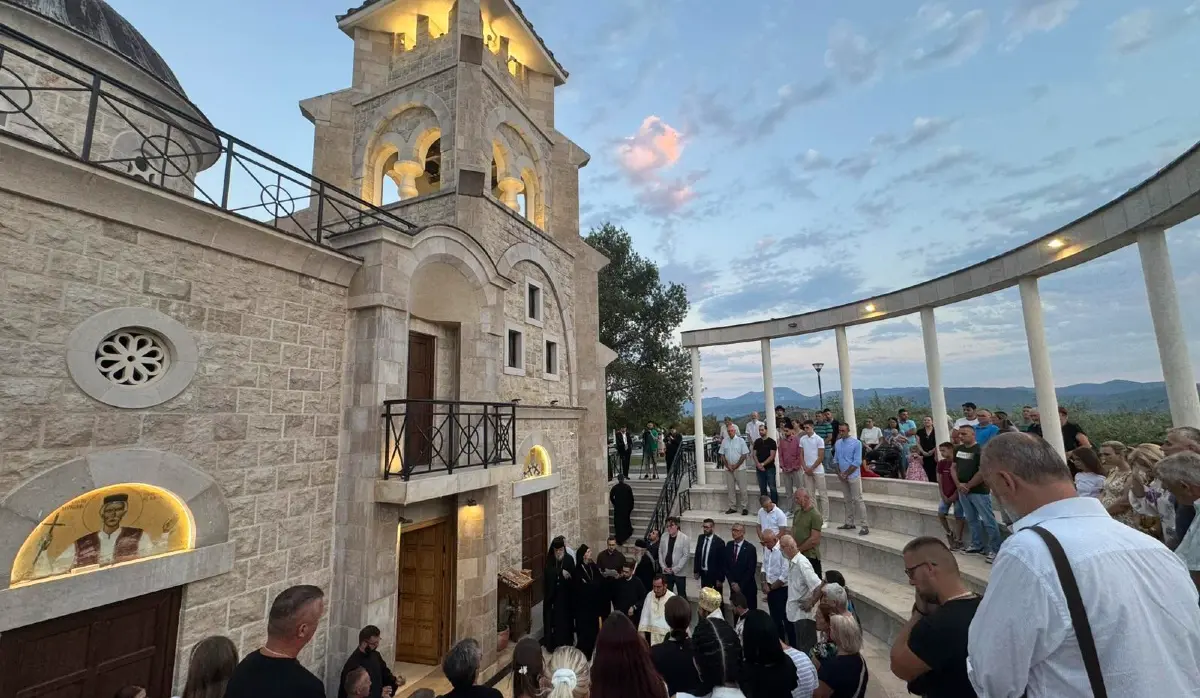
BELGRADE, AUGUST 6 /SRNA/ - Historian Miloš Ković told SRNA that Prebilovci symbolises the genocide suffered by the Serb people in the territory of the Independent State of Croatia /NDH/ during the Second World War, stressing that Serbs must become fully aware of that history and make it a cornerstone of their national identity.
"It was an assault on civilians, carried out in the most brutal way imaginable. In terms of its cruelty and barbarity, it is similar to the horrific genocide committed against Serbs in the villages near Banja Luka - Drakulić, Šargovac and Motike. Above all, they were places where children were massacred," Ković said on the occasion of the 85th anniversary of the Ustasha crime against Serb civilians in Prebilovci.
He also said that both Prebilovci and the genocide committed against the Serb people must become an integral part of the Serb national identity.
"We must become aware that we are, above all, a people marked by concentration camps in both the First and the Second World Wars. We must avoid the senseless divisions imposed on us from outside so that we understand that we continue to suffer in Kosovo and Metohija today simply because we are Serbs," Ković said.
He said that genocide marked the history of the Serb people during the First World War as well, particularly in the areas of western and eastern Podrinje, but that nothing could compare with the horrors endured by Serbs during the Second World War.
Ković stressed that it must never be forgotten that, during the last war, the tomb containing the remains of the Prebilovci victims was blown up, killing them for a second time.
He pointed to the numerous massacres of the Serb people in Prebilovci, Stari Brod, Jadovno, Jasenovac and many other sites of mass killing.
Ković said that the Serbian Orthodox Church /SOC/ was the first to launch an organised and systematic process of commemorating the martyrs who perished in the genocide against the Serb people during the First and Second World Wars, and that the Holy New Martyrs of Prebilovci, commemorated in prayer on August 6, have come to symbolise the genocide committed against Serbs in the Independent State of Croatia /NDH/.
"The people of Prebilovci have been canonised and are now saints of the Serbian Orthodox Church and of the Orthodox Church as a whole, as people around the world, especially in Orthodox countries, are increasingly learning about what the Serb people endured during the Second World War," Ković said.
He believes that the deeper meaning of the immense suffering endured by the Serb people should be sought within the framework of Christian teaching.
"That is precisely the path of Christ's suffering. At the same time, in terms of practical politics, everything possible must be done to prevent such atrocities and ensure they are never repeated. We can see that, during the Defensive-Patriotic War in the 1990s, there was a clear intention to repeat such a genocide," Ković said.
In addition to the suffering endured by the Serb people, Ković said that the Serb national identity is also shaped by Saint Sava and Saint Simeon, as well as by Serbia's victories in the liberation wars between 1912 and 1918.
The Ustashas carried out the massacre in Prebilovci between August 6 and 11, 1941, under the command of Ivan Jovanović Crni. Most of the victims were thrown alive into the Golubinka pit, while the others were killed on the spot.
In Prebilovci alone, 830 Serbs were killed, and 57 families were wiped out, with no survivors.
There were around 110 massacre sites across Herzegovina, most of them karst pits such as Golubinka, Korićka Jama, Jagodnjača, Pandurica, Ržani Do and many others.
The crime committed in Prebilovci was covered up in the former Yugoslavia, and in 1961 the pits into which Serbs had been thrown were sealed with concrete.
The excavation of 13 pits in the area of Lower Herzegovina began in 1990, and the remains of more than 4,000 Serbs were buried in a memorial ossuary in Prebilovci on August 4, 1991.