REPUBLIKA SRPSKA FLAG BROKEN OUT AT KAJMAKČALAN SUMMIT
North Macedonia - culture and remembrance
09/30/2026
18:24
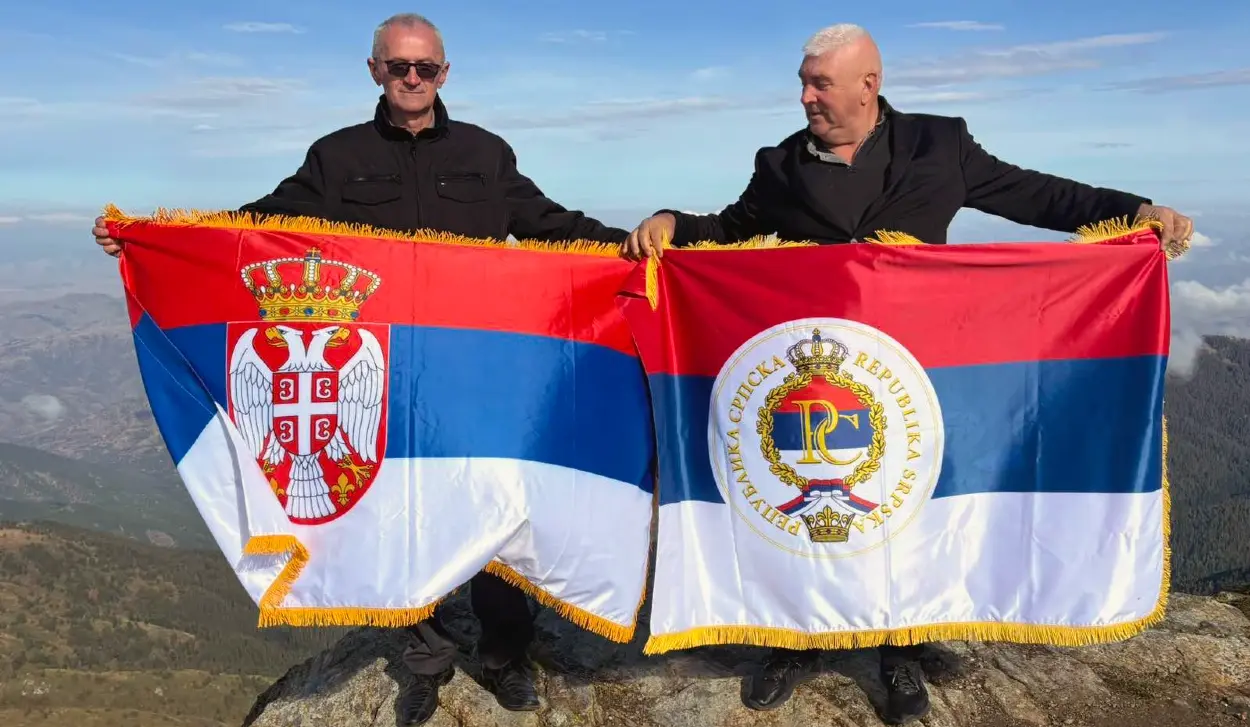
BELGRADE, SEPTEMBER 30 /SRNA/ – At the summit of Kajmakčalan, at an altitude of 2,521 meters above sea level, the flag of Republika Srpska was broken out today as part of commemorations marking the 110th anniversary of the famous Battle of Kajmakčalan and the 108th anniversary of the breakthrough of the Salonika Front.
Earlier, the bells at the Church of St. Peter were consecrated, and a memorial service was held for the Serbian heroes who fell there.
On behalf of the Serbia’s Parliament, wreaths were laid at the memorial chapel and at the ossuary erected in 1929 by King Alexander I Karađorđević in memory of those who fell. The wreath was laid by Dušan Marić, president of the Serbia - Republika Srpska Parliamentary Forum, while Minister Milica Đurđević Stamenkovski laid a wreath on behalf of the Government of Serbia.
Among those attending the ceremony were Ivan Stoilković, a minister in the Government of North Macedonia; Serbia’s Ambassador to Greece Nikola Nedeljković; representatives of the Serbia’s Embassy in Skopje; members of the Serbia’s Armed Forces; clergy of the Serbian Orthodox Church; and members of numerous patriotic associations from Serbia, North Macedonia and Montenegro.
The Battle of Kajmakčalan, one of the most significant operations on the Salonika Front during the First World War, was fought from September 12 to 30, 1916.
This epic military offensive represented the first major victory of the Serbian army after its difficult retreat across Albania and its successful recovery on the island of Corfu.
Fierce armed clashes took place in the rugged Nidže mountain range, at extreme elevations exceeding 2,500 meters.
Serbian forces fought against well-fortified Bulgarian and German units, which called the fortified position Borisov Grad and considered it completely impregnable to enemy attacks.
Because of the summit’s enormous historical significance and the fact that the soldiers set foot there for the first time on occupied territory of their homeland, the mountain peak was named the Gateway of Freedom.
The main burden of the weeks-long fighting and hand-to-hand assaults was borne by the heroic Drina Division, reinforced by elements of the Danube Division and volunteers under the command of Duke Vuk.
The strategic capture of the position came at an extremely high cost, with more than 30,000 Serbian soldiers becoming casualties, including 4,643 killed.
The successful breakthrough secured the advance of Allied forces and enabled the liberation of Bitola in November 1916.
In honour of the fallen heroes, King Alexander Karađorđević erected a memorial chapel at the very summit, where the heart of doctor Archibald Reiss, a great friend of the Serb people, is also preserved.