FATHER BUILDS MONASTERY ON ANCESTRAL HOMESTEAD IN STJEPKOVICA IN MEMORY OF HIS DECEASED SON
BiH - Brčko - endowment
09/24/2026
10:04
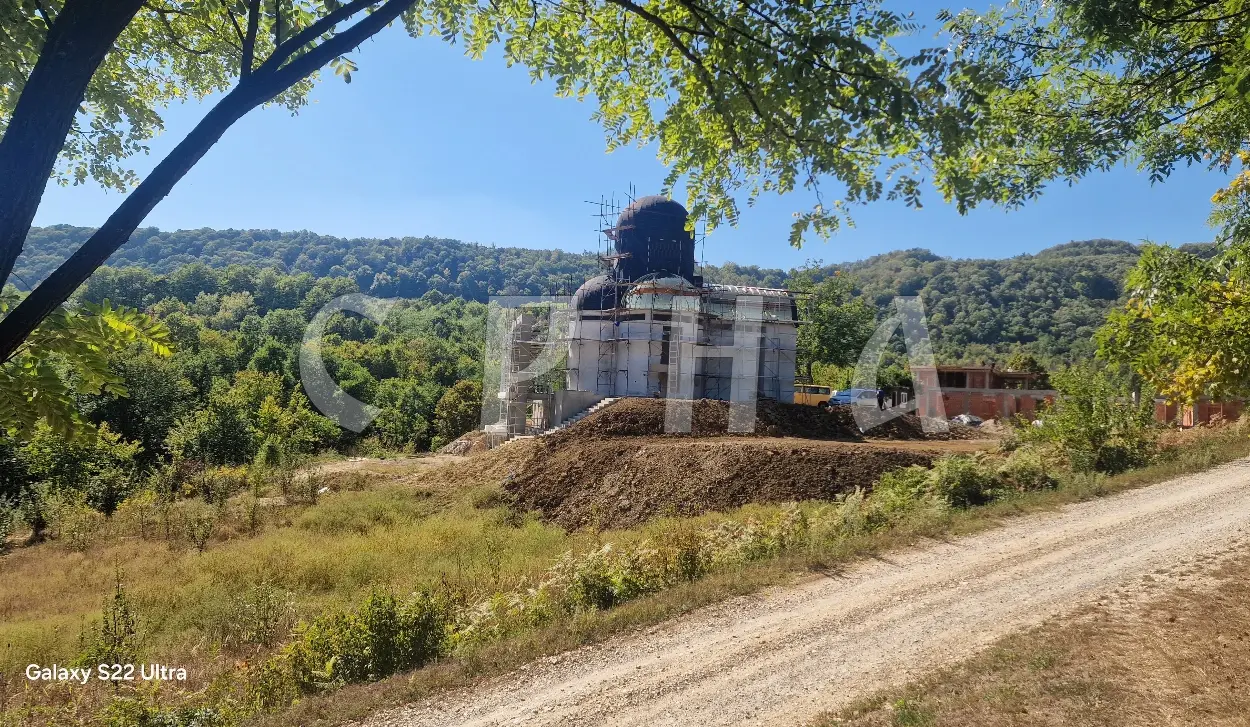
Combining his love for his late only son, respect for his ancestors and a passion for nature, Živan Đurić, an economist, says that preserving tradition is the only path to understanding the future.
By Dragan ĐUKIĆ
BRČKO, SEPTEMBER 24 /SRNA/ — In the picturesque hamlet of Stjepkovica near Gornja Skakava, in the southern part of the Brčko District, a magnificent monastery complex is taking shape - a combination of deep spirituality, a family vow and untouched nature.
Founder and benefactor Živan Đurić, who was born in this area, decided to build a monastery with residential quarters and extensive land on his ancestral property and donate it to the Serbian Orthodox Church /SOC/, thus transforming a personal and family tragedy into a lasting spiritual and material endowment for future generations.
The idea of returning to his roots and establishing an estate originally came from Živan's father, who, after the war, purchased the first four dunums of land from his youngest brother.
Later, Živan's only son, Mihael, proposed starting a business in this peaceful oasis of untouched nature by using a natural spring to bottle healthy spring water and the surrounding orchards to produce organic juices. For this purpose, Živan bought around 500 dunums of land for his son.
AFTER HIS SON'S SUDDEN DEATH, ŽIVAN DECIDES TO BUILD MONASTERY
However, a sudden tragedy completely changed the course of Živan's and his wife Johana's lives. Mihael died in hospital just eight days after experiencing stomach pain.
Following Mihael's death, and with the blessing of His Eminence Metropolitan Fotije of Zvornik-Tuzla, Živan decided to build a monastery and two residential quarters on the site.
He continued purchasing surrounding plots, but instead of registering them in his own name, he transferred them directly into the ownership of the Serbian Orthodox Church, creating an estate that already encompasses more than six hectares of land, with the aim of eventually transferring the remaining part of the complex to the Church as well.
“My only wish in life is for this place to remain as it is, to bring my son here from Austria, and for my wife, father, mother and I to rest here together with him. We want to build an edifice that will be a spiritual sanctuary in memory of my great-grandfather Đuro Đurić, who came here, lived to the age of 104 and founded this settlement,” Živan said.
BUILDING THAT PERFECTLY BLENDS SEVERAL STYLES OF ORTHODOX ARCHITECTURE
As for the architecture of the monastery church, the building was designed on two levels, with the lower level intended as a crypt containing the remains of members of the immediate Đurić family.
The architect accommodated the benefactor's wishes, creating a harmonious blend of Greek, Russian and Serbian Orthodox architectural styles. The domes are covered with a special alloy of stainless steel, copper and gold, ordered from Russia.
Two residential quarters are also being built alongside the church, one of which was designed after the historic residence of Prince Miloš Obrenović in Belgrade. The complex also includes a family cemetery where Đuro Đurić, the founder of the family line, is buried.
The plan is for the entire complex to become fully self-sufficient and eventually generate income to support monastic life and religious tourism.
"We are not building a private church. We would like to demonstrate that this estate can sustain itself, so that our monks and the Church can rely on it and survive even under the most difficult conditions," Đurić emphasized.
A special place within the complex is occupied by a memorial statue of Mihael, his late only son, created by Trebinje sculptor Željko Aleksić. Standing on elevated ground, the statue overlooks the entire estate and family endowment.
Benefactor Đurić says he plans to turn the monument into a memorial fountain by bringing water from the spring that inspired his son's business initiative to the monument, so that water will flow from an amphora to quench the thirst of passing travelers.
NATIVE SPECIES, UMMER HOUSE AND WATERMILL ON THE ESTATE
In addition to its spiritual segment in Stjepkovica, particular attention is being paid to preserving nature and native breeds and varieties. The estate is home to quince, plum and preserved wild apple varieties, which are used to make homemade vinegar.
In the spirit of tradition, a summer house for rest and gatherings has been built on the foundations of the old family home. A watermill with a capacity of up to 30 kilograms of flour per hour is also in operation, preserving the tradition of grinding locally grown wheat and corn.
The estate is also home to numerous animals - donkeys, ponies, horses, sheep, the native Moravka breed of pig, as well as deer and pheasants, all of which the hosts care for devotedly.
Živan's wife Johana, a native Austrian, has fully embraced Serb customs and supported the idea of establishing the endowment and their eternal resting place in Stjepkovica.
By combining his love for his late only son, respect for his ancestors and his passion for nature, Živan Đurić, an economist by profession, says that preserving tradition is the only path to understanding the future.
"If we do not respect tradition, we do not even know why we are here. Everything must be in harmony with nature and the people around us. We must repay our debt to our ancestors and preserve what they fought for," Đurić said.

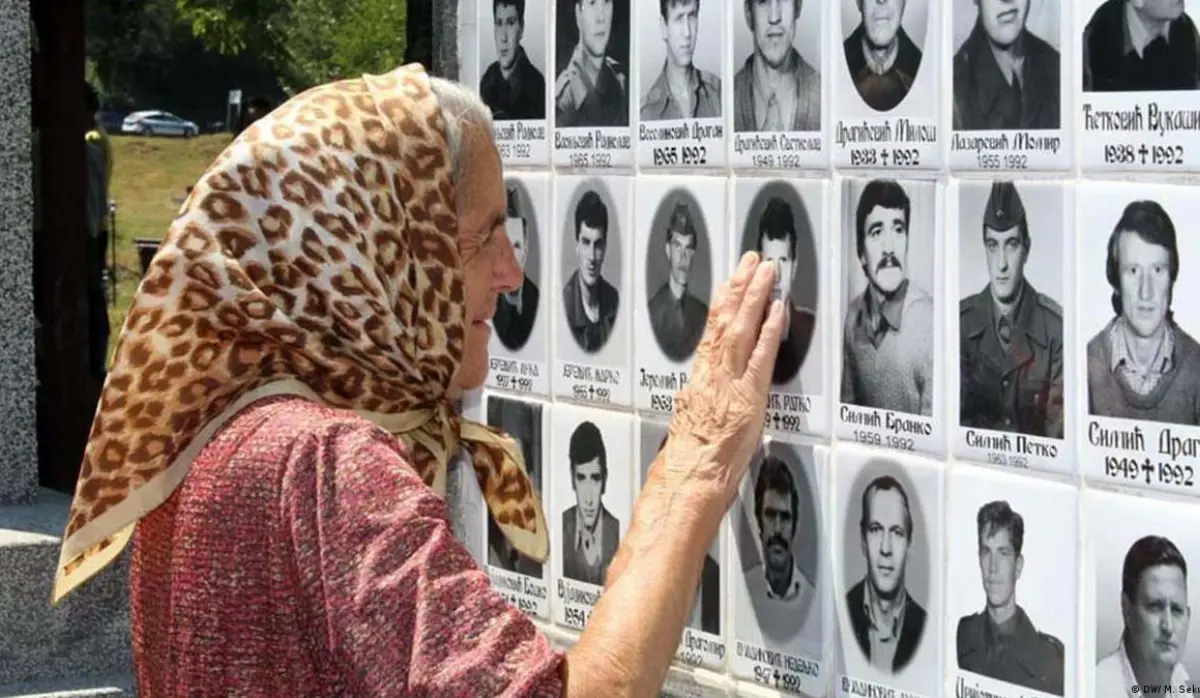
NO ONE HELD ACCOUNTABLE FOR KILLING 32 PODRAVANJE RESIDENTS AND ERASURING IT FROM THE FACE OF THE EARTH
SAJIĆ: CVIJANOVIĆ CONTINUES EFFORTS TO PRESERVE SRPSKA'S AUTONOMY

5.1-MAGNITUDE EARTHQUAKE HITS EASTERN TURKEY

HAMAS COMMANDER RESPONSIBLE FOR HOSTAGES KILLED