REFORMING GLOBAL GOVERNANCE FOR A FAIRER WORLD ORDER
China - Global Governance Forum
10/24/2026
08:39

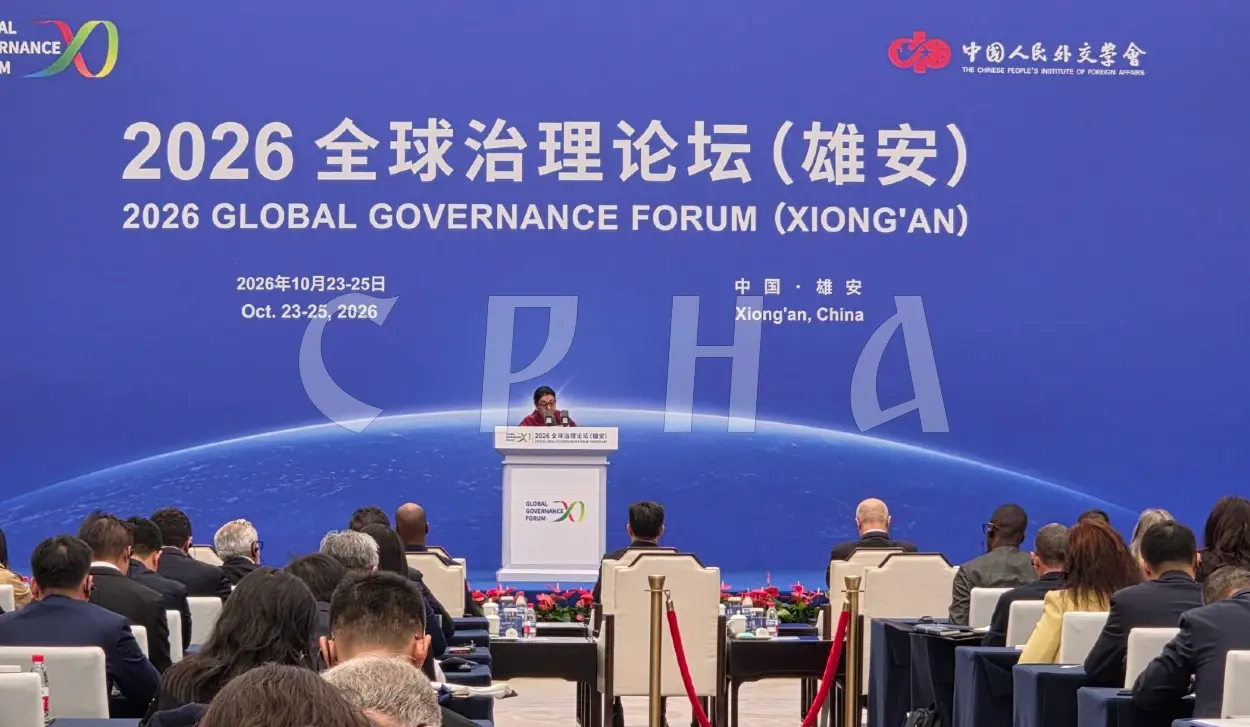
XIONGAN, OCTOBER 24 /SRNA/ - International institutions must be reformed to reflect a multipolar world, ensure fairer representation of countries in the Global South, and respond more effectively to challenges such as conflicts, inequality, climate change, and the development of artificial intelligence, participants said at a plenary session of the Global Governance Forum in Xiongan, Hebei Province, China.
UN Under-Secretary-General for Policy Guy Ryder highlighted the need to reform international institutions to reflect changing global power relations, ensure more equitable representation for countries in the Global South, and strengthen confidence in multilateral cooperation.
"Our world is becoming increasingly multipolar, but many international institutions still reflect the political and economic realities of eight decades ago," Ryder said, noting that this mismatch undermines trust, weakens the legitimacy of institutions, and limits the scope for collective action.
He stressed that the principles, frameworks, and common agenda for reform are already in place, but that political will is needed to implement them.
"We have the principles, frameworks, and a common agenda for reform. What we need now is the political will to put all of this into practice," Ryder said.
Former Kyrgyz Prime Minister Djoomart Otorbaev pointed to the unequal distribution of influence in international financial institutions, noting that the United States holds 16.49 percent of the voting power in the International Monetary Fund, and that certain strategic decisions require 85 percent support.
"Why shouldn’t countries of the Global South have a greater share?" Otorbaev asked, adding that the global order should enable development without dominance, cooperation without interference, and progress without hegemony.
Former Nepalese leader Bidhya Devi Bhandari stressed that the success of governance should be measured by its impact on people’s lives, including poverty reduction, better access to education and healthcare, job creation, and environmental protection.
"The voice of every country must be represented in global decision-making processes," Bhandari said.
She also highlighted the importance of regional cooperation, particularly among China, Nepal, and India, in sharing meteorological data, monitoring glaciers, providing early warnings of natural disasters, and coordinating responses to emergencies.
UN High Commissioner for Refugees Barham Salih warned that 117 million people worldwide have been forcibly displaced, with around 70 percent of refugees living in low- and middle-income countries that are often facing economic and other development challenges.
"Humanitarian aid, however essential, cannot replace lasting solutions. Ultimately, the solution to forced displacement is peace," Salih said.
He also presented UNHCR’s "50/35" vision, which aims to halve by 2035 the number of refugees living in protracted displacement and dependent on humanitarian assistance.
The Global Governance Forum is being held from October 23 to 25 in Xiongan, Hebei Province, China, under the slogan Rebuilding Trust and Cooperation. It brings together representatives of international organizations, former government officials, and experts to discuss ways to improve global governance and strengthen international cooperation.
A journalist from the Media System of Republika Srpska /SRNA/ is also covering the forum.