IN JERUSALEM'S OLD CITY, SACRED SITES AND CENTURIES OF HISTORY STAND SIDE BY SIDE
Israel - feature
09/13/2026
12:29
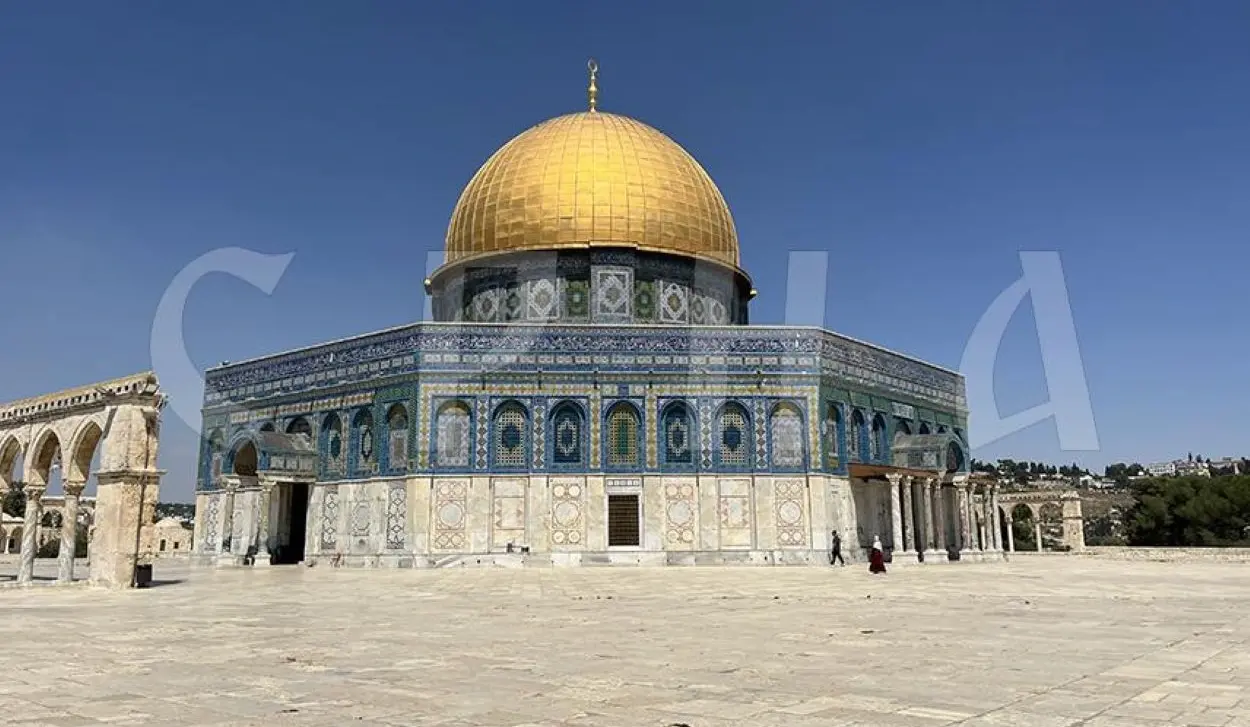
JERUSALEM, SEPTEMBER 13 /SRNA/ – Along the narrow, steep streets of Jerusalem's Old City, Christian, Jewish and Muslim holy sites stand just minutes' walk from one another, while the air carries the scents of oriental spices and incense, mingling with the sounds of prayer and the bustle of the bazaar.
By Nikolina DAMJANIĆ
The route from the Via Dolorosa and the Church of the Holy Sepulchre, past the Western Wall and on to the Al-Aqsa compound, passes through a city where religions, traditions, peoples and centuries of history intertwine within a remarkably small area.
LIFE AMONG THE HOLY SITES
Between the major holy sites, the city's busy everyday life unfolds.
Outside small shops, vendors arrange their goods and call out to passers-by, while stalls display spices, souvenirs, scarves and jewellery. The aromas of coffee and oriental sweets drift out from the shops.
Tourists stop to look at the displays, pilgrims search for their way, while local residents make their way through the crowds.
Music can be heard from one street, conversations among traders from another.
Narrow passageways lead into one another, while the cobblestones, polished by the footsteps of countless visitors, become increasingly steep.
Security checkpoints at the entrances to the Old City make it impossible to forget what kind of place you are in, but that feeling lasts only until you catch sight of one of the buildings that suddenly appears beyond the stone walls.
Then the checkpoints, uniforms and security checks fade into the background, leaving only the domes, bell towers and winding streets that bear witness to thousands of years of history.
ALONG THE VIA DOLOROSA
One of the best-known routes through the Old City is the Via Dolorosa.
According to Christian tradition, it was along these streets that Jesus Christ carried the cross on his way to Golgotha.
Amid groups speaking different languages, pilgrims can be seen carrying wooden crosses, while others quietly follow the route along which generations of believers have walked for centuries.
At the end of the Via Dolorosa stands the Church of the Holy Sepulchre, one of Christianity's holiest sites, which Christian tradition associates with the crucifixion, burial and resurrection of Christ.
Outside the entrance, groups of pilgrims and tourists come and go, while inside, the dim light, burning candles, the scent of incense and quiet prayers completely transform the atmosphere.
There is no entrance fee to the church, nor to the Western Wall, while access rules for certain parts of the Al-Aqsa compound depend on the time and conditions of the visit.
HOLY SITES IN A SMALL AREA
In the Jewish Quarter stands the Western Wall, also known as the Wailing Wall, one of the holiest sites in Judaism.
Before its massive stone blocks, worshippers pray in separate sections for men and women, placing written prayers between the stones.
Nearby is the Al-Aqsa compound, one of the holiest sites in Islam.
Within a relatively small area are holy sites of profound importance to three major monotheistic religions, giving Jerusalem's Old City a unique significance.
The boundaries between the Christian, Jewish, Muslim and Armenian Quarters do not always feel like clearly defined lines.
The signs, languages, people and customs change, while one street almost imperceptibly gives way to another.
A CITY WHERE HISTORY IS EVERYDAY LIFE
Jerusalem, however, reveals itself not only through its great holy sites.
It is also present in the shopkeeper waiting for a customer, in children running past groups of tourists, in the pilgrim and in the resident hurrying home, paying little attention to what, for someone else, is a once-in-a-lifetime journey.
It is in this encounter between the monumental and the everyday that the Old City's uniqueness can best be felt.
The Church of the Holy Sepulchre, the Western Wall and Al-Aqsa are not separate worlds here, but parts of a space where worshippers, residents, traders and travelers encounter one another every day.
A walk through the Old City is therefore not simply a tour of historic landmarks, but an experience of a place where the past is constantly colliding with the present.
And perhaps that is Jerusalem's strongest impression: history here has not remained behind walls or in books, it still walks the streets of the city.

LINTA: 81 SERB CIVILIANS KILLED IN CROATIAN ARMY ATTACK ON REFUGEE CONVOY NEAR JAJCE IN 1995

DODIK: SERBIA'S MILITARY HAS REACHED IMPRESSIVE LEVEL OF READINESS

KARAN: MEMORY OF JASENOVAC MARTYRS IS LASTING FOUNDATION OF REPUBLIKA SRPSKA

TRUMP FOLLOWS GOLF TOURNAMENT AT HIS IRISH RESORT