CHINESE SCIENTISTS DEVELOP MORE EFFECTIVE TYPES OF PESTICIDES
China – agriculture – science
10/18/2026
11:59

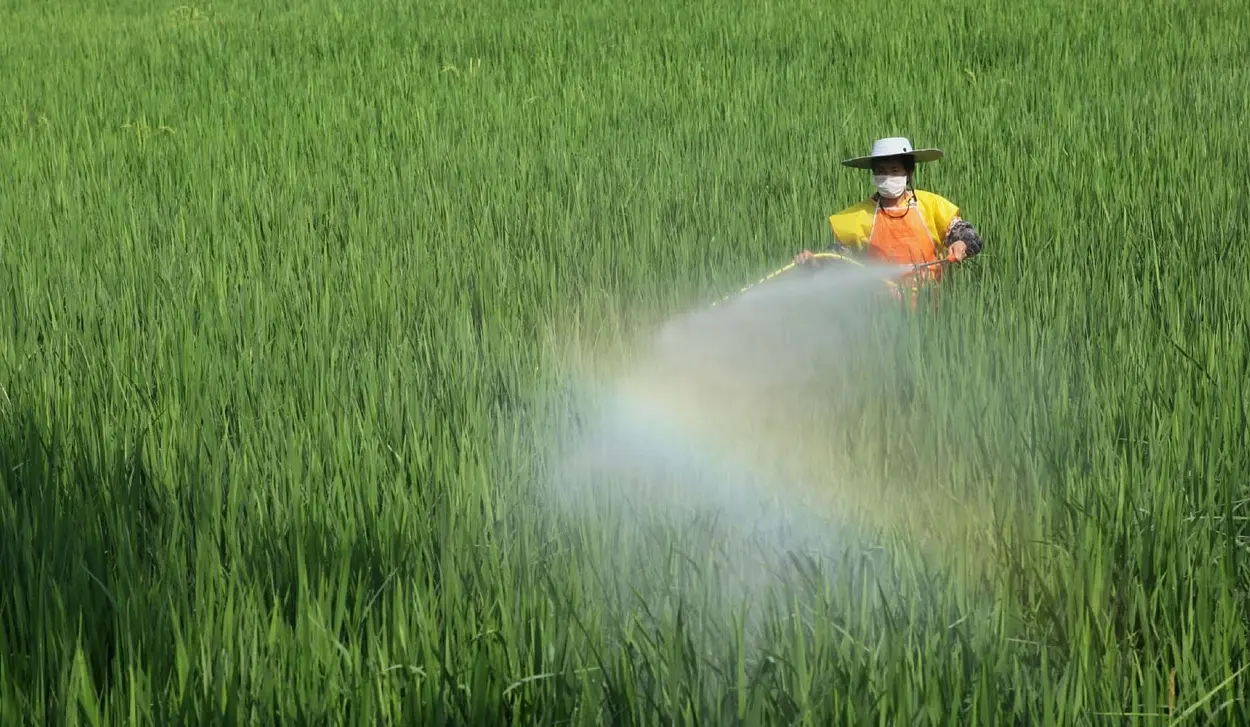
BEIJING, OCTOBER 18 /SRNA/ - Chinese scientists at the Hefei Institutes of Physical Science are proposing a new solution to one of agriculture’s biggest challenges: pesticides that adhere more effectively to crop leaves.
The study was inspired by tiny hair-like structures that help bacteria attach to the human intestines.
By mimicking this natural adhesion mechanism, the researchers created silicon dioxide nanoparticles with rough surfaces that adhere much more effectively to leaf surfaces than conventional formulations.
This could potentially reduce pesticide waste and the need for repeated crop spraying, Xinhua News Agency reported.
According to the researchers, conventional pesticide spraying is extremely inefficient. Leaf surfaces are covered with a waxy, water-repellent layer that causes spray droplets to bounce off.
Rain washes away what lands on the ground, while sunlight and evaporation break down the active ingredients.
Previous studies have shown that as much as 90 percent of pesticides never reach their intended targets, forcing farmers to spray crops again and again. This drives up costs and exacerbates pollution and environmental damage.
The research team turned to bacteria for an answer. Certain intestinal bacteria have tiny hair-like structures called pili.
These pili act like tiny hooks, gripping surfaces and preventing the bacteria from being washed away.
The researchers replicated this idea by creating tiny hollow silica particles and covering their surfaces with small spikes. They then filled the particles with imidacloprid, a commonly used insecticide. The result is greater effectiveness and better crop protection.