CHINA IN JOINT ACTION WITH OTHER COUNTRIES TO MAKE WORLD BETTER PLACE FOR EVERYONE
China - Han
09/28/2026
10:58
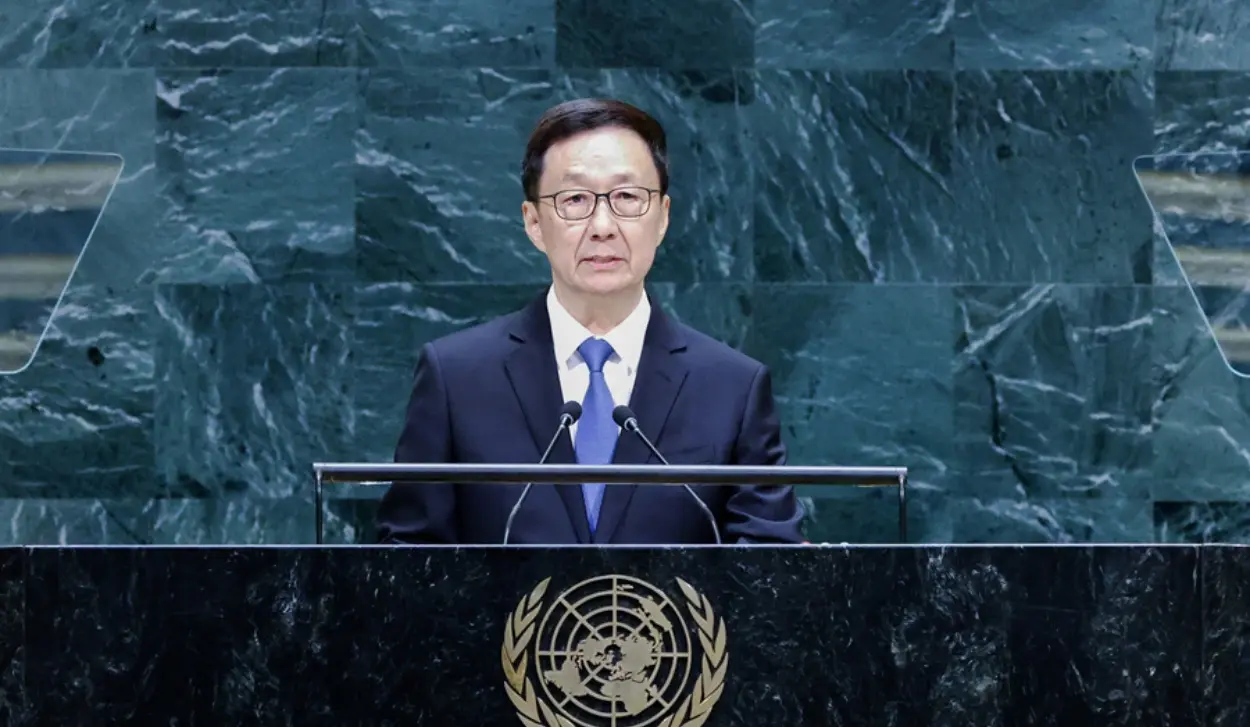
BEIJING, SEPTEMBER 28 /SRNA/ - China will work with all other countries to build a community with a shared future for mankind and make the world a better place for everyone, Chinese Vice President Han Zheng said during the general debate of the United Nations General Assembly.
Han said that, as a progressive force in an era of change, China has always supported the legitimate rights and interests of developing countries and advocated a fairer and more equitable system of global governance.
He stressed that regardless of how international relations evolve, China remains firmly committed to peace and development, upholding fairness and justice, and supporting multilateralism.
The world, he said, is witnessing intertwined changes and turbulence, prolonged geopolitical conflicts, widening development gaps and a growing number of global challenges.
Reminding that China proposed the Global Development Initiative at the 76th session of the UN General Assembly, followed by the Global Security Initiative, the Global Civilization Initiative and the Global Governance Initiative, Han said these initiatives provide strategic guidance for building a community with a shared future for mankind.
He said a growing number of countries want to join forces in taking on the historic mission of confronting difficulties and challenges and advancing the well-being of all humanity.
Han also put forward four proposals, the first of which was to uphold the post-war international order and promote lasting peace based on common security, while turning the vision of common and sustainable security into action and rejecting Cold War thinking and bloc confrontation.
His second proposal was to address global development challenges and promote prosperity for all through openness and cooperation.
"Development should remain at the center of the international agenda, and efforts should be made to jointly build a global development partnership based on solidarity and equality that is balanced and inclusive. Priority should be given to key areas including poverty reduction, food security and the energy transition, while increasing resource investment and support for countries of the Global South", Han said.
He added that a people-centered approach should be applied, with efforts focused on delivering positive results and benefits and narrowing the digital divide.
His third proposal was to promote exchanges and mutual learning among civilizations and rebuild unity and mutual trust through communication and dialogue.
The UN platform should be used to encourage international people-to-people exchanges, strengthen mutual understanding and friendship among nations, and promote the joint development of different civilizations, he added.
As his fourth proposal, Han called for continued commitment to multilateralism and concrete action to uphold fairness and justice.
"China believes that all countries, large or small, are equal members of the international community, that world affairs should be decided by all countries through consultation, and that the rule of law, fairness and justice in international relations should be jointly upheld", Han stated.
He stressed that countries should join forces and work together to protect and strengthen the United Nations.
China supports reform and improvement of the UN, as well as effective responses to global challenges including climate change and public health security, China Media Group reported.
Han also noted that the People's Republic of China restored its lawful seat at the United Nations in 1971, which he said was of profound and far-reaching significance for both China and the world.
"Over the past 55 years, China has been a stabilizing force in times of instability. China remains firmly committed to peaceful development and, among major countries, has the best record on peace and security", Han said.
As one of the main drivers of shared development, he said China had achieved two major accomplishments at home - rapid economic growth and long-term social stability, and had contributed around 30 percent of global economic growth for many years.

DODIK: VISIT TO MOSCOW CONFIRMS STRENGTH OF SRPSKA-RUSSIA RELATIONS
LALIĆ: RESIDENTS SEE TRGOVSKA GORA PLAN AS ENVIRONMENTALLY UNJUST
WORLD WAR II BOMB DISCOVERED IN BELGRADE'S PALILULA CONSTRUCTION SITE
CHINA IN JOINT ACTION WITH OTHER COUNTRIES TO MAKE WORLD BETTER PLACE FOR EVERYONE