ATACAMA DESERT BLANKETED IN FLOWERS AFTER HEAVY RAINS
Chile - interesting fact
10/01/2026
13:31
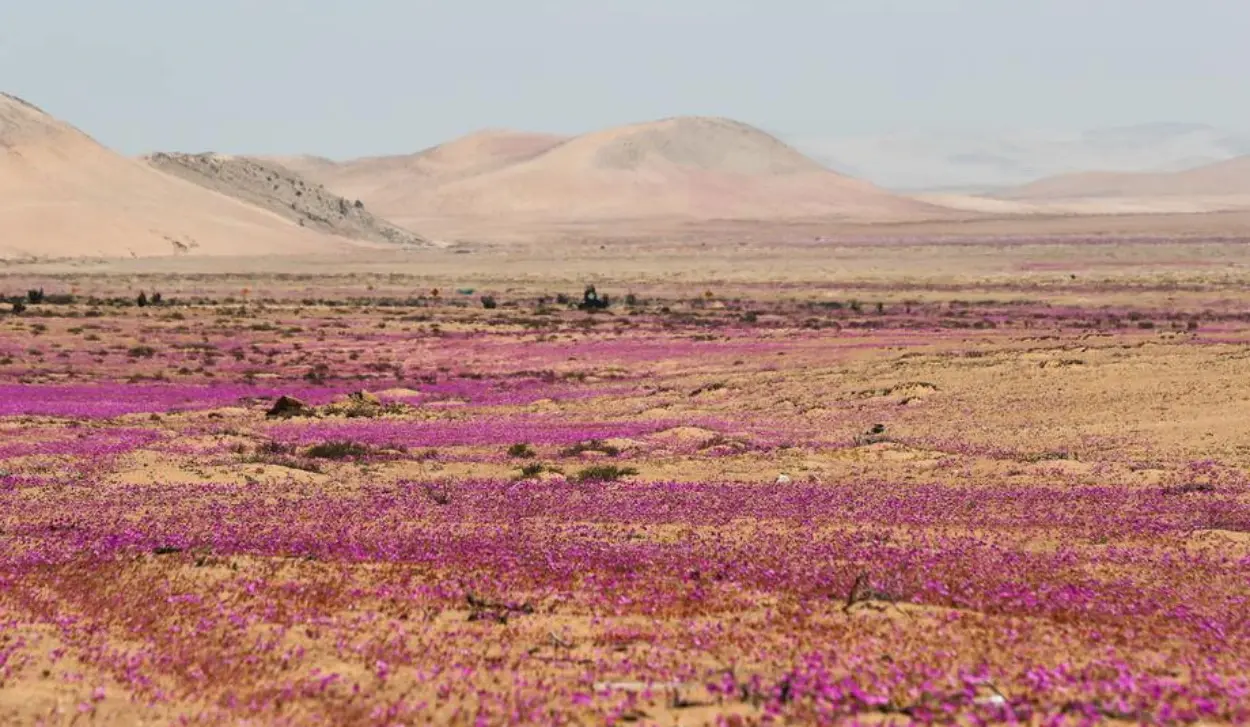
SANTIAGO, OCTOBER 1 /SRNA/ - Vast areas of the Atacama Desert, which stretches between the Pacific Ocean and the Andes Mountains, are covered in flowers after the climate phenomenon known as "El Niño" brought heavy rainfall to the region at the beginning of spring in the Southern Hemisphere.
The unusually large amount of water allowed millions of seeds and bulbs to germinate and bloom, many of which had remained dormant for decades in the sandy soil of the world's driest non-polar desert, which stretches for more than 1,600 kilometres across Chile.
"This is clearly an extraordinary and unusual phenomenon, very different from other flowering patterns that occur elsewhere in the world - more than 200 plant species have emerged in just a few warm days at the beginning of spring in an area that is normally covered in brown sand," said Jorge Carabantes, head of the Protected Areas Department of the National Association of Forestry Companies, according to AP.
In July and August, several regions of Chile experienced record rainfall, with some areas receiving amounts not seen since measurements began in the 1950s. The huge amounts of rain saturated Atacama’s normally dry soil, allowing seeds already in the ground, as well as new seeds carried by the wind, to germinate and put down roots.
The heavy rainfall was caused by the increasingly powerful climate phenomenon known as "Super El Niño," which leads to a sharp rise in global temperatures.


TRUMP: WASHINGTON COULD RESUME ATTACKS ON IRAN AFTER ELECTIONS

KARAN: PLAVŠIĆ CONTRIBUTED TO BUILDING SRPSKA AND ITS INSTITUTIONS

KOŠARAC: PLAVŠIĆ LEFT A DEEP MARK DURING SRPSKA'S MOST CRITICAL YEARS

HERZOG TO HONOR FOUR ISRAELIS FOR BRAVERY ABOARD FLYDUBAI PLANE