VOJISLAV LUBARDA - WRITER WHO TRANSFORMED TRAUMA INTO TESTIMONY
Republika Srpska - writer - anniversary
10/12/2026
09:23

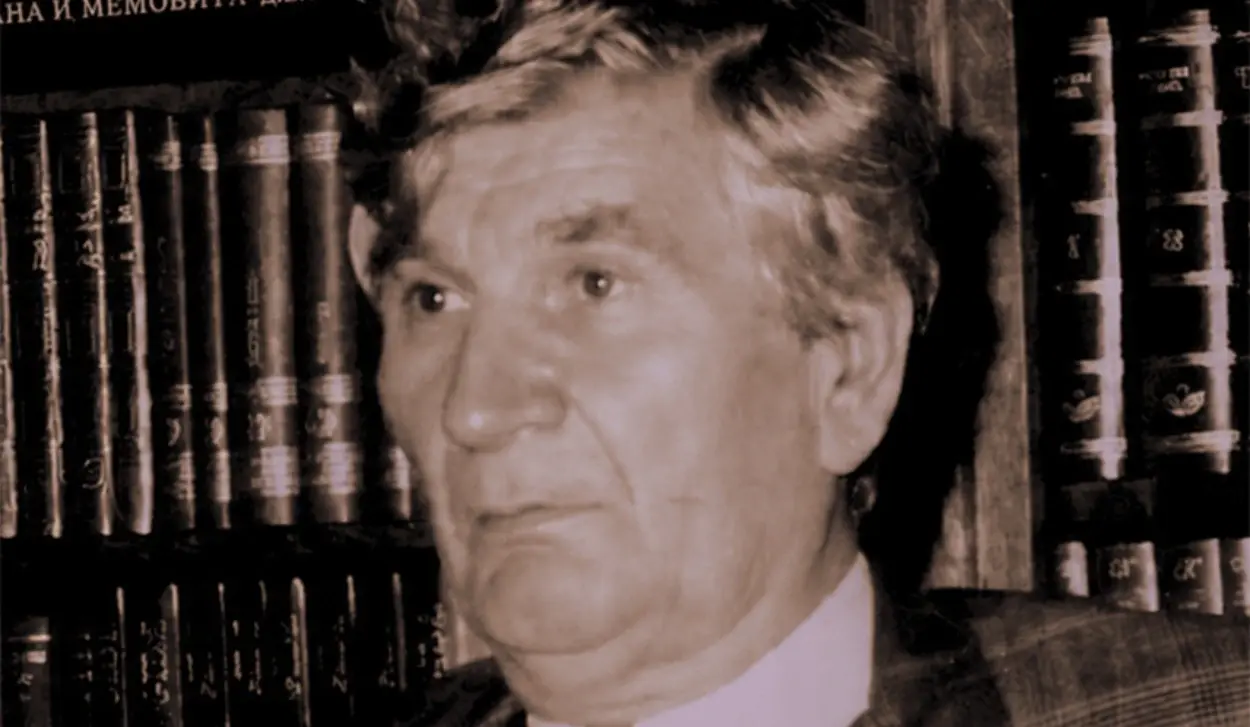
SARAJEVO, OCTOBER 12 /SRNA/ - Serbian writer and academic Vojislav Lubarda /1930-2013/ died on October 13, 2013.
Lubarda left a significant mark on Serbian literature through works exploring wartime trauma, the suffering of Serbs in the Podrinje region, the mechanisms of hatred and the consequences of political pressure on individuals.
His life was marked by childhood trauma from the war, when, at the age of 11, he stood in line waiting to be killed by the Ustasha and escaped only by chance, as well as by later clashes with the political establishment over the subjects he addressed in his books.
One of six children, Lubarda experienced the horrors of war at an early age and, after wartime losses, grew up in a home for war orphans. Those experiences became one of the foundations of his literary work.
Lubarda suffered nightmares for decades after the war, and writing became a way for him to unburden himself of painful memories. Scenes of violence against innocent people that he had witnessed as a boy continued to return in his dreams long after the immediate danger had passed.
He was educated in Sarajevo, where he completed secondary forestry school and graduated from the Faculty of Philosophy, Department of Literature. He worked as a journalist, literature teacher and editor at the Narodna prosvjeta and Veselin Masleša publishing houses. He was also editor of the Mladost newspaper for BiH and editor of the arts and culture department at Television Sarajevo.
HE ADDRESSED SUBJECTS THAT WERE TABOO
Lubarda attracted literary attention with his first novel, "Bližnji svoj", published in 1962, and the following year published "Ljuljaška", which, according to available biographical sources, was temporarily banned in Sarajevo.
A special place in his body of work belongs to the novel "Gordo posrtanje", published in 1970, in which Lubarda raised questions of wartime violence, collective memory and society's treatment of victims, prompting intense political and public controversy.
Following the publication of the novel and other public statements, Lubarda faced professional and political pressure. After losing his job at Television Sarajevo and being prevented from continuing to work in his profession, he moved to Belgrade in early 1975, where he continued his literary career.
He also wrote about his experience of political pressure in the 1981 book "Anatema", an important testimony to a writer's confrontation with the ideological restrictions of the system at the time. In the novel "Svileni gajtan", he also dealt with the consequences of persecution and the authorities' treatment of a writer whose works did not conform to official interpretations of the past.
His other notable works include the novels "Preobraženje", "Pokajanje" and "Vaznesenje", as well as "Žive legende", published in three volumes in the 1960s, and "Znamenje Sutjeske".
Lubarda won the NIN Award for Novel of the Year in 1989 for "Vaznesenje", one of the most prestigious literary awards in the former Yugoslavia.
In addition to wartime events, the novel explores the inner worlds of its characters, the origins of violence and the psychological mechanisms from which hatred develops. Literary critics particularly highlighted Lubarda's ability to show how violence is shaped by personal experience, family relationships and historical circumstances.
Lubarda became a member of the Senate of Republika Srpska in 1996. He was elected a corresponding member of the Academy of Sciences and Arts of Republika Srpska in 1997 and a full member in 2004.
LUBARDA BETWEEN PERSONAL MEMORY AND HISTORICAL REMEMBRANCE
One of the lesser-known aspects of Lubarda's life is that his earliest wartime experiences remained suppressed for a long time before later finding powerful literary expression.
His accounts of the nightmares that followed him until the publication of his first novel show how deeply he viewed writing as a way of confronting trauma, rather than merely as a literary vocation.
It is also notable that his works met with resistance in the environment in which he worked, while at the same time attracting the attention of readers and literary critics. Lubarda thus became an example of a writer whose literary success and professional difficulties unfolded in parallel.
In interviews, he also spoke about forgiveness, stressing that it did not mean forgetting crimes, but recognizing the need for people to extend a hand of understanding to one another. That view provides an important key to reading his work, in which testimony about suffering is accompanied by the question of whether the legacy of violence can be overcome.
After Lubarda's death, his name continued to live on through literary events and programs dedicated to preserving cultural heritage.
Since 2018, Rogatica has hosted the "Vojislav Lubarda Days", dedicated to his life and work, while the town library bears his name.
Lubarda's work remains part of the literary and cultural memory of the Serbian people, while also providing an opportunity to reflect on broader questions about the relationship between literature, history and politics, and on a writer's responsibility to bear witness to subjects that society sometimes seeks to suppress.
Lubarda was born on June 17, 1930, in Rogatica and died on October 13, 2013, in Belgrade.

KOŠARAC: EU INTEGRATION CANNOT COME AT COST OF SRPSKA'S CONSTITUTIONAL RIGHTS
MIROSHNIK SAYS EUROPE COULD PRESS KYIV TO DISRUPT DIESEL DEAL
VOJISLAV LUBARDA - WRITER WHO TRANSFORMED TRAUMA INTO TESTIMONY
DOBRIVOJE BOŽIĆ - PIONEER OF MODERN RAILWAY AIR BRAKING