VEKIĆ: RURAL WOMEN’S NEEDS MUST BE PART OF CLIMATE RESPONSE
Republika Srpska - Center for Gender Equality
10/20/2026
17:18

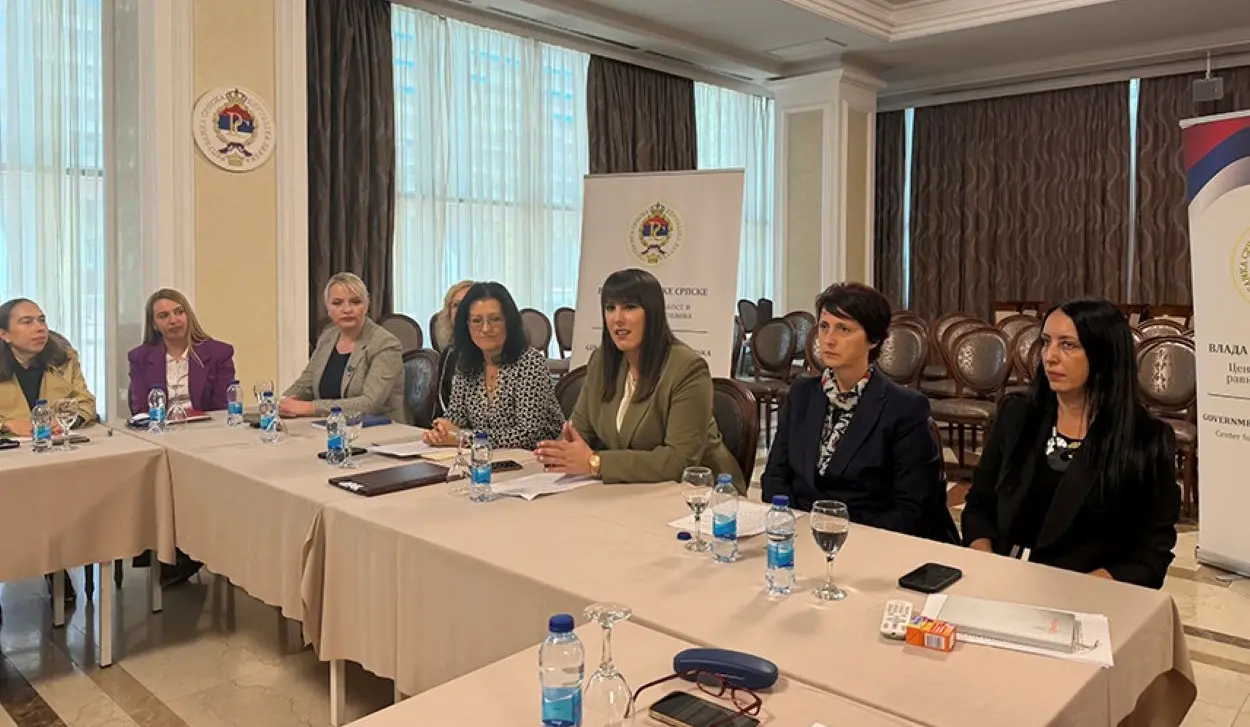
NJA LUKA, OCTOBER 20 /SRNA/ – The Republika Srpska Centre for Gender Equality today held a round-table discussion in Banja Luka titled "Rural Women and Climate Change: Measures and Institutional Support", aimed at strengthening cooperation among institutions and improving support for women living in rural areas.
Center Director Maja Vekić said climate change affects not only agricultural production but also families' daily lives, water availability, infrastructure, economic security and quality of life in rural communities.
When discussing rural women, Vekić stressed that the term encompasses not only female farmers but also teachers, nurses, doctors, workers, entrepreneurs, homemakers, unemployed women and all those who live, work and raise their families in villages.
"Each of them has her own needs and challenges, which is why institutional support must be comprehensive and tailored to the realities of everyday life," Vekić said.
The round table featured a presentation of measures implemented by the Republika Srpska Ministry of Agriculture, Forestry and Water Management. Participants also discussed opportunities for greater involvement by other government departments in environmental protection, infrastructure, healthcare, social protection, employment and education.
Particular attention was paid to the challenges climate change poses to rural communities and the need to better coordinate existing support measures and adapt them to the needs of women on the ground.
Vekić noted that Republika Srpska had a long-standing record of institutional efforts to improve the position of rural women, reminding that its first Action Plan was adopted in 2010.
She said a new Action Plan for 2026–2028 was also in place, with all ministries in the Republika Srpska Government involved in its implementation.
"This is particularly important because the position of rural women is not the responsibility of a single government department, but a shared responsibility of all institutions. Our goal is not simply to adopt another document, but to introduce concrete measures and achieve measurable results that improve women’s everyday lives," Vekić said.
She stressed the importance of hearing first-hand accounts from rural communities, assessing what had been achieved so far and identifying areas where more could be done.
"Only through joint efforts by institutions and the professional and academic communities can we develop solutions that deliver tangible results. By investing in a better position for rural women, we are also investing in more secure families and the future of our rural communities," Vekić concluded.
The round table was held as part of the implementation of the Action Plan for Improving the Position of Rural Women in Republika Srpska for 2026–2028. Its conclusions and recommendations will help further strengthen cooperation across government departments and guide the development of concrete support measures.
The event took place at the Republika Srpska Government Administrative Centre.