TRIŠIĆ BABIĆ: TIME TO DEBATE FUTURE OF INTERNATIONAL SUPERVISION
Republika Srpska - Office for International Cooperation
10/30/2026
11:44

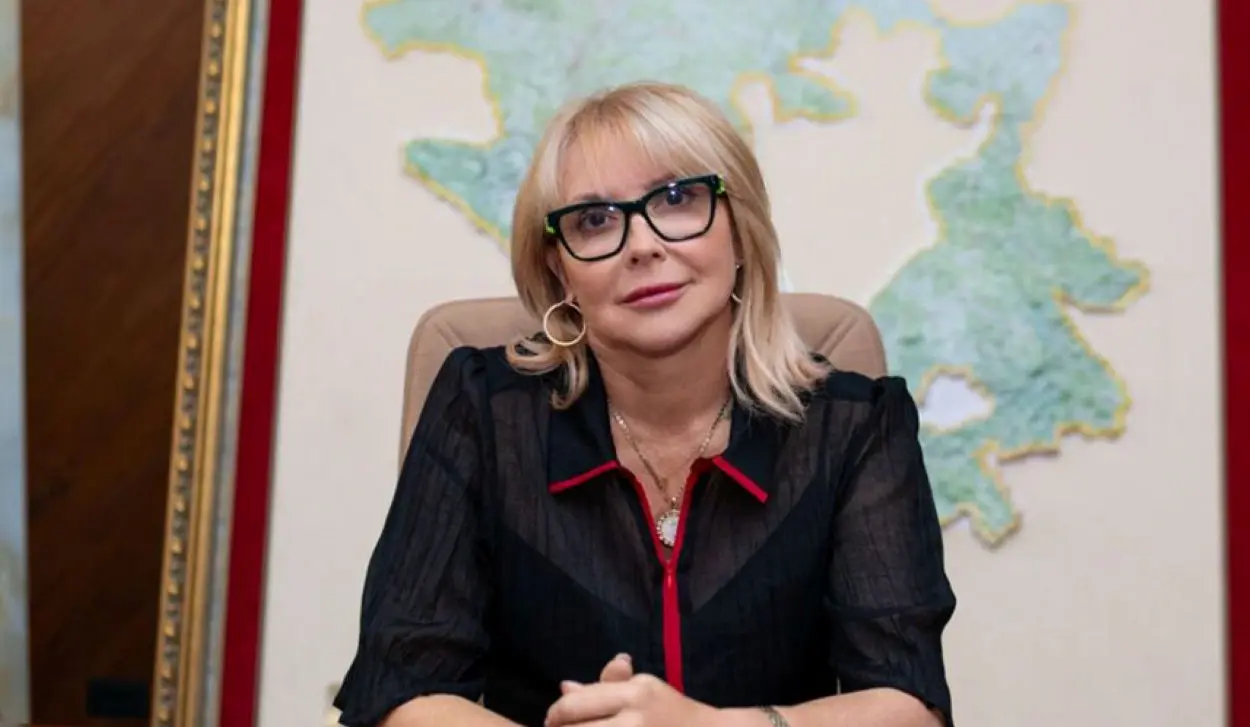
BANJA LUKA, OCTOBER 30 /SRNA/ - Director of the Republika Srpska Office for International Cooperation Ana Trišić Babić said that, if the time for domestic solutions has come, the future of international supervision must become the subject of debate just as serious as the political activity of the institutions whose work that supervision assesses.
Commenting on the OHR's report to the UN Security Council, Trišić Babić said the report was rightly expected to offer a serious analysis of the OHR's future, the remaining functions of international supervision and the conditions for ending it, but that instead it continues to assess political processes in Republika Srpska, while the question of its own institutional future remains without a clear answer.
SRNA carries Ana Trišić Babić's position on the OHR's report to the UN Security Council in full.
On the occasion of the OHR's 70th report to the UN Security Council, the need to reconsider international supervision in BiH has been highlighted, with an emphasis on respect for the Dayton Agreement, the democratic legitimacy of Republika Srpska's institutions and domestic political representatives assuming full responsibility.
The High Representative's 70th report to the UN Security Council confirms once again that the OHR, almost 31 years after Dayton, has ignored the temporary nature of its mandate and continues to act as if it were a permanent institution of the political order of BiH.
It is particularly significant that this approach continues precisely at a time when the United States is openly saying that the era of intrusive international interventions is over and that responsibility for the future of BiH must be assumed by the representatives of its three constituent peoples.
The US position in the UN Security Council was clear: it is abandoning the policy of nation-building and intrusive international interventions, and it is time for domestic solutions led by the representatives of BiH's three constituent peoples.
That message raises a serious question about the political consistency of the international approach to BiH. If responsibility for political processes is to be returned to domestic representatives, then it must be explained how that goal is reconciled with the continued retention of extraordinary powers to impose laws, remove democratically elected officials and oversee political processes.
The fact that an acting High Representative, whose status is not unanimously accepted at the international level, makes far-reaching assessments of Republika Srpska's constitutional position, its competences and its political activity, while a serious debate on the future of the OHR itself is lacking, raises the question of institutional legitimacy and the limits of international supervision.
Institutional continuity cannot in itself be a substitute for political legitimacy, just as the longevity of a particular mechanism cannot justify its indefinite duration.
Republika Srpska bases its constitutional position on the Dayton Peace Accords and the BiH Constitution. Its competences are not a matter of the political goodwill of international officials, but an integral part of the constitutional order established by the peace agreement.
Republika Srpska has democratically elected institutions, a continuity of regular election cycles and citizens who decide on its political future by their sovereign will.
The last general elections, held with biometric voter identification and ballot scanning, further strengthened the transparency of the electoral process and confirmed the importance of the democratic mechanisms on which its political system rests.
Elections are not merely a procedure for deciding who will hold power. They are the foundation of democratic legitimacy and legality, an expression of the sovereign will of citizens who, with their vote, entrust a political mandate, assess the results of the previous term and set the direction of future political development.
This is precisely where the argument for domestic institutions assuming full responsibility lies. Republika Srpska is not a place without democratic tradition, political pluralism and institutional capacity that needs permanent international administration.
Its citizens choose their representatives, shape political relations and decide on the development of their institutions through democratic processes. Democratic maturity is not proven by the absence of political differences, but by the ability to decide on them through institutions and the will of citizens.
In this light, the US position on domestic solutions takes on full political meaning. The responsibility that domestic representatives should assume is not something for which a democratic foundation still needs to be created. That foundation already exists in the electoral will of citizens, Republika Srpska's constitutional position and the institutions that draw their mandate from that will.
Assuming responsibility therefore does not mean starting some new political experiment, but relying on the existing democratic and constitutional order, with trust in democratically elected representatives to make decisions independently within their competences, reach political agreements and be accountable for their results.
This also implies the ability to continue improving institutions, strengthening economic and social capacities and creating conditions for long-term stability and progress through their own political initiatives, reforms and development policies.
Democratic responsibility is not only the ability to manage the existing situation, but also the right and duty to improve it in line with the needs and expectations of citizens. It is on this basis that the future of international supervision and domestic institutions assuming full responsibility should be considered.
That is why political advocacy for protecting entity competences and reconsidering their earlier transfer cannot in itself be equated with threatening peace or intending secession.
The constitutional order binds all its participants, and changes in competences must be carried out through prescribed procedures. However, the right to advocate politically for a different institutional arrangement does not cease to exist just because such a position does not match the political expectations of international representatives.
Likewise, Republika Srpska's international cooperation cannot be equated in advance with conducting an independent foreign policy.
The constitutional competence of the institutions of BiH to conduct foreign policy does not exclude international communication and cooperation by entity institutions in the economic, cultural, development and other areas that fall within their competences.
Presenting Republika Srpska's institutional positions and maintaining relations with international partners must be distinguished from assuming the authority to conduct the foreign policy of BiH.
The limits of these activities are set by the Constitution and the applicable legal framework, not by the mere fact that an entity institution operates in the international arena.
Nor can the Republika Srpska National Assembly's demands for the closure of the OHR be presented as a security threat simply because of their content. A democratically elected assembly has the right to take political positions on the future of international institutions. Political disagreement with a particular model of international supervision does not in itself constitute a challenge to peace.
The democratic and legal problems associated with the Bonn powers were pointed out as early as 2005 by the Council of Europe's Venice Commission, particularly with regard to the imposition of laws, the removal of officials and the lack of effective legal protection.
Its recommendation to gradually abandon such a model is still important today for the debate on the future of international supervision.
The essential problem is not only how long international supervision lasts, but also that the justification for its existence changes over time. Powers established in response to extraordinary post-war circumstances cannot be justified for decades solely by reference to the circumstances in which they were created.
Their continued use requires justification in relation to today's political and institutional circumstances.
Herein lies the fundamental contradiction of long-term international supervision: the institutions to which responsibility should gradually be handed over are at the same time seen as the reason for postponing its full transfer.
Such a relationship raises the question of whether the existing model creates the conditions for its own end, or whether its duration is gradually becoming a political goal in itself.
That is precisely why the High Representative's 70th report was rightly expected to offer a serious analysis of the OHR's future, the remaining functions of international supervision and the conditions for ending it. Instead, the report continues to assess political processes in Republika Srpska, while the question of its own institutional future remains without a clear answer.
Republika Srpska remains committed to peace, stability, international cooperation and the consistent implementation of the Dayton Peace Accords.
It will continue to defend its constitutional position and competences by legal, institutional and diplomatic means, while respecting the rights of all constituent peoples and citizens of BiH.
Almost 31 years after Dayton, the success of international engagement cannot be measured by the duration of extraordinary powers, but by the ability of domestic institutions to assume responsibility for the political future of BiH. Democratic elections are proof that domestic institutions have the capacity to bear that responsibility.
If the time for domestic solutions has come, then the future of international supervision must become the subject of debate just as serious as the political activity of the institutions whose work that supervision assesses.
The peace established by the Dayton Agreement must be preserved through respect for the constitutional order, political dialogue and the responsibility of domestic institutions. International supervision cannot be a substitute for that responsibility, nor can its duration in itself be proof of its justification.