SERBS DO NOT RECOGNIZE MARCH 1 AND DO NOT FORGET THE MURDER OF SERBIAN WEDDING GUEST
BiH - holidays - commentary
02/26/2026
10:06

In the perception of Serbs and of Republika Srpska, March 1 is not an Independence Day of any kind, let alone a day for celebration. That date is significant only because it is associated with murder, blood, death, and the hatred that led to many victims.
By Ognjen BEGOVIĆ
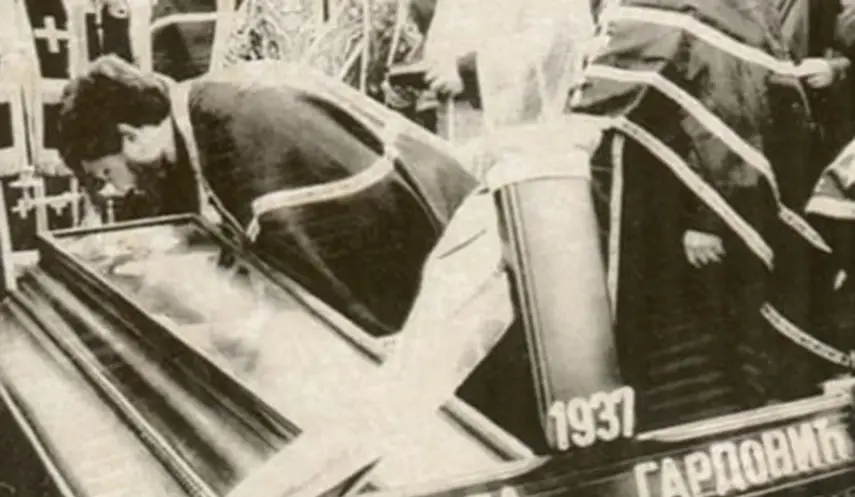
ISTOČNO SARAJEVO, FEBRUARY 26 /SRNA/ - Republika Srpska, its institutions, and the Serb people will never accept as legitimate the March 1 referendum on the so-called independence of BiH, nor will they forget the heinous murder of Nikola Gardović and the burning of the Serbian flag in Baščaršija 34 years ago.
Bosniaks continue to celebrate March 1, the date on which Serbs were outvoted and when Nikola Gardović was killed in Baščaršija.
In the part of the Federation of BiH with a Bosniak majority, March 1 is observed as BiH's Independence Day, while this date is not celebrated in Republika Srpska.
In the perception of Serbs and of Republika Srpska, March 1 is not an Independence Day of any kind, let alone a day for celebration. That date is significant only because it is associated with murder, blood, death, and the hatred that led to many victims.
It was then that mistrust was born, mistrust that still smolders today in BiH, a country facing a ruthless international protectorate, a false High Representative and numerous foreign Serb-haters for whom Republika Srpska is a thorn in the eye.
For Serbs in this region, March 1 still serves as a reminder of the organized act of murder committed in front of the Old Orthodox Church in Baščaršija. Time has shown that the claim made by Bosniak Sarajevo that this crime, as well as the burning of the Serbian flag, was merely the act of a single Sarajevo criminal, Ramiz Delalić, known as Ćelo, was a great lie.
It is clear that this was an organized and armed struggle by Muslim fundamentalists against the Serb people and their national interests in BiH following the breakup of the Socialist Federal Republic of Yugoslavia, all under the auspices of the Party of Democratic Action /SDA/ and the leadership of Alija Izetbegović.
After the referendum was voted through in the Assembly of the former Socialist Republic of BiH and Serb representatives were outvoted, followed by renewed outvoting on February 29 and March 1, 1992, in an illegal referendum, the Serbs in BiH were left with only two options: to accept majorization and face a new genocide, or to organize and defend themselves. They chose the latter.
Even today, double standards prevail on the political scene in BiH, with the international community, together with Bosniak political actors, seeking to challenge the Day of Republika Srpska, while Bosniak officials continue to regularly observe March 1, demonstrating that they show absolutely no respect for Republika Srpska or for the position of the Serb people.