SARAJEVO SERBS CHOSE SRPSKA AND FREEDOM
Republika Srpska - exodus of Sarajevo Serbs - Đogo
03/13/2026
11:27

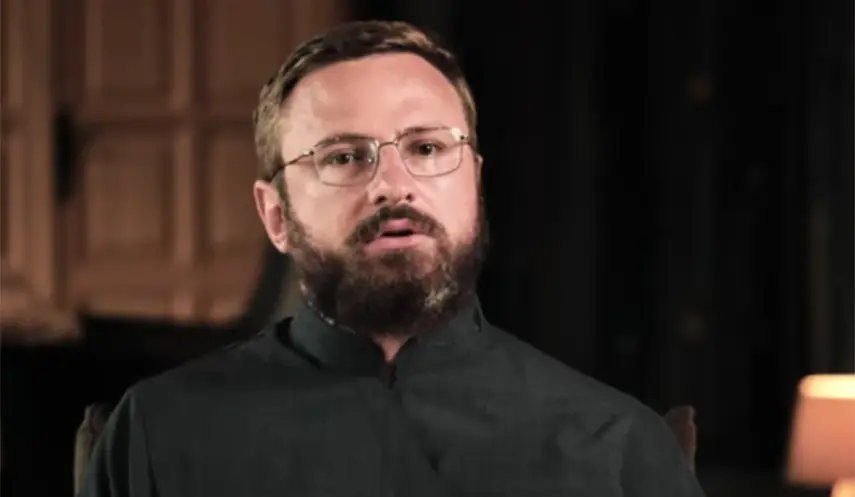
ISTOČNO SARAJEVO, MARCH 13 /SRNA/ - The Dean of the Orthodox Theological Faculty in Foča, protopresbyter-stavrophor Darko Đogo told SRNA that for Sarajevo Serbs the exodus three decades ago was the only option to remain free and in their own state, Republika Srpska, and he stressed that today’s Sarajevo is still burdened by a predominantly aggressive attitude toward Serbs.
Đogo emphasized that freedom and a homeland are as necessary to Serbs as air.
"It is not said without reason that `a homeland is like health,` and it truly is so. For us, Sarajevo Serbs, the exodus was the only option for us to be masters in our own land," Đogo said.
He states that Serbs who had built Sarajevo for centuries and gave their stamp and spirit to the city, which also grew on the wings of Serb merchants and the Serb urban middle class in the mid-19th century and the second half of the 20th century, were forced at the end of the war in BiH to pack their entire history in just a few days and leave their homes for the free Serb territories, and some, unfortunately, also went abroad.
"We all left, realizing that for us it was more important, dearer, and better to have nothing under Serb rule than everything under foreign rule. Deep in our souls, we felt that the entire wartime effort would not be crowned if we did not have Republika Srpska, and that we could not live in some other state," Đogo emphasized.
EVEN TODAY, MEMORIES OF EXODUS STILL BRING BACK PAINFUL SCENES
Đogo notes that it was not easy for the Sarajevo Serbs, because even today, after 30 years, the memory of the exodus still awakens painful scenes.
According to him, in that historic exodus, after the wartime victory, the Serbs were forced under pressure and threats from the Muslim authorities in Sarajevo to pack up their entire lives and leave their homes.
"I lived in Sarajevo for about ten years myself, and even for me it was not easy to leave those ten years behind. How much harder must it have been for people who were born there, or who came as very young children and built their entire lives in Sarajevo, where during the war they defended the Jewish Cemetery or Grbavica, as well as most of the Sarajevo municipalities at the time? They made enormous sacrifices, and then someone signed that all of it would belong to someone else, making it seem as if that entire sacrifice had been in vain," Đogo said.
According to him, in such a tense and turbulent postwar political situation, the Serbs had to leave because they realized that if Republika Srpska had been created where it is and as it is, then it was worth living only on the territory called Srpska.
Đogo says that those were biblical scenes, in which Serbs even carried their deceased with them.
SARAJEVO IS STILL AGGRESSIVE TOWARD SERBS
"Someone today might say that it was unnecessary. Someone might say it was too harsh. Someone might say that people did not realize that afterward they would still live together, or next to one another. But today it is enough just to go and have a coffee in Sarajevo and try to recall the images of your childhood from the streets of that city on the Miljacka, and you will hear how much today's Sarajevo is still burdened by a predominantly aggressive attitude toward Serbs," Đogo emphasized.
He points out that it is simply incomprehensible that most of "political Sarajevo" still perceives Pale and the whole of Serb Sarajevo as symbols of some kind of aggression, which is absolutely not true.
According to him, Sarajevo Serbs reacted intuitively at that decisive historical moment of the exodus, because they recognized that they could not remain and survive in a place where they would not be allowed to be free and to be Serbs.
SARAJEVO'S CHURCH OF TRANSFIGURATION WAS DESECRATED EVEN AFTER THE WAR
"When we look today at cases of seizure of property belonging to the Serbian Orthodox Church, the digging up of cemeteries, and the treatment of our Orthodox churches, although there are also decent people, we see that there are painful facts as well, such as the fact that the Church of the Transfiguration in Sarajevo has been the most frequently attacked and desecrated, from the war until today," Đogo pointed out.
According to him, when Muslim extremists could not carry out some greater act of harm against this or other churches in the Federation of BiH, then out of spite, they tried at least to scratch or otherwise damage the cars of priests of the Serbian Orthodox Church.
He says that Sarajevo Serbs 30 years ago were neither angry nor deluded, nor misled, but that they sensed the danger threatening their lives and property if they remained in territory under Muslim rule.
"However, no matter how much our Serbian heart breaks when you leave your house, your apartment, your entire life and history behind, when you leave everything you have, you are simply aware and determined that you must go where Republika Srpska is, where you will feel free and as you wished to be, and as Serbs have always wished to be," Đogo emphasized.


DODIK: EUROPEAN PATH POSSIBLE WHEN BRUSSELS ACCEPTS SRPSKA WITHIN ITS CONSTITUTIONAL CAPACITY

DODIK: ANNUL DECISIONS THAT HAVE NOT GONE THROUGH PARLIAMENTARY PROCEDURE

DODIK: REPUBLIKA SRPSKA DELEGATION TO VISIT CHINA BY THE END OF THE YEAR

DODIK: PROCLAIMING NEW CONSTITUTION ON JANUARY 9 PLANNED