REPUBLIKA SRPSKA HAS RIGHT TO SPEAK WITH ITS OWN VOICE
Republika Srpska - Trišić Babić – opinion piece
09/01/2026
12:22
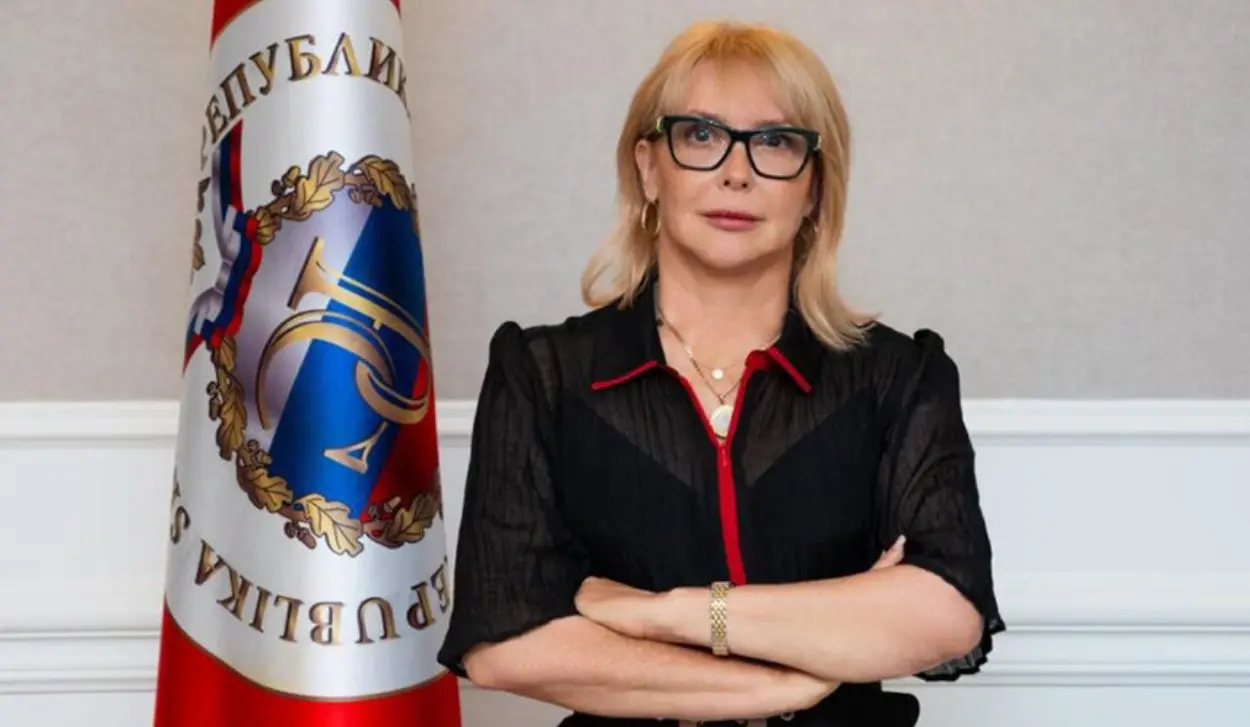
BANJA LUKA, SEPTEMBER 1 /SRNA/ - In international politics, you do not lose only when you run out of arguments; you lose the moment you agree to let someone else interpret your arguments for you, acting director of the Office for International Cooperation Ana Trišić-Babić said.
"Republika Srpska has for too long been portrayed in the international arena almost exclusively in a negative light. It has been spoken of as a problem that needs to be solved, an obstacle that needs to be removed, and a political phenomenon that needs to be disciplined.
Its positions have often not been interpreted from the perspective of its legitimate interests, but rather through pre-defined political categories. This created a situation in which others spoke about Republika Srpska, while the space for Republika Srpska to speak for itself remained disproportionately narrow," Trišić-Babić said in an opinion piece published on the website of the Office for International Cooperation — diplomatijars.rs — which SRNA is publishing in full:
There are moments in political life when the establishment of an institution is not an administrative act, but a response to a situation that has become politically untenable. The establishment of the Office for International Cooperation of Republika Srpska is precisely such a decision.
It stems from the simple fact that there is no longer any point in concealing behind diplomatic formulations: the international standing of BiH has long failed to reflect the balance of interests of its constituent parts, nor can Republika Srpska accept that its interests abroad be represented without its genuine influence over how those interests are presented.
Relations in BiH are deeply dysfunctional. This is not the result of a single political dispute, one term in office, or one decision. It is a long-standing structural problem in which what was once shared has gradually ceased to be truly shared, while institutions that should reflect the complex constitutional nature of BiH have increasingly been used as instruments of a single political vision of the state.
Foreign policy may be the clearest example of this problem.
In international relations, there is no such thing as neutral representation. Whoever defines the problem, chooses the interlocutors, sets the priorities, formulates the messages, and interprets political developments wields political power. That is why the question of who speaks on behalf of BiH has never been merely a technical matter of diplomacy. It is a question of political subjectivity.
In international politics, you do not lose only when you run out of arguments. You lose the moment you agree to let someone else interpret your arguments for you.
Republika Srpska has for too long been represented in the international arena almost exclusively in a negative light. It has been spoken of as a problem that needs to be solved, an obstacle that needs to be removed, and a political phenomenon that needs to be disciplined.
Its positions have often not been interpreted from the perspective of its legitimate interests, but rather through pre-defined political categories. This created a situation in which others spoke about Republika Srpska, while the space for Republika Srpska to speak for itself remained disproportionately narrow.
This is not a matter of communication. It is a matter of power.
Peoples do not disappear from the map first. They disappear when they agree to let others tell them who they are, what they are allowed to want, and where the boundaries of their interests lie.
The right of a political community to explain its own interests is one of the fundamental hallmarks of political agency. Those who have no ability to offer their own interpretation become the subject of someone else’s interpretation. Those who have no ability to articulate their own interests sooner or later become the object of others’ interests.
Republika Srpska can no longer accept such a position.
The problem is deeper, because behind many of the institutional disputes in BiH lies a political project that should be called by its proper name. It is a unitary and centralist concept according to which BiH should gradually move away from its Dayton structure, while Republika Srpska’s actual political influence would be continuously reduced.
Such a policy rarely manifests itself openly. It is implemented gradually. One jurisdiction today, a new interpretation tomorrow, an institutional practice the day after that. What is presented as an exception at one point becomes a precedent at the next, and then a rule.
Foreign policy is particularly important in this process because international representation shapes political reality within the country as well. If one political concept succeeds in monopolizing the representation of BiH to the outside world, it thereby gains the ability to present its own interpretation of the state as the only legitimate interpretation.
That is precisely why equality cannot exist only on paper.
If Republika Srpska bears the consequences of international decisions, economic processes, European integration, regional relations and geopolitical changes, then it must have a genuine ability to articulate its interests to the actors who make decisions on these matters. Anything else creates a structural imbalance. Equality without a voice is not equality.
Contemporary political practice shows that the international presence of federal or decentralized units is by no means an exception, but rather a standard feature of properly functioning systems. In the Federal Republic of Germany, one of Europe’s most stable federations, Article 32 of the Constitution provides that the Länder may, insofar as they have legislative powers, conclude treaties with foreign states with the consent of the federal government.
The German Länder have their own representative offices and actively protect their economic, educational and cultural interests around the world. Belgium’s experience goes a step further: its regions and communities have developed strong international capacities in areas falling within their respective jurisdictions, including direct foreign contacts and certain independent actions vis-à-vis other states.
The Swiss cantons, for their part, participate in shaping positions when international decisions directly affect their areas of competence, because a serious federation understands that responsibility for the consequences cannot be separated from the right to participate in decision-making.
Even in the United States, where individual states do not conduct foreign policy in the classical sense, they vigorously develop international trade, investment and educational offices, because it has long been understood that protecting a specific interest is not the same as competing with the central government.
The question, therefore, is not whether a political community has the right to develop international contacts in areas relating to its constitutional and development interests, but whether it is prepared to exercise that right responsibly, professionally and consistently. The establishment of the Office for International Cooperation is therefore, above all, a decision by Republika Srpska to put an end to the practice of accepting the role of an object.
We are not seeking the right to speak on behalf of others. We are taking responsibility for speaking for ourselves. That is the essential difference.
The Office is not an administrative ornament, a protocolary addition, or an institution established to create new positions. It is intended to be an instrument for serious, professional, and sustained international engagement by Republika Srpska.
Its role is not to create a parallel diplomatic structure outside the existing constitutional order, but to build a complementary diplomatic capacity that will, within that framework, protect the interests of Republika Srpska where they are currently not sufficiently represented.
This is not an escalation. It is an institutional response to an existing imbalance.
The Office for International Cooperation is not a luxury. It is a long-overdue form of institutional self-defense. Our priorities must therefore be concrete.
The first is defending the constitutional position of Republika Srpska and consistently explaining the Dayton structure of BiH to the international community. Dayton is not a historical footnote or a temporary arrangement that applies only as long as it suits someone politically.
It is the foundation of BiH’s current constitutional order and the framework within which its political life is possible. The second priority is to develop direct relations with governments, parliaments, political parties, academic institutions, business associations, research centers and other relevant international actors.
Republika Srpska must be present where positions are being shaped, not merely where assessments that have already been made are subsequently communicated.
The third priority is monitoring political processes that may have direct consequences for Republika Srpska, from European integration and security policies to energy, trade, migration and changes in the international economic order.
A small political community cannot determine the rules of the global system, but it can understand where changes are emerging, assess their consequences on time and protect its own interests. That is precisely what distinguishes serious policymaking from a policy of reaction.
The international engagement of Republika Srpska, however, must not be reduced solely to institutional and status-related issues.
Investment diplomacy must become one of the pillars of the Office’s work. Capital does not come on the basis of political declarations. It goes where there is information, contacts, legal predictability, and people capable of connecting a specific project with a specific investor.
Republika Srpska must systematically identify the markets and sectors in which it has comparative advantages, from energy, agriculture and the food industry to tourism, infrastructure, the timber industry and emerging technologies. Our international engagement must deliver measurable economic results.
Capital does not follow political slogans, but seriousness. And seriousness in international relations is measured by presence, knowledge, reputation and the ability to explain your interests before someone else interprets them for their own benefit.
Cultural diplomacy is equally important. A people who allow others to define them permanently gradually lose the ability to determine their own place in the world. Republika Srpska has its own cultural, historical, and institutional reality, which should be presented without any sense of inferiority and without the need to explain its existence to anyone as a political anomaly.
Universities, cultural institutions, artists, scholars, historical heritage and contemporary creative work are all part of Republika Srpska’s international identity, just as its political institutions are. Culture is often a quieter form of politics, but its effects last longer than many official statements. Those who allow others to tell their story eventually surrender the place they have in the world as well.
The Diaspora holds a particularly important place. For decades, we have viewed the Diaspora primarily through a sentimental lens. It is time we began to view it strategically. People from Republika Srpska who live in Europe, North America, Australia, and other parts of the world are not merely keepers of family ties.
Among them are entrepreneurs, professors, doctors, engineers, professionals, and people with political and social connections. A serious state does not leave such potential to chance.
We need a network of knowledge, capital, contacts, and trust that will connect the Diaspora with the institutions of Republika Srpska; not occasionally and ceremonially, but on a permanent and organized basis. All of this requires a change in the way we understand international politics. The world is not a place where those with the best arguments prevail if no one hears them.
International relations are not a seminar in political theory. Interests are articulated, alliances are built, reputations are established, contacts are maintained, and political space that you do not occupy yourself is very quickly occupied by someone else. The world does not always hear those who are right. It hears those who are present, prepared, and capable of turning what is right into a political argument.
Republika Srpska must act with full awareness of this reality. The Office for International Cooperation is therefore not an institution against anyone. It is an institution for Republika Srpska. Its existence stems from a responsibility to our institutions, our citizens, our economy and our constitutional position.
Our task is not to produce yet another interpretation of Republika Srpska among many others. Our task is to ensure that the voice of Republika Srpska is heard where decisions are made, policies are shaped, and perceptions are formed that later have very concrete political consequences.
The time when others had a monopoly on explaining Republika Srpska must come to an end. Not because we expect everyone to agree with us, but because we no longer accept others determining what we are, what we are allowed to want, and where our legitimate interests end.
From Germany and Belgium to Switzerland and the United States, well-ordered systems do not operate on the assumption that their federal or decentralized units should remain silent on issues that directly shape them.
On the contrary, stability is built when internal constitutional reality is accompanied by responsible external representation.
I therefore consider the establishment of the Office to be a responsible and necessary statesmanlike step. Republika Srpska is taking greater responsibility for its own international positioning, its economic ties, its political contacts, its culture and its relations with its Diaspora.
We have the right to our own voice. We have a duty to make that voice serious, competent and present. Those who do not invest in their own voice end up financing someone else's interpretation of their own interests. Republika Srpska will no longer be merely a subject of international politics.
Tag s

HYSTERIA FOLLOWING DEATH OF GENERAL MLADIĆ SHOWS THAT IT IS IMPOSSIBLE TO LIVE TOGETHER IN BiH
POLITICAL SARAJEVO'S HATRED TOWARDS SERBS AND SRPSKA NEEDS MEDICAL TREATMENT
ISTOČNO SARAJEVO HAS POTENTIAL TO BE AMONG MOST DEMANDED DESTINATION
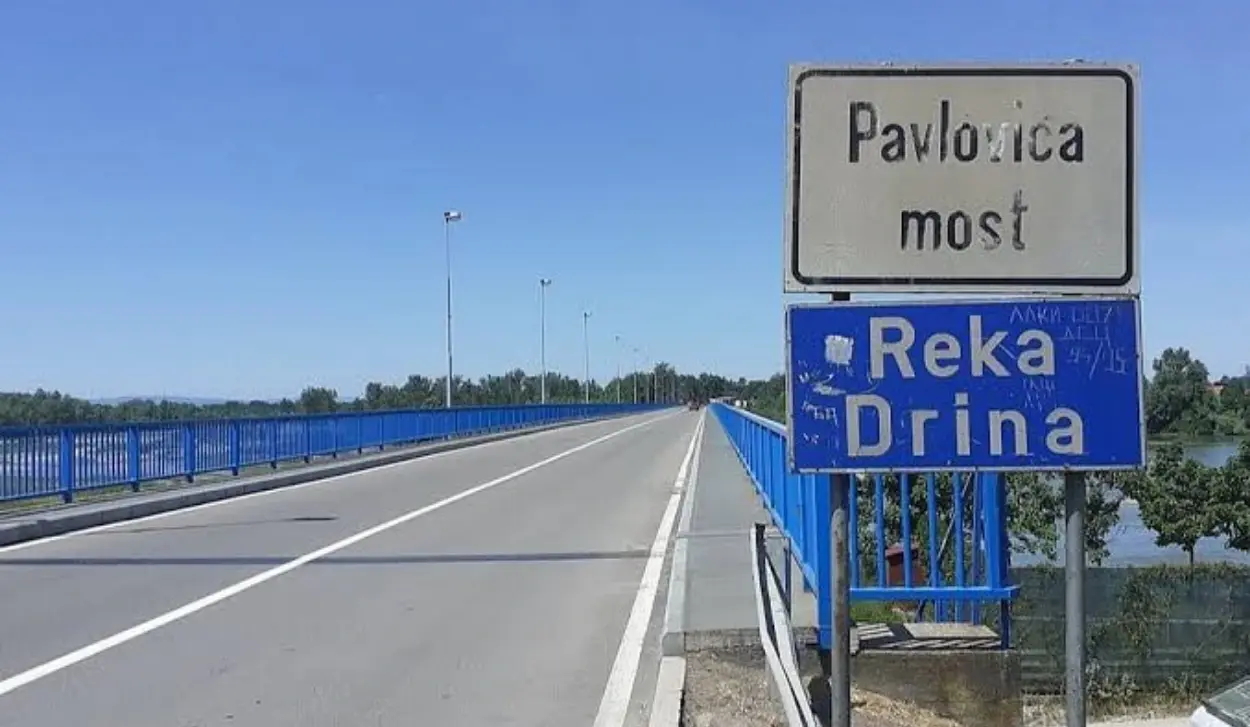
CROSSING THE PAVLOVIĆ BRIDGE FREE OF CHARGE AS OF TODAY