RAJILIĆ: OPERATION STORM - THE LARGEST GENOCIDE AGAINST SERBS SINCE JASENOVAC
Republika Srpska - Association of Women Victims of War
08/01/2026
12:20
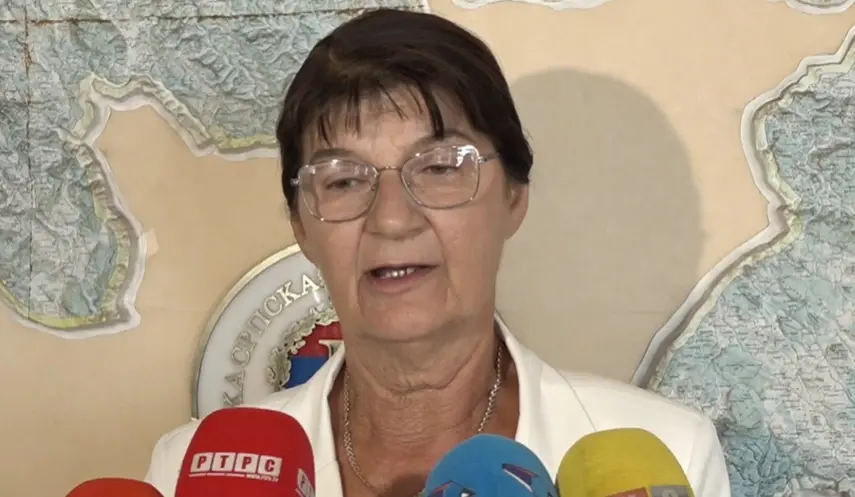
BANJA LUKA, AUGUST 1 /SRNA/ – The suffering of Serbs during the criminal Operation Storm and its follow-up Operation Southern Move in 1995 is the largest act of ethnic cleansing and genocide against Serbs since Jasenovac, Božica Živković Rajilić, the head of the Association of Republika Srpska Women Victims of War, told SRNA.
"It is important to remember the suffering of the Serb people and preserve the truth about these criminal operations so that they are never repeated," Rajilić said ahead of the upcoming observance of the Day of Remembrance for all Serbs killed and expelled during the Croatian-Muslim pogrom against the Serbs of Republika Srpska Krajina and Republika Srpska in 1995, which will be held in Mrkonjić Grad.
Rajilić assessed that, as she put it, fascist policies from Europe and the region prevented international legal proceedings concerning the suffering of Serbs during Operation Storm, adding that the The Hague Tribunal paid particular disregard to Serb victims.
"Following the example of the injustice and instructions of The Hague, the courts in BiH and Croatia acted in the same manner. Mass graves of murdered Serbs remain from the Petrovac Road, through Bravnice, to Mrkonjić Grad," Rajilić said.
She noted that no one has been indicted or convicted for these crimes.
"Perhaps attitudes will change and it will eventually be acknowledged that Serbs also suffered terribly, but by then there will be no living perpetrators or witnesses," Rajilić said.
She recalled that Serbs who survived Operation Storm settled in Republika Srpska or Serbia, adding that it is appropriate for the Day of Remembrance to be commemorated with the support of the governments of Republika Srpska and Serbia.
The Day of Remembrance for all Serbs killed and expelled during the Croatian-Muslim pogrom against the Serbs of Republika Srpska Krajina and Republika Srpska in 1995 will be observed in Mrkonjić Grad on Tuesday, August 4.
The commemoration of this historical event of republic significance is being jointly organised by the governments of Republika Srpska and Serbia.
The Croatian military and police operation "Storm" began on August 4, 1995, with an offensive by Croatian Army and police forces, together with units of the Croatian Defence Council (HVO), in the regions of Banija, Lika, Kordun, and northern Dalmatia, during which more than 220,000 Krajina Serbs were expelled from their ancestral homes.
According to the updated records of Veritas, 1,904 Serbs were killed or remain missing during and after the operation, including 1,250 civilians, around three-quarters of whom were over the age of 60.
The criminal military and police Operation Storm began on August 4, 1995, with an offensive by Croatian Army and police forces, along with units of the Croatian Defence Council /HVO/, in the regions of Banija, Lika, Kordun, and northern Dalmatia, during which more than 220,000 Krajina Serbs were expelled from their ancestral homes.
According to the updated records of Veritas, 1,904 Serbs were killed or remain missing during and after the operation, including 1,250 civilians, around three-quarters of whom were over the age of 60.
The victims also included ten children under the age of 14 and 566 women, about four-fifths of whom were older than 60, representing particularly grim record of the 1990s civil war in the former Yugoslavia, Veritas points out.
The International Court of Justice, in its February 2015 ruling, characterized Operation Storm as ethnic cleansing but not genocide, although experts in the field around the world claim that the operation had all the characteristics of genocide.