NO ONE HAS BEEN INDICTED FOR BEHEADING OF SERBS
Republika Srpska - Srebrenica - testimony
07/02/2026
12:01
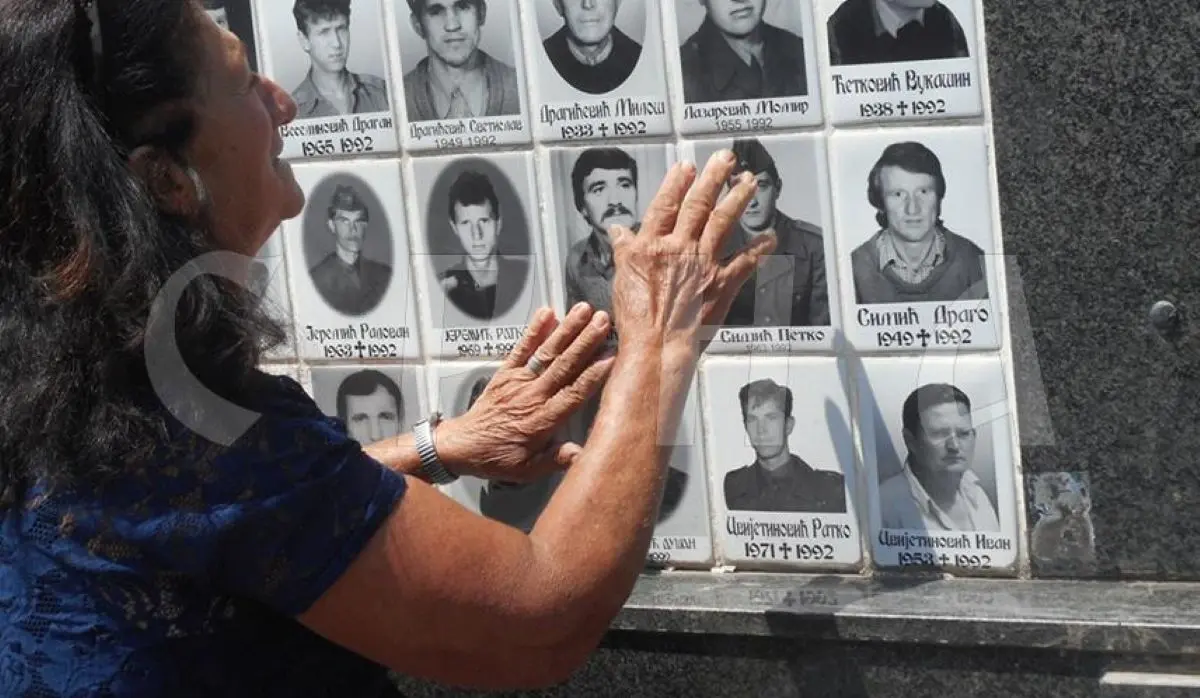
SREBRENICA, JULY 2 /SRNA/ - The Prosecutor's Office of BiH does not respect or apply the provisions of the Geneva Convention regarding the humane treatment of prisoners of war, and it has never indicted criminals from the Muslim ranks for the murders of Serb soldiers who were captured alive at Zalazje, near Srebrenica, on July 12, 1992.
Out of the 22 missing Serb fighters that day, at least seven were taken alive.
This was testified to by the rare survivors who saw when they were tied up and taken away, but also by Serbs who had previously been imprisoned in Srebrenica camps and were later exchanged—facts which were also confirmed by some Bosniaks after the war.
There were multiple testimonies from former camp inmates regarding the torment, torture, and beatings of captured Serbs, but these statements have remained buried in prosecutors' drawers.
CRIMINALS ENJOYED AND WERE REWARDED FOR BEHEADINGS
The monstrous, cruel beheading of captured Serbs was particularly pronounced among the members of the so-called Army of BiH, specifically its 28th Division, which seemed to foster this uncivilized ritual and the tradition of the infamous Ustasha Handschar division from World War II. This division was made up of members of the Islamic faith or, as their commanding mentors called them "Croatian flowers".
It is widely known in Srebrenica, and Dragica Lazarević confirmed to SRNA, that her brother Petko Simić was captured alive at Zalazje, and that his decapitated body was found after the war at a garbage dump.
Even before that case, the elderly Sekula Ristanović from Osredak was beheaded and burned, the elderly Stoja Vasić from Vijogor was burned, and in Ratkovići, Živan Prodanović's head was severed. His head was later found, and his mother Dobrina identified it by the teeth.
The photograph of a mother screaming with her son's skull in her hands traveled the world, but it was circulated with a false caption claiming she was a Muslim mother.
In Brežani as well, deaf-mute Dostana and Krstina Lazić were burned inside their home; their remains, along with those of 88-year-old Stanko Milošević, were never found.
Less than a month after the crimes on St. Peter's Day /July 12, 1992/ at Zalazje, members of the Muslim armed forces from Srebrenica, under the command of Naser Orić, broke into the Serb village of Ježestica near Bratunac on August 8. There, they killed, looted, and burned everything in their path.
On that occasion, they caught brothers Anđelko and Dragan Mlađenović and their mother Savka in their yard. After beatings and torture, they killed Dragan and cut off Anđelko's head. They forced Savka to watch the murder and slaughter of her sons, and then they executed her as well.
According to testimonies, Anđelko was beheaded by Kemal Mehmedović, who also monstrously tortured Nenad Rankić by burning him and severing parts of his body. For cutting off Anđelko's head, Mehmedović was rewarded by Commander Orić.
Additional cases of the beheading of Serbs have been registered.
DRAGO MITROVIĆ SLAUGHTERED TWICE IN TWO WARS
Particularly tragic and characteristic is the case of the slaughter of the elderly Drago Mitrović in Podravanje. He had survived an Ustasha throat-slitting in the Second World War, though it left him without the ability to speak.
When the villain caught him, he told him: "You survived '41, but you certainly won't survive '92." This indicates that the killer knew him and was likely the descendant of a neighbor who had cut his throat in 1941, returning to finish the shameful "job."
There were other cases of throat-slitting and the severing of Serb heads in the municipalities of Bratunac and Srebrenica, but no indictments were ever brought against the executioners, let alone anyone being convicted.
In just one day, on the great Orthodox holiday of St. Peter's Day, Dragica Lazarević lost her husband Momir, her brothers Branko and Petko, brothers-in-law, and several close relatives in Zalazje.
"They perished. They were captured and then killed afterward. They were killed in a Serb village; they didn't attack anyone but were guarding their own. There is no more youth in the village because a large number of young, handsome boys perished, who were just supposed to live and start families," says this embittered woman.
NO INDICTMENTS FOR CRIMES AGAINST SERBS - MUSLIM WARTIME JUDGES CONTINUE TO JUDGE SERBS
She says she remembers that unfortunate St. Peter's Day as if it were yesterday.
"I immediately get upset, I tremble, and the tears start. It's stronger than me," she says, wiping the tears that flow unstoppably down her face with trembling hands.
She points out that the BiH judiciary is under the influence of the West and political Sarajevo, and that the majority of positions there are held by Muslim wartime judges. Instead of being held accountable for the unfounded convictions of Serbs in staged trials—which caused many innocent Serbs to spend years in camps, suffer torture, and be murdered—they have been promoted and rewarded with high salaries.
"The BiH judiciary protects the perpetrators of crimes against Serbs. No indictments are filed for the torture of captured soldiers; for the slaughter, burning, and murder of Serb civilians, the deaf, blind, immobile, and elderly; or for the numerous beheadings of Serbs, a practice in which Orić's followers particularly stood out," this woman emphasizes.
Lazarević says that family members have repeatedly given statements and spoken out, and that the names of both victims and criminals are known. Yet, the BiH Prosecutor's Office does not react, hides the case files, and protects the criminals.
Dragica notes with regret that her neighbor Mara Jeremić did not live to bury the bones of her son Marko, who went missing in Zalazje.
"For years she hoped they would find and bury his bones, as she did for her other son Radovan, but crying and waiting, she passed away. She didn't live to see it," Dragica notes.
She says that the crimes committed against Serbs in the villages around Srebrenica and Bratunac in 1992 and 1993, including the one in Zalazje, are just a continuation of the crimes committed on Trinity Day in 1943 in Srebrenica, Zalazje, and Vitlovci.
"My mother was from Zalazje, and here local Muslims in Ustasha uniforms killed her brothers, cousins, extended family, godparents, and neighbors. A total of 105 Serbs—civilians, including a large number of children—were killed in a single day. In the last war, my brothers, husband, and several members of my extended family were also killed here," states Lazarević.
She emphasizes that no one has answered for these crimes against Serbs in this village, and that because of this impunity, crimes keep repeating.
Lazarević concludes by saying that the Serb families of the murdered and fallen no longer expect earthly justice, but they believe in God's justice and that it will eventually catch up with the villains.