JASENOVAC ATROCITIES AGAINST SERBS MUST NEVER BE FORGOTTEN
Republika Srpska - Banja Luka - commemoration
04/22/2026
10:42
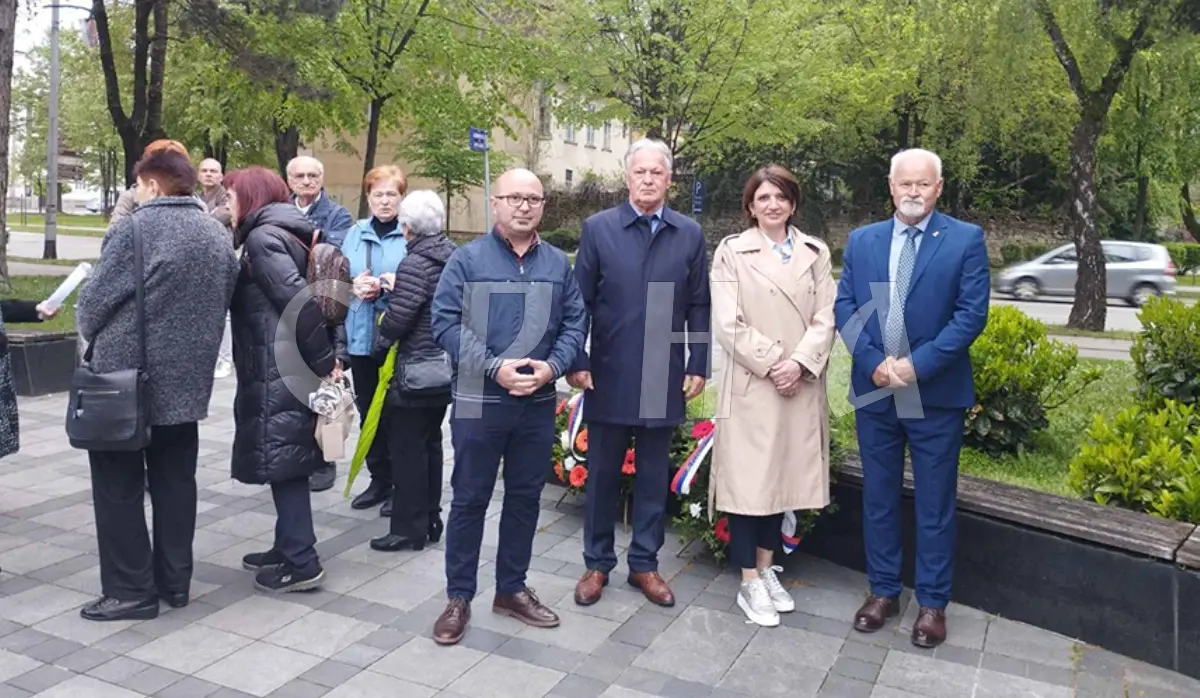
BANJA LUKA, APRIL 22 /SRNA/ – The genocide committed against the Serbian people in the Ustasha-run Jasenovac camp during World War II must never be forgotten by current and future generations, it was stated today at a commemorative gathering in Banja Luka marking April 22, the Day of the Jasenovac camp inmates' breakout.
The President of the Banja Luka City Association of Former WWII Camp Inmates Dragoslav Ilić said that younger generations in Republika Srpska must remember the victims and the heroism of the Jasenovac inmates who carried out the breakout from the largest Ustasha camp during World War II.
"It is important that we remember the sacrifice of the Jasenovac inmates so that we do not become victims again, and that we cultivate remembrance in a way that prevents revenge," Ilić told reporters at the event marking 81 years since the breakout, held at the Poplar of Horror Memorial in Banja Luka.
The President of the Republika Srpska Association of Camp Inmates Anđelko Nosović stressed that the crime of genocide committed against Serbs in the largest Ustasha camp during World War II must never be forgotten, emphasizing that it is especially important to speak about it to young people.
"The Serbian people should never forgive this crime, as they had no right to kill us then, just as they had no right during the past Defense-Homeland War," Nosović said.
The commemorative gathering was attended by representatives of republic and city authorities, the Banja Luka Association of World War II Camp Inmates, the Republika Srpska Association of Camp Inmates, as well as students of the Banja Luka Secondary Medical and Electrical Engineering Schools.
Wreaths were laid at the Poplar of Horror Memorial by representatives of the Banja Luka City Association of Former WWII Camp Inmates, the Republika Srpska Association of Camp Inmates, and the City of Banja Luka.
Surviving inmates of the notorious Ustasha Jasenovac camp launched a breakout on April 22, 1945. Of the 1,073 who attempted the desperate charge against the guards, only 169 managed to reach freedom.
The NDH death camp system comprised around 80 camps, with Donja Gradina, the largest execution site within the Jasenovac camp system, established in August 1941.
According to the Donja Gradina Memorial Area, 700,000 victims of Ustasha crimes perished in the Jasenovac camp during World War II, including 500,000 Serbs, 40,000 Roma, 33,000 Jews, and 127,000 antifascists. A total of 20,000 children were killed at Jasenovac.