GROWING SRPSKA PRESIDENT’S POPULARITY, OPPOSITION LOSING CONFIDENCE
Republika Srpska - public opinion - research
04/01/2025
13:04
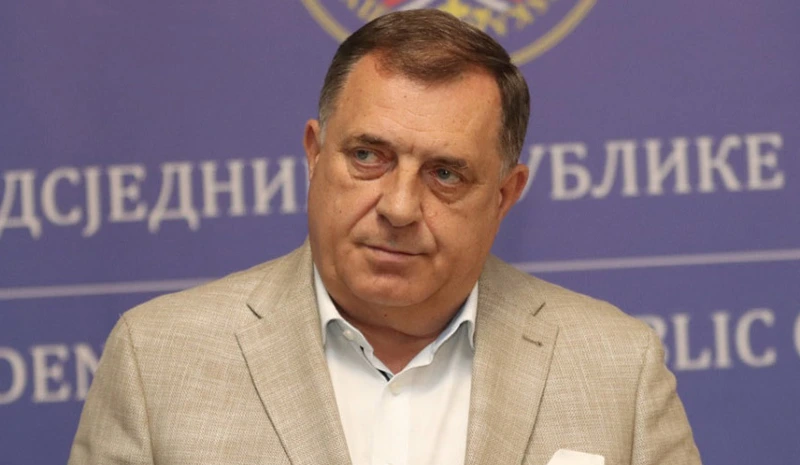
BANJA LUKA, APRIL 1 /SRNA/ - According to a public opinion survey conducted in March by a Belgrade marketing agency, the popularity of Republika Srpska President Milorad Dodik is growing, while the opposition is losing people's confidence.
The survey showed that in the midst of one of the most sensitive crises in the history of Srpska, the majority of residents still believe that Republika Srpska is taking the right course.
The ruling against the president of Republika Srpska was the trigger for a series of political and social reactions in Srpska, while the people convincingly express the view that it is politically motivated.
Only 11.4 percent believe that the judgment is "legally founded," while 13.7 percent of the respondents said they do not have an opinion, according to the survey.
Such position is dominantly shared not only by the voters of the ruling parties, but also by a considerable number of those who do not vote or are politically undecided.
"This kind of perception is crucial, because it indicates a deep mistrust of citizens towards judicial institutions that operate outside Republika Srpska and further strengthens the position that the politician is not being tried - but the institution he represents," the research stated.
The response of Republika Srpska, which is reflected in the passing of the new constitution and laws adopted by the National Assembly, is fully supported by 38.9 percent of respondents, partially by 20.8 percent, not supported by 23.2 percent, while the rest have no opinion.
"Whether full or partial support, it is clear that the people do not perceive these moves as arbitrary or destructive, but as an institutional attempt to keep the crisis within the framework of the parliamentary process," the results of the survey show.
At a time of growing general feeling of insecurity, support is not flowing towards protest, but towards mechanisms that show continuity, not a break in order.
The thesis from previous research cycles is also confirmed - the trial of Milorad Dodik, instead of weakening him, strengthened him politically, making him a symbol of political continuity in that narrative, while the opposition is unsuccessfully trying to convince the citizens that the judgement is a personal reckoning, reads the research in the possession of Srpskainfo.
Voters' confidence is also growing when it comes to elections in Republika Srpska, thus the survey reads that in the January-March period, Dodik's advantage over Draško Stanivuković increased to as much as 17 percent.
On the other hand, the opposition continued to produce negative results. They did not present clear positions during the political crisis. The voters see their politics as lost or are of the opinion that they do not know what they are doing or behave irresponsibly.
In the part of the research that concerns the behaviour of political subjects, the opposition receives defeating marks – the confidence did not grow, their presence in the public during this period left almost no positive mark.
Almost two-thirds of residents believe that the crisis will eventually be resolved through dialogue and negotiations, not through unilateral or radical moves.
Precisely this difference between what is currently supported /institutional response/ and what is hoped for /dialogue/ speaks of the maturity of the electorate - citizens want a decisive response, but prefer solutions through appeasement, not escalation, concludes the research of the Belgrade marketing agency.