GOVERNING IMPOSED DECISIONS WITHOUT LEGAL BASIS
Republika Srpska - UN Security Council - report
05/04/2026
09:23
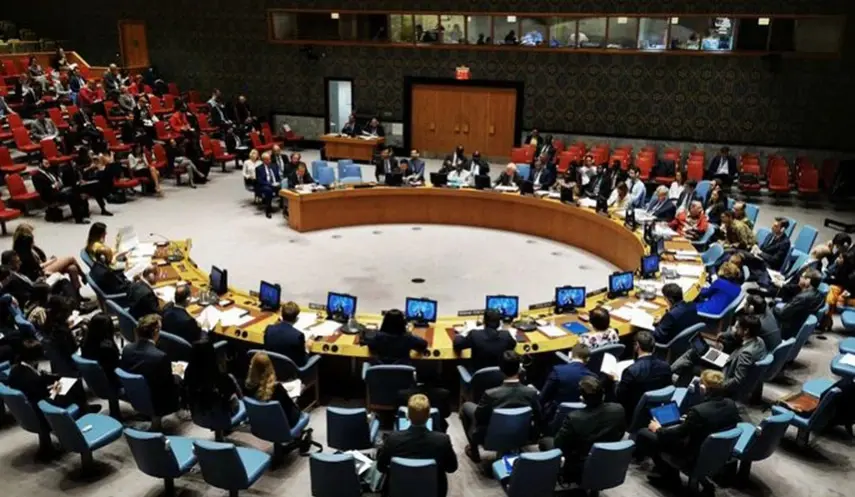
BANJA LUKA, MAY 4 /SRNA/ – High representatives, particularly the current officeholder Christian Schmidt, have governed BiH unlawfully through imposed decisions without any oversight, introducing new "laws" at their own discretion simply by publishing them on the OHR website, according to the 35th report of the Government of Republika Srpska submitted to the UN Security Council.
The document explains that the Dayton Agreement envisages the appointment of a high representative with a strictly limited mandate, encompassing non-legislative functions such as mediation between parties and coordination of international activities in the post-war period, but does not grant any legal authority to enact laws or otherwise issue decisions binding on citizens in BiH.
The report emphasizes that the Constitution of BiH explicitly stipulates that laws can be adopted only by the legislative authorities of BiH.
Instead of respecting the Constitution and the limited mandate of the position, successive high representatives, particularly Schmidt, have, according to the report, governed BiH unlawfully through imposed decisions without oversight, introducing new "laws" at their own discretion via the OHR website.
"To ensure his autocratic authority remains beyond any control, Schmidt continues to enforce a strict ban on any judicial proceedings that 'in any way challenge' his decisions, meaning that his personal decrees stand even above rulings of the Constitutional Court. It is widely known, and even acknowledged by former high representatives, that the so-called dictatorial powers of the high representative are unlawful", the report states.
BONN POWERS DESCRIBED AS LEGALLY DISPUTED
The report reminds that Carl Bildt, the first high representative, recently wrote that the legal basis of the so-called Bonn powers is "highly questionable".
Carlos Westendorp, the first high representative to assume these powers, later acknowledged that they were not entirely legal.
"Moreover, any serious legal analysis of the powers claimed by high representatives to rule by imposition concludes that they are flagrantly unlawful", the report states.
It cites, among others, a legal analysis in the Goettingen Journal of International Law, in which author Tim Banning concludes that "the Bonn powers cannot be considered legally granted authority and their existence is a powerful but misleading legal fiction."
Former OHR legal adviser Matthew Parish also wrote that "the level of legal fiction involved in the creation of the Bonn powers is astonishing".
The report notes that political leaders in BiH have observed that some foreign powers, while emphasizing the importance of the rule of law, ignore that principle when it comes to what it describes as unlawful governance by the OHR through imposed decisions.
"An increasing number of observers recognize that the powers invoked by high representatives and Schmidt lack any legal foundation and are, in fact, counterproductive. Like some other countries, the United States has reasonably ceased supporting governance by Christian Schmidt through imposed decisions", the report states.
At a hearing of the Subcommittee on Europe of the US House Foreign Affairs Committee in December 2025, Chairman Keith Self described the Bonn powers as "unchecked authority" that is "legally questionable".
"In February this year, the Constitutional-Legal Commission of the House of Representatives of the BiH Parliamentary Assembly adopted a conclusion confirming what has always been clear - that the high representative has no constitutional authority to enact laws", the report adds.
CLAIMS OF UNCONSTITUTIONAL CENTRALIZATION
Despite what the report describes as the evident illegality of the OHR's powers, high representatives, including Schmidt, have used them to advance the political agenda of Bosniak parties aimed at significant centralization of BiH, contrary to the federal constitutional structure agreed in Dayton.
It further states that mechanisms of power-sharing defined by the Constitution have been undermined by those supporting the concentration of authority at the state level.
The Constitution of BiH stipulates that all governmental functions and powers not explicitly assigned to BiH institutions belong to the entities.
"Despite this clear constitutional provision, institutions at the BiH level today exercise numerous functions and powers that have not been explicitly, or even implicitly, assigned to them. This unconstitutional centralization is almost entirely the result of unlawful interventions by high representatives", the report states.
The document also claims that the Constitutional Court of BiH, influenced by foreign and Bosniak judges acting in coordination, has failed to prevent these violations and has instead used opportunities to weaken Republika Srpska, often with support or tacit involvement from the OHR and certain foreign capitals.