FIGHT FOR JUSTICE TO CONTINUE
Republika Srpska - Srebrenica - culture of remembrance
07/12/2026
15:34
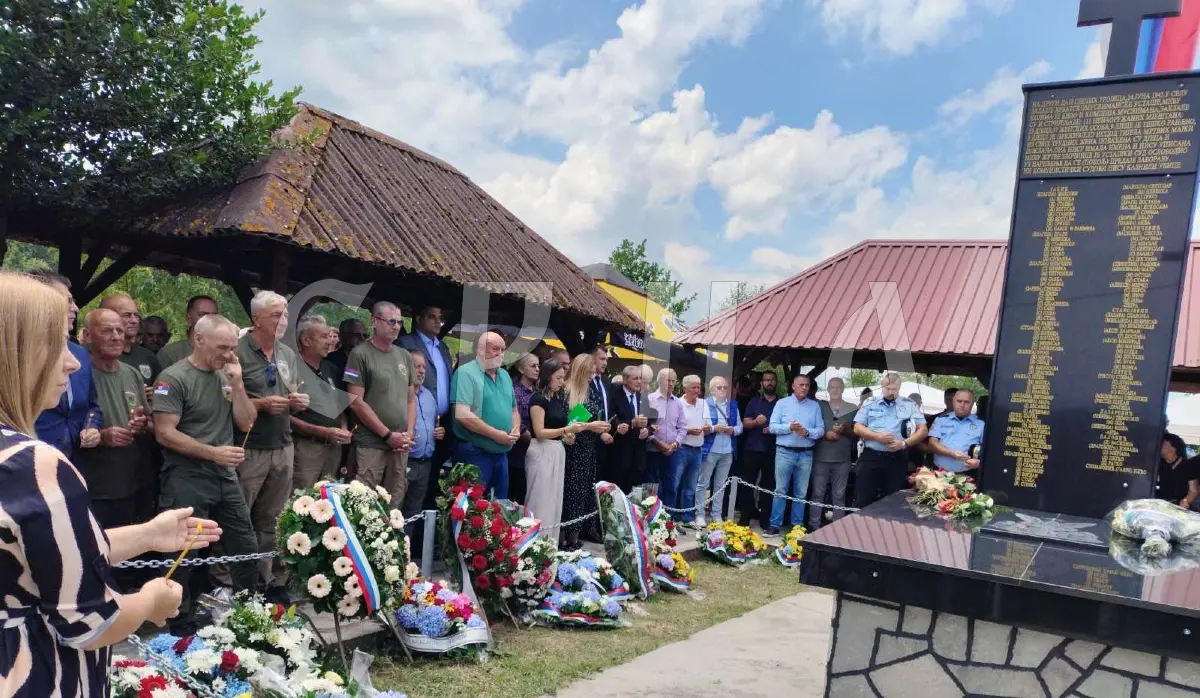
SREBRENICA, JULY 12 /SRNA/ – The fight for justice for Serbs from villages in the Srebrenica and Bratunac areas who were killed on July 12, 1992, will continue, participants said today in Zalazje near Srebrenica, where the 34th anniversary of the deaths of 69 Serb civilians and soldiers killed on St. Peter's Day by members of Muslim forces was commemorated.
A memorial service was held at the monument and ossuary dedicated to Serbs killed in the 1992–1995 war and the Second World War in Zalazje for the 69 Serb civilians and soldiers killed on St. Peter's Day in 1992, as well as for 22 who were captured and later killed.
Srebrenica Mayor Miloš Vučić said the day remains one of mourning for the Serb people in the municipality.
"St. Peter’s Day has been a day of sorrow for 34 years because the pain and grief for those who died defending their people and Republika Srpska have never ceased. The additional pain is that no one has been prosecuted, let alone convicted, for the killing of prisoners who were taken alive. That speaks volumes about the judiciary and its attitude toward Serbs," Vučić said.
He said the judicial authorities of BiH had treated all Serbs as legitimate targets and that this injustice must be corrected.
"After the war, Serbs were intimidated and threatened with imprisonment if they testified about Serb suffering. We must protect witnesses and continue the fight for justice," Vučić said.
According to him, there is also an obligation to preserve the culture of remembrance and create conditions for a dignified life for those who survived in the area.
Biljana Kandić, a member of the organizing committee for commemorating Serb victims in Srebrenica, said families of the missing were disappointed by what they see as the BiH Prosecutor's Office's failure to prosecute crimes committed in the village.
"This is a Serb village. The people here defended their homes and families and attacked no one, yet no one has been held accountable for the killing of prisoners, which shows the kind of injustice dispensed by the judiciary of BiH," Kandić said.
Momčilo Cvjetinović, whose sister Radinka was killed in Zalazje on St. Peter's Day in 1992, also spoke.
He pointed to what he described as a pattern of crimes against Serbs committed on Orthodox religious holidays.
"No one has been held accountable for any of these crimes, and that is why they were repeated," Cvjetinović said.
Dragica Lazarević lost her husband, Momir, and her brothers Branko and Petko on St. Peter's Day.
"They were captured in Zalazje. My brother Petko was found decapitated at a garbage dump. It is tragic what is being done to the Serbian people, for whom there is no justice because no one is held accountable for the killings of Serbs. These are the rules imposed on us by the West, where one side is blamed in advance and courts later issue rulings without examining whether those judgments are justified," Lazarević said.
She said her wounds have never healed and that she remembers that St. Peter's Day as if it were yesterday.
"Here in Zalazje, my mother's brothers and relatives were killed in 1943, and in this war my husband, two brothers, brothers-in-law, relatives and many young people were killed here," Lazarević said through tears.
She added that many of those who were killed had never married and left no descendants.
Flowers were laid at the memorial by Republika Srpska National Assembly Vice Speaker Petko Rankić, Marko Milisav, envoy of the Serb member of the BiH Presidency, Republika Srpska Minister of Transport and Communications Zoran Stevanović, family members of those killed and Aleksandar Šešelj, vice president of the Serbian Radical Party of Serbia.
Flowers were also laid by Srebrenica Mayor Miloš Vučić, Bratunac Deputy Mayor Ninko Tešić, representatives of the Birač Region Association of Camp Inmates, and veterans' organizations from the Srebrenica and Bratunac municipalities.
Before the memorial service, a restored monument to Serb victims of the Second World War was consecrated. The monument now bears the names of 111 victims, 14 more than previously.
Before the service, family members, fellow veterans and municipal delegations from Srebrenica and Bratunac laid flowers at the cemetery in Bratunac, where most of those killed are buried, as well as at memorial sites in Biljača and Sase.
The memorial service in Zalazje concluded the eight-day "Petrovdanski Dani" program of memorial, humanitarian, religious, cultural and sporting events organized by the Srebrenica Committee for Commemorating Serb Victims.
According to the report, on St. Peter's Day in 1992, Muslim forces from Srebrenica under the command of wartime commander Naser Orić continued what it describes as a systematic campaign of ethnic cleansing against Serbs in the Srebrenica and Bratunac municipalities that had begun in April that year.
The report states that the forces entered several Serb villages, killing residents, looting property and setting homes on fire.
In addition to the 69 people killed on St. Peter's Day 1992, another 22 Serbs were reported missing or captured, 10 of whom are still listed as missing, while many others were wounded.
The report says those who were captured were tortured and abused in detention facilities in Srebrenica before being killed. The remains of 10 victims were accidentally discovered on June 10, 2011, in Zalazje during the search for Bosniak victims.
More than a year later, the remains were identified and buried on St. Peter’s Day in 2012. Two victims had previously been found decapitated at a landfill and buried, while the search for 10 others who disappeared that day is still ongoing.


TRUMP: IRAN BREACHED NUCLEAR AGREEMENT BY ATTACKING VESSEL

PELLEGRINI: SEVERAL NATO ALLIES REJECTED FINANCING UKRAINE ARMAMENTS
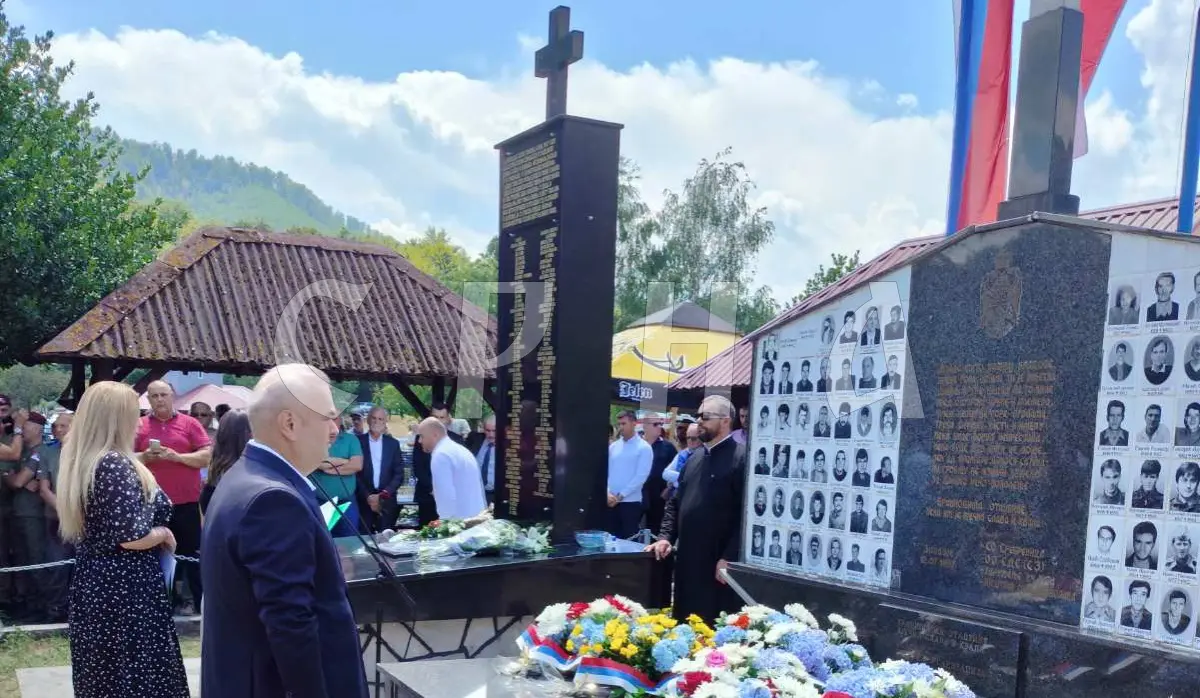
STEVANOVIĆ: HONOR SERB VICTIMS KILLED ON ST. PETER'S DAY AND ENSURE SUCH TRAGEDIES ARE NEVER REPEATED
FIGHT FOR JUSTICE TO CONTINUE