CRNKOVIĆ: LOCAL COMMUNITY'S POTENTIAL TO RESIST IS BEING SUBTLY UNDERMINED
Republika Srpska - Novi Grad - Green Team Association
11/06/2026
12:55

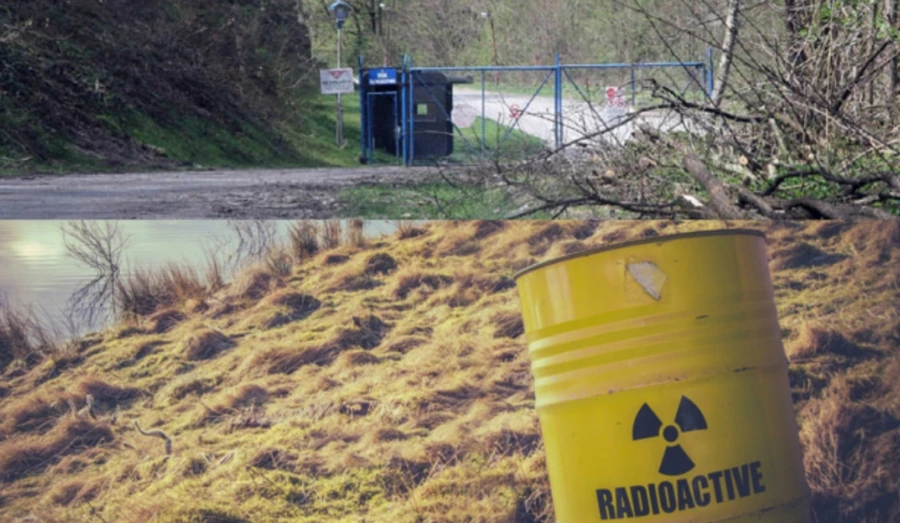
NOVI GRAD, NOVEMBER 6 /SRNA/ – Croatia is making covert efforts to weaken opposition in the municipality of Dvor to the plans to store radioactive waste at Trgovska Gora by involving children in the process, Mario Crnković, head of the Green Team Association from Novi Grad, told SRNA.
Crnković stressed that visits by primary school pupils to the information centre on radioactive waste in Dvor should not be viewed as isolated activities, but rather as part of a serious pattern aimed at creating the impression over a number of years that the issue of radioactive waste at Trgovska Gora is a fait accompli.
"For years, children in Dvor have been told that radioactive waste is not dangerous and that it is an interesting subject. We can also ask a logical question: how many times have children in Split, Pula, Dubrovnik and Osijek been given educational presentations on radioactive waste?" Crnković said.
He pointed to a serious strategic approach involving several subtle methods, all with one practical objective - to undermine the local community's capacity to resist.
He added that all of this was being presented as a development opportunity and that the "propaganda experts" had clearly done their homework, given that exhibitions of local meat products, honey-tasting events and various lectures were being organised at the so-called Radioactive Waste Information Centre.
In his view, financial and political manoeuvring surrounding the issue could temporarily be overlooked, as it was overshadowed by the involvement of children and concerns relating to women's health.
He recalled that, since 2016, children in Dvor had been told that radioactive waste was "cool".
"All of this is part of the documentation compiled by the Expert Team dealing with the Trgovska Gora case. However, this is not just about children, but also their parents and the influence children can have on them. That is a much broader issue," Crnković said.
He added that, for the third consecutive year, free mammography screenings had been organised in the car park outside the Radioactive Waste Information Centre rather than at the local health centre, and that no one had raised any questions about this.
"Apparently, all of this is in line with European norms and standards. There are no special rapporteurs, and everything passes in silence, as though it were perfectly normal. That `normality` is not normal," Crnković stressed.
Noting that efforts were being made to portray as normal the transfer of radioactive waste from Slovenia and other hazardous waste from across Croatia to the border with BiHa, Crnković concluded that it was equally normal for people on the other side of the border to rightfully defend themselves, their homes, the Una River, their loved ones and generations yet unborn.
Croatia plans to store radioactive waste from the Krško Nuclear Power Plant, as well as existing institutional radioactive waste, at the Trgovska Gora site in the municipality of Dvor, directly on the border with BiH.