ĆOSIĆ: PRESERVE MEMORY OF SERB FAMILIES THAT BUILT SARAJEVO
Republika Srpska - Istočno Sarajevo - culture of remembrance
05/19/2026
14:08
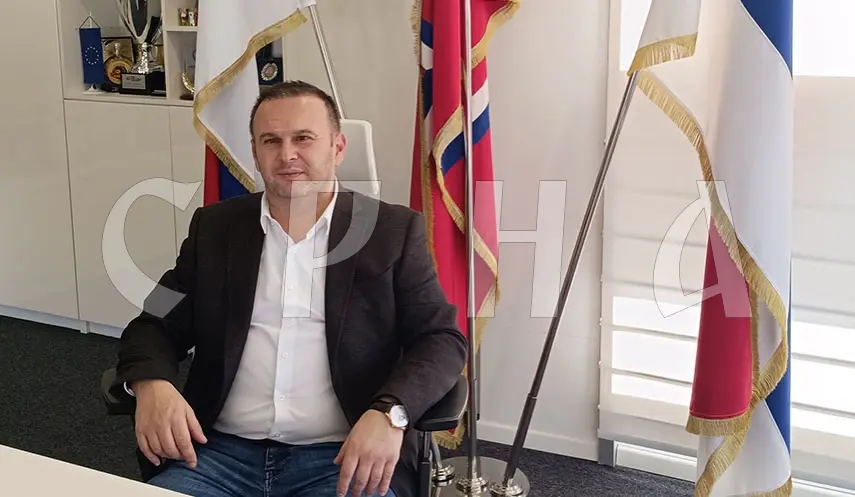
ISTOČNO SARAJEVO, MAY 19 /SRNA/ - The Mayor of Istočno Sarajevo Ljubiša Ćosić said that the city, through the culture of memory, will continue to emphasize the importance of the Jeftanović family and other Serb families who built the former Sarajevo.
Ćosić told SRNA that this morning he hosted Andrea Jeftanović, the great-granddaughter of one of the most respected Sarajevo Serbs, Gligorije Jeftanović, who lives in Chile and is currently in Sarajevo for the purpose of filming a documentary about her family.
He recalled that in 2021, the City Administration of Istočno Sarajevo renovated the family tomb of the Jeftanovićs in Sarajevo, with the aim of preserving the memory of Serb families who in the 19th and 20th centuries significantly influenced the culture, education and infrastructural development of the city.
Ćosić stated that the initiative to name a street in Istočno Sarajevo after Gligorije Jeftanović, that is, the Jeftanović family should be considered.
"I am very glad that Andrea has been coming to Istočno Sarajevo for years and that with us, as she says, she feels like home, because this is her home," Ćosić pointed out.
Gligorije Jeftanović /1841–1927/ was one of the most famous Sarajevo Serbs and a successful businessman, best known as the owner of the Evropa Hotel, opened in 1882, and he also owned a brick and lime factory, shops and other business facilities in Sarajevo.
He was one of the founders of the Serbian Savings Bank and the Serbian National Bank in Sarajevo, and he helped the development of the economy, education, culture and Serbian societies.
Jeftanović helped Serbian schools, cultural societies and the Cathedral Church in Sarajevo, and he was also one of the founders of the Sloga Serbian Singing Society.
He played an important role in the struggle of Serbs for the right to the Serbian language, the Cyrillic alphabet and school self-government during the Austro-Hungarian period, and during the Great War he was arrested and sentenced to prison.
After the Great War, he participated in the political life of the new state, and died in Sarajevo in 1927. He is remembered as one of the most important Serbian businessmen and benefactors of his time.