BOOKS ON THE CREATION OF REPUBLIKA SRPSKA AND THE SREBRENICA CONSPIRACY PRESENTED
Republika Srpska - Srebrenica - culture
11/15/2026
14:53

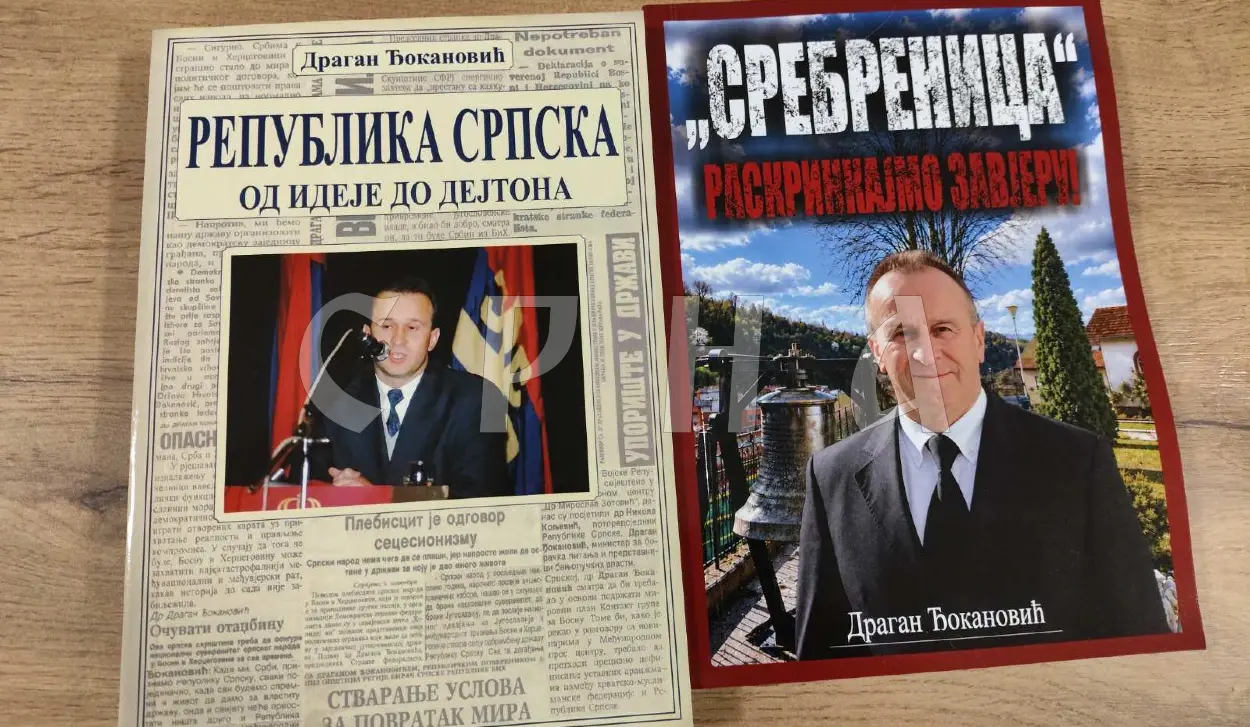
SREBRENICA, NOVEMBER 15 /SRNA/ - Dragan Đokanović today presented his books Republika Srpska – From Idea to Dayton and Let Us Expose the Conspiracy in Srebrenica, in which he proved that the crime in Srebrenica was staged and that the number of Bosniak victims in July 1995 was greatly exaggerated.
Đokanović pointed to collusion between the international community and the Muslim wartime leadership, agreement and preparations for the staging of a crime in Srebrenica in order to blame the Serb side and conceal the mass crimes committed up to that point by members of the 28th Division of the so-called Army of BiH.
"Everything was prepared in advance. I have proven this in the book based on Muslim and several international documents. These documents show that the figure used by Bosniaks today for the number of people killed in July 1995 is incorrect. That figure has been inflated several times over," Đokanović said.
He added that a comparison of all the documents led to an estimate of between 2,500 and 3,000 victims, a large number of whom were killed during the breakthrough at Baljkovica, near Zvornik.
He pointed out that the Muslim military column was heavily armed when it set out to break through from Srebrenica, as evidenced by the fact that its members killed dozens of Serb fighters and captured three tanks.
"Unarmed civilians, as the Muslim side claims today, could not have done that," Đokanović stressed.
Đokanović said it was necessary to continue documenting the truth about the suffering of Serbs in the Podrinje region and exposing false claims about the scale of Bosniak suffering in July 1995.
He said this was supported by facts about members of the 28th Division who had been displaced to 80 countries around the world, noting that the names of many of them were listed among the victims at the Srebrenica Memorial Centre in Potočari, as well as that the names of many people who were still alive and had returned to live in Srebrenica, and those who had died before and after July 1995, were included on the list.
He told those present that he had served as a member of the joint Assembly of BiH and subsequently the Assembly of the Serb People in BiH, had been a close associate of the leaders at the time, and had served as Minister for Veterans' Affairs in the first Government of Republika Srpska.
He said he had been familiar with all the circumstances, conditions, dilemmas, decisions and processes involved in the creation and establishment of Republika Srpska, which, he said, was intended to preserve the identity and freedom of the Serb people in BiH and save them from the persecution and oppression being prepared for them.
He also spoke about the original Serb policy of state-building following BiH's secession from Yugoslavia, which was later changed under various circumstances and pressures.
He also outlined various pressures exerted by the international community on Republika Srpska's leadership and the Serb people, as well as collusion between international organisations and the Muslim and Croat sides, namely the wartime leadership of the Muslim-Croat Federation.
He pointed out that all international decisions on BiH during the war years were made by the UN Security Council, while their consideration and endorsement by the UN General Assembly were skilfully avoided, noting that most of these decisions were detrimental to Republika Srpska.
Both of Đokanović's books contain a wealth of documents, which, he said, substantiate the accounts and claims presented in them.


PATRIARCH PORFIRIJE: BEING HUMAN IS BOTH A GIFT AND A TASK
NICULESCU: THREE SHIPS IN THE BLACK SEA HIT BY DRONES
MEMORIAL SERVICE FOR FIGHTER WHOSE REMAINS WERE IDENTIFIED MORE THAN THREE DECADES LATER
BOOKS ON THE CREATION OF REPUBLIKA SRPSKA AND THE SREBRENICA CONSPIRACY PRESENTED