BEES - EXAMPLES OF DEVOTION AND SELFLESSNESS
Republika Srpska - beekeeping - feature story
11/01/2026
11:12

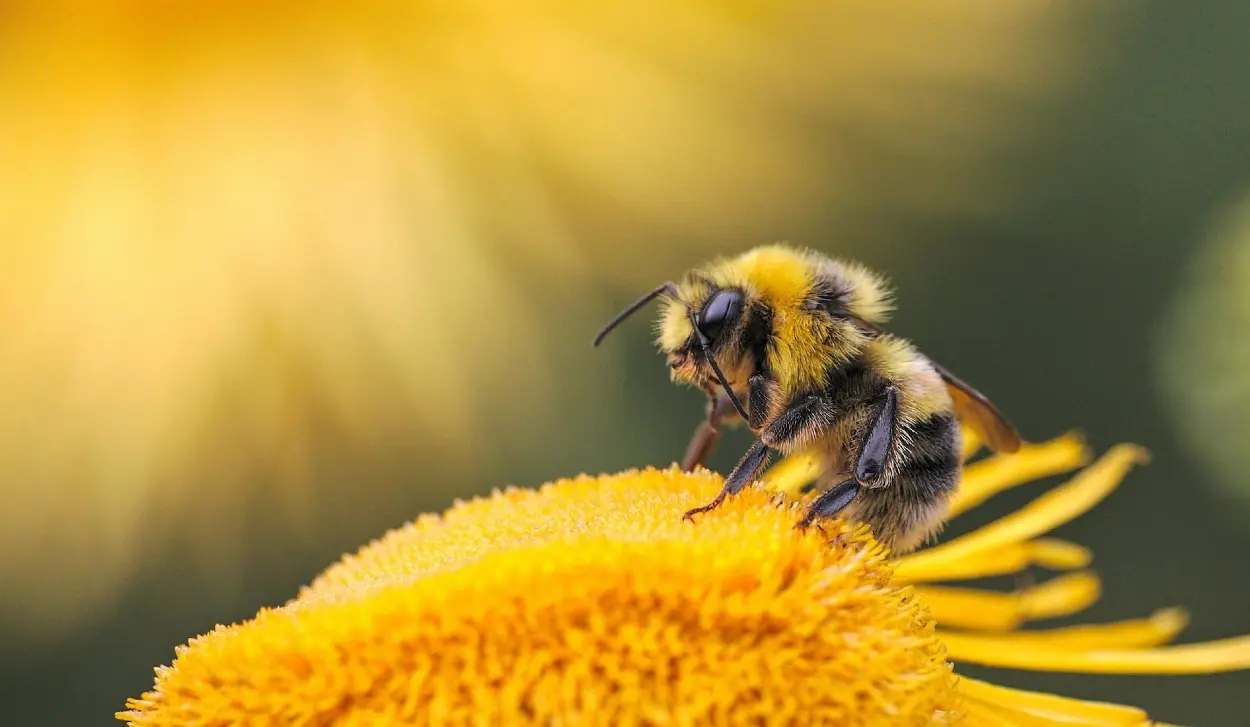
Marković lived in Colorado, USA, for more than five years, but nostalgia and patriotism brought him back to Doboj, where he is eager to use the knowledge he gained abroad to help preserve rural communities and develop agriculture, while also drawing the attention of fellow residents to the natural wealth that surrounds them. By Ana BENCUN
BANJA LUKA, NOVEMBER 1 /SRNA/ - Climate change, drought, counterfeit honey on the market, and a shortage of young beekeepers are major challenges facing beekeeping today. Despite these difficulties, however, bees continue their tireless work, helping ensure prosperity in the areas where they are found.
Darko Marković from Doboj took up beekeeping 25 years ago and currently has 110 bee colonies.
He said that no matter how much people study bees, they will find it difficult to uncover all the secrets of their existence, but that bees are undoubtedly the most organized creatures, devoted to their community and willing to give their lives for it.
"A hive can contain more than 50,000 bees, yet each one knows its role and works for the good of the community rather than for its own benefit. Key decisions concerning the survival of the community must be made unanimously," Marković said.
BEES ALSO COMMUNICATE THROUGH DANCE
Marković said that bees communicate with one another through pheromones, sounds and dance, which scientists are still studying as they continue to discover new ways in which bees communicate.
In the morning, he explained, worker bees leave the hive to forage and, when they discover a particular source of nectar, such as acacia, which is widespread in Republika Srpska, they return to the hive and use dance to indicate the direction of the food source and encourage the other bees to go there.
"Without bees, there is no life, but I am not sure we value them as much as they deserve. Beekeeping is not an agricultural sector that can generate substantial profit, but without the pollination work that bees tirelessly carry out, we would have no fruit, many crops, or seeds for fodder plants and oilseeds, nor would we have forest biodiversity," Marković said.
Marković lived in Colorado, USA, for more than five years, but nostalgia and patriotism brought him back to Doboj, where he is eager to use the knowledge he gained abroad to help preserve rural communities and develop agriculture, while also drawing the attention of fellow residents to the natural wealth that surrounds them.
"I hope that my decision to return and choose agriculture as my main occupation will inspire others to help preserve rural communities, which is not easy given the current climate change and the challenges it brings," Marković said.
LABORATORIES FOR HONEY QUALITY TESTING SHOULD BE STRENGTHENED
He believes that society should work to strengthen and equip laboratories to determine whether bees have been poisoned by pesticides, as well as to establish whether honey is genuine or counterfeit.
"Without thorough chemical analyses, it is impossible to determine whether honey has been diluted with cheaper syrups. Counterfeit products have become so sophisticated that they behave much like genuine honey," said Marković, who is also president of the Republika Srpska Alliance of Beekeepers' Associations.
He said that honey produced in Republika Srpska is of the highest quality, made from wild-growing and often medicinal plants, stressing that the only way for consumers to be sure they are buying genuine honey is to get to know local beekeepers and purchase directly from them.
"That is why we have launched a project to establish a demonstration and educational apiary near Doboj. It would serve as a place where consumers could meet local beekeepers, while young beekeepers would also have the opportunity to learn a great deal about bees. This would encourage more young people to take up beekeeping, as the average age of beekeepers in Republika Srpska is around 60," Marković said.
Mile Milojević from the village of Pervan near Banja Luka has been engaged in beekeeping for 40 years and has more than 150 hives at three locations.
He inherited his love of beekeeping from his father, and his interest grew year after year. He devoted himself to studying professional literature, seeking to learn as much as possible about bees, their habits and the benefits of using bee products.
Nine years ago, he said, he came up with the idea of opening an apitherapy chamber, a specially designed wooden room that enables apitherapy, or the direct and safe inhalation of air from beehives.
INHALING AIR FROM BEEHIVES HAS SIGNIFICANT HEALTH BENEFITS
Milojević said that the hive used for inhalation contains around 30,000 bees, noting that breathing in the air from the hive directly introduces honey, royal jelly, bee bread, pollen and all other bee products into the body.
"There are all kinds of vitamins in there," Milojević added.
He said that simply entering and spending time in the api-chamber has a beneficial and calming effect, as visitors breathe in the scent of bee products absorbed by the wooden paneling lining the chamber's walls.
Milojević said that inhalation sessions in the api-chamber can be of great help to people suffering from bronchitis, asthma, lung and heart diseases, depression, stress and severe forms of migraine.
"Bronchitis can be cured in 98 percent of cases. Asthma cannot be cured, but the treatment can help people who used to need their inhalers four or more times a day to reduce their use to just once a day after completing the full course of treatment," Milojević said.
He added that patients with pulmonary fibrosis receive free treatment in his api-chamber.
"I invite them to come to me for free treatment, as I once had a patient with this disease whose condition improved significantly after inhalation sessions in the api-chamber. The doctors could hardly believe it when they saw the test results and concluded that there was no fibrosis," Milojević said.
He stressed that the major challenges facing beekeeping include pesticides, counterfeit honey, and getting products onto the market due to unfair competition from imported honey, which is often of poor quality.
PUBLIC AWARENESS OF THE IMPORTANCE OF BEES SHOULD BE RAISED
Milojević said that many people are unaware of the importance of bees and the benefits they provide.
"They spray their orchards with pesticides but fail to notify us in advance so that we can protect the bees. That is why apiaries are often located in natural surroundings, far from populated areas," Milojević said.
Željko Ivić from Banjaluka has been engaged in beekeeping for 10 years and has around 70 beehives. A war veteran with a disability who has had a leg amputated, he sees beekeeping as a form of rehabilitation and says he cannot imagine his life without bees today.
"I took up beekeeping by chance. I was given a beehive by a friend whom I once helped transport some bees. I fell in love with it immediately and bought another four or five hives. That love has continued to grow ever since," Ivić said.
BEEKEEPING – A UNIQUE FORM OF REHABILITATION
Beekeeping is a special form of rehabilitation for him, one that only bees can provide through their scents, buzzing and industrious activity.
"Spending time in nature is an added benefit that gives you the strength to overcome all obstacles and ensure the best possible conditions for the bees to forage. I move them to different areas depending on the time of year, taking them to places where acacia, linden and chestnut trees grow. I don't find it difficult; I don't even think about getting tired. Sometimes I transport them to locations as far as 200 kilometres away," Ivić said.
He also pointed out that many people mistakenly believe that honey crystallization means the honey is not good.
"When honey starts to crystallize from the bottom upwards, it means it is genuine honey. This is a natural process that occurs. And for consumers to be sure they are buying genuine honey, the best thing is to purchase it from a local beekeeper they know," Ivić said.
VARROA MITE ONE OF THE BIGGEST CHALLENGES
Ivić said that the Varroa mite is one of the biggest challenges in beekeeping because it transmits a virus that bees sometimes struggle to fight off.
Another major challenge for him is the high cost of equipment needed to develop his beekeeping business. In this regard, he receives considerable support from the UDAS Organization of Amputees of Republika Srpska.
"I am a member of the 'Pčelica' Association of Beekeepers with Disabilities and Women, which was established as part of a project promoting beekeeping as a tool for empowering landmine survivors, implemented by the UDAS Organization and its partners from Slovenia. I receive a great deal of support through the association, and I don't know how I would manage to provide everything the bees need without it," Ivić stressed.
Tags

TULEKOVIĆ: IT IS NOT TOO LATE TO COMPILE A LIST OF JASENOVAC VICTIMS
BARBIN: DENMARK DEEPLY INVOLVED IN THE CONFLICT IN UKRAINE
BEES - EXAMPLES OF DEVOTION AND SELFLESSNESS

DODIK: WE REMEMBER THOSE WHO DIED IN THE NOVI SAD TRAGEDY WITH SORROW AND RESPECT