REMAINS OF BLAGOJE JOVOVIĆ EXPECTED TO BE TRANSFERRED TO BELGRADE THIS AUTUMN
Serbia - Argentina - World War II
09/01/2026
19:06

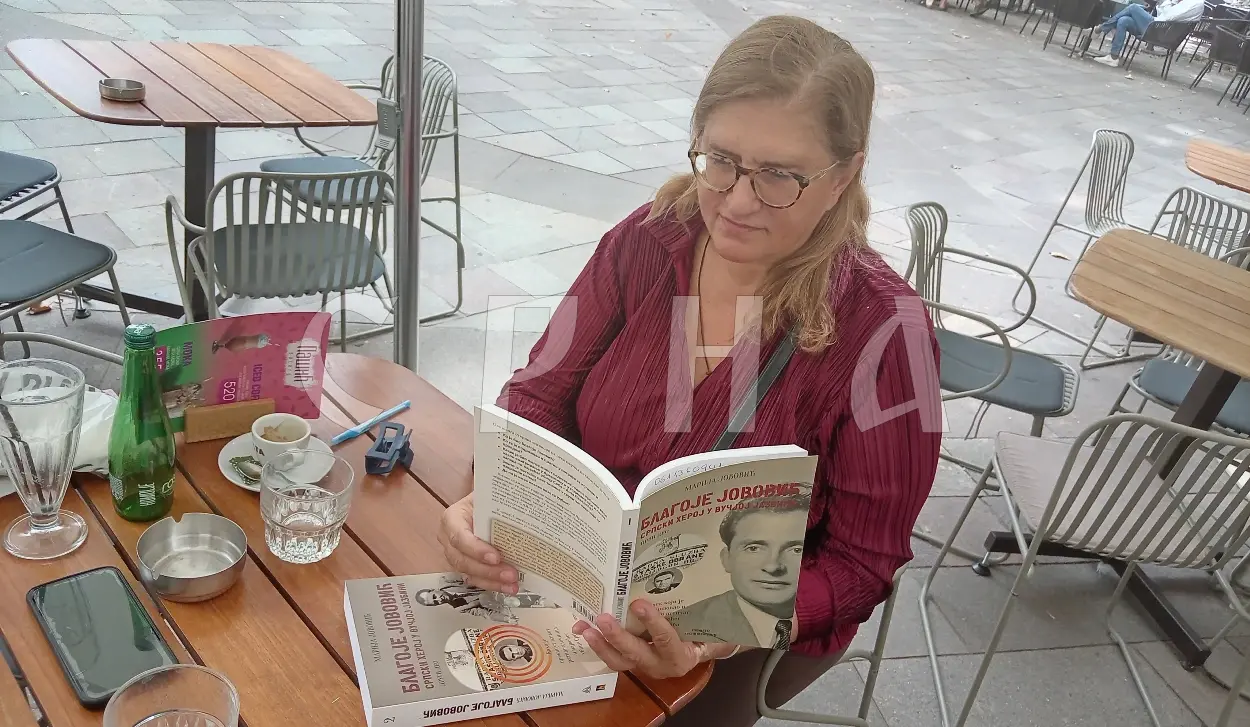
BELGRADE, SEPTEMBER 1 /SRNA/ - If the complex administrative procedure is resolved within the expected timeframe, the remains of Blagoje Jovović, who is remembered in Serbian history as a hero and the assassin of the leader of the infamous Independent State of Croatia /NDH/ Ante Pavelić, will be transferred from Argentina to Serbia this autumn and buried in the Alley of the Greats in Belgrade, his daughter Marija told SRNA.
She stated that she is monitoring and overseeing the entire process from Belgrade, and that the transfer of her father's remains will fulfill his wish to rest in the Serbian land he loved so much and sacrificed for.
"He will be buried in the Alley of the Greats - that is the plan, but also justice. We cannot bring Blagoje's remains without anyone seeing them; they should be here so everyone can visit his grave. I see how much love there is for him," said Jovović.
She noted that next year marks the 70th anniversary of her father's shots at the leader of the infamous NDH and that it is time to point out who the criminals were, and who were the victims, true heroes, and patriots.
"This is the least we can do for Blagoje, to restore respect for him. He wanted neither gold nor money. At that time, he did what he had to do because he was a soldier and a patriot. We, as a family, ask for nothing for ourselves, only to restore respect for Blagoje, and we look forward to the arrival of his remains in Serbia," she said.
Marija Jovović pointed out that she is often asked why her father will be buried in Belgrade and not in his native Kosovac in Montenegro. She replies that it was her decision because Belgrade is the center of Serbdom, and as a Serb from Montenegro, he belongs there, as a Serb in Serbian land.
"Even after so many years since the war, we cannot obtain an official document stating that genocide was committed against the Serbian people in the NDH. This way, when we come to Blagoje's grave, it will also serve as a reminder that a genocide was committed against our people, which has not yet been given its name," she said.
Marija reiterated that this was her father's wish and that it will soon be fulfilled.
"He always said that when he died, he would be in his homeland, always, always. I waited as long as I had to wait, and now I think it is the moment for him to be in his homeland," she said.
She emphasized that it was a great satisfaction for her personally and for the whole family when a street in Zemun was named after her father in 2020, and that this was actually crucial for her decision to come from Argentina to Belgrade and start fighting for the truth about the life and work of her father.
"I constantly hear people calling Blagoje a terrorist, but they do not say that the Ustaše were terrorists. They are changing history, but the truth always finds its way," said Jovović, who is the author of several books in which she factually and documentarily shed light on all the events that preceded the assassination of Pavelić and followed it.
She stressed that she is glad that the film "Hand of Justice" by director Nemanja Ćeranić will soon premiere in Serbia. She served as an expert consultant on the film, which will tell the world the story of her father and the events of April 1957 in an interesting and unique way.
Jovović said that while working on the books about her father, she researched numerous archives, and during that research, the question arose as to where the enormous money and wealth of the Serbian and Jewish martyrs in the NDH ended up.
"They financed their diaspora. Pavelić opened a Croatian Home in the center of Buenos Aires and similar homes in Paraguay, Bolivia, Chile, all over the world. He was making plans to attack the old Yugoslavia. Pavelić did all this using that money. They spent it, opened companies. Even today, Croats live very well there, you can see that they have that money," she said.
Blagoje Jovović /1922-1999/ shot Ante Pavelić, the leader of the NDH and the mastermind of the genocide committed against the Serbs during World War II, on April 10, 1957, in Buenos Aires, Argentina.
In the absence of a legal trial and punishment, Jovović, with the help of a few friends, took justice into his own hands and assassinated Pavelić, who later died from the consequences of the attack.
Jovović kept the secret of the assassination to himself for a long time, only confessing to the late Metropolitan Amfilohije at the Ostrog Monastery in December 1998, when he returned to his homeland for the first time after the war. This was also when his daughter Marija and his family learned the secret.
Jovović passed away a few months later – on June 2, 1999, in the city of Rosario in Argentina.
On June 25, the Government of Serbia adopted a Conclusion agreeing that the remains of Blagoje Jovović, who was a member of the Yugoslav Army in the Fatherland during World War II, be transferred from Argentina to Belgrade, thereby paying tribute to the man who assassinated Ante Pavelić.