PAVIĆ: TUTELAGE PERSISTS, POLITICAL SARAJEVO HAS NOT ABANDONED ITS WARTIME GOALS
Serbia - Dayton Agreement - anniversary
11/15/2026
12:12

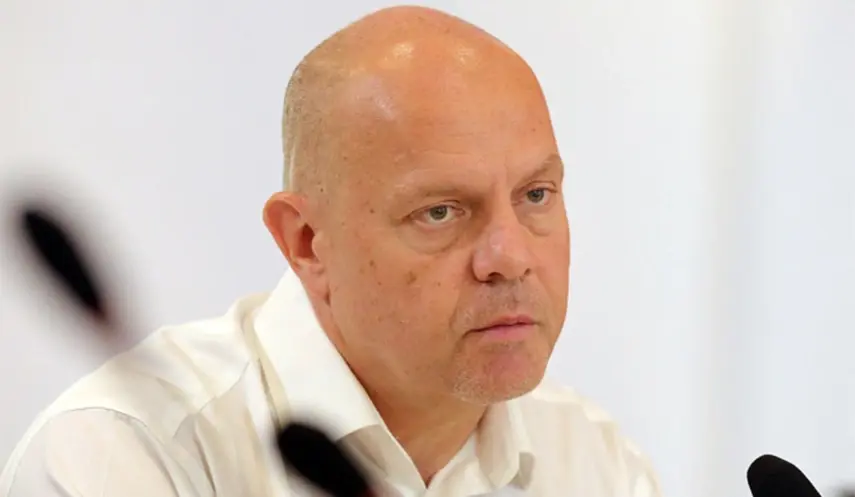
BELGRADE, NOVEMBER 15 /SRNA/ - Foreign tutelage in BiH remains in place even 31 years after the signing of the Dayton Peace Agreement, and another problem is that political Sarajevo has not moved away from its wartime positions, political analyst Aleksandar Pavić told SRNA on the occasion of the anniversary of the agreement's signing.
Pavić emphasized that political Sarajevo had not moved away from its hostile attitude towards Republika Srpska, which it still regards as an incident that should be overcome, suppressed, and rendered meaningless as soon as possible.
He explained that this meant that, for Sarajevo, the Dayton Agreement had not been a peace agreement but rather a ceasefire agreement, noting that almost nothing had been resolved in the years since its signing and that the agreement had been undermined almost beyond recognition.
"The Serb people accepted Dayton and, over the past 31 years, have been its staunchest defenders against, among others, the very architects of the agreement, as well as political Sarajevo," Pavić added.
Pavić said that no state-building nation, such as the Serb people, should or would accept living indefinitely under someone else's protectorate, without freedom and independence, despite the continued foreign tutelage.
He pointed out that steps had been taken towards freeing BiH from external tutelage, but that the worst thing was that the Office of the High Representative /OHR/ still remained in place.
"The EU and the United Kingdom still want to have a tutor installed in Sarajevo. The most disappointing thing is that, in the heart of Europe, we have a country that is a foreign protectorate, while those who want this arrangement to continue pretend that it is perfectly normal," Pavić said.
He added that Republika Srpska and the Serb people had endured all the trials and enormous pressure and now had the right to seek something better for themselves, especially given that the collective West no longer existed as a unified bloc and that the rift between the Trump administration and the EU was widening.
He stressed that it should be borne in mind that the Dayton Agreement was a product of a unipolar world, when the Americans were able to impose their will on the rest of the world, but that the world was no longer like that and that global relations needed to be redefined.
"This is something that will have to be reconsidered because the world order is changing," Pavić said.
He said that the Serbs had endured enough in BiH as it currently stood, noting that, thanks to its good relations with Moscow, Beijing and US President Donald Trump's administration, Republika Srpska was in a good position to face any new reshaping of the world order that might lie ahead.
The Serb people, he said, should hold on a little longer, as a new redefinition of global relations would inevitably take place.
"What Republika Srpska brought into Dayton BiH can only be taken out by Republika Srpska itself, or BiH must be reshaped into a country that would serve the interests of the Serb people in Republika Srpska. If that is not possible, then the current BiH is completely pointless, even in the medium term, because it is dysfunctional and cannot function without foreign tutors," Pavić concluded.


THIEVES RAM CAR INTO JEWELRY STORE
PAVIĆ: TUTELAGE PERSISTS, POLITICAL SARAJEVO HAS NOT ABANDONED ITS WARTIME GOALS
UROŠEVIĆ: WE ARE GIVING YOUNG VIRTUOSOS OPPORTUNITY TO SHARE THEIR EXTRAORDINARY TALENT WITH AUDIENCE
TRIVIĆ: MINIMUM WAGE SHOULD BE SET BASED ON ECONOMIC PARAMETERS