TRIVIĆ: MINIMUM WAGE SHOULD BE SET BASED ON ECONOMIC PARAMETERS
Republika Srpska - SRNA - podcast
11/15/2026
11:23

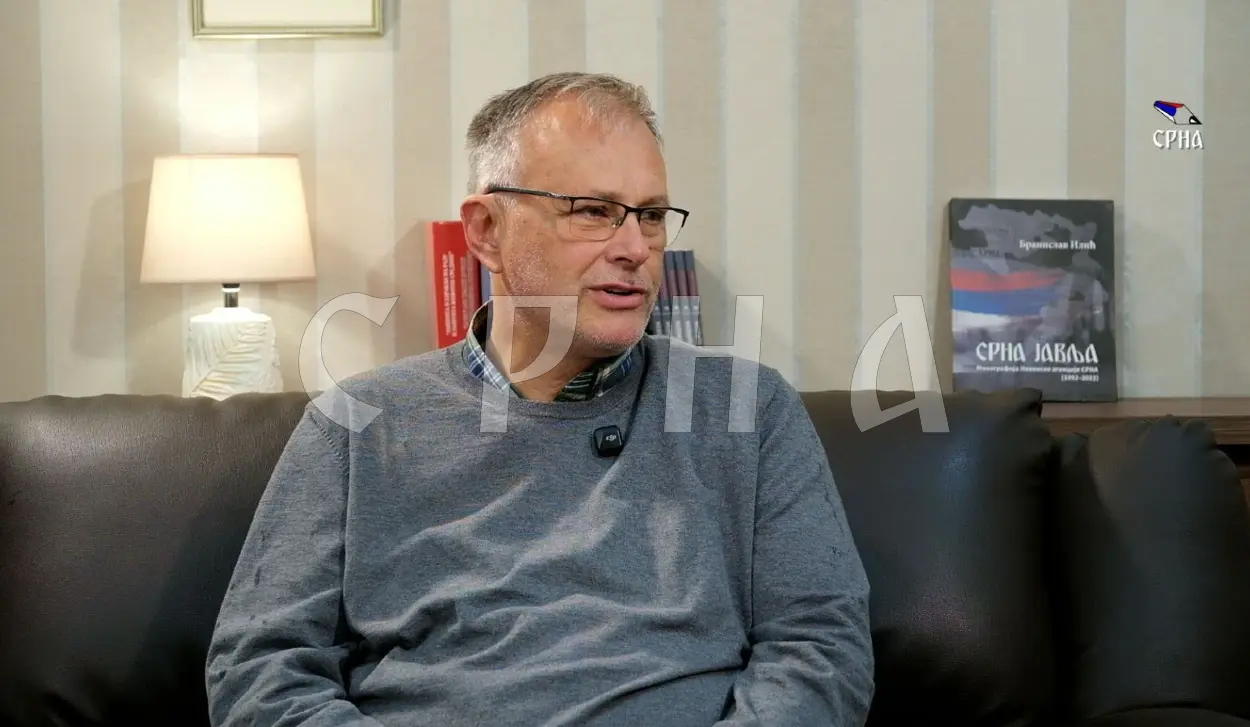
BANJA LUKA, NOVEMBER 15 /SRNA/ - Saša Trivić, Vice-President of the Union of Employers' Associations of Republika Srpska, said that the minimum wage for next year should be set based on economic parameters, as it was a matter of economic productivity rather than an administrative decision.
"The decision must be made based on economic parameters, not the wishes of employers, trade unions or the Government of Republika Srpska," Trivić said in a podcast produced by the Media System of Republika Srpska – SRNA.
He said that the business community had called for inflation and GDP growth to be taken into account.
"That currently amounts to an increase in the minimum wage of around 4.3 per cent. Even an increase of around five per cent in the minimum wage is a lot for us. Everyone thinks it is just five per cent, but that means you have to raise the price of your product to earn more and offset the increase in wages," Trivić said.
He pointed out, however, that a situation in which wages are not increased must also be avoided, as this would encourage people to leave.
"Employers are the ones who would most like to see wages increased regularly," Trivić said.
SOCIAL PARTNERS' DIALOGUE WITHOUT DISAGREEMENTS
Regarding dialogue among the social partners, Trivić said that discussions were taking place at a high level and that there were no disagreements, as seen several years ago, when the Government of Republika Srpska had to set the minimum wage.
"I think we need to talk and show one another what the situation is. The trade unions also understand that when wages rise sharply, inflation rises as well," Trivić stressed.
Speaking about reports that the business sector is generating high profits, Trivić said that everyone considers this to be a positive development.
"When you exclude the high profits made by banks, the figure becomes lower. We also have companies with one or no employees that generate net profits of BAM 20 million, which pushes up the statistics. These are not companies that employ workers, and I think the trade unions are aware of that as well. This is a matter for economists and requires serious statistical analysis," Trivić said.
FEWER WORKERS IN THE FOOTWEAR, TEXTILE, METAL AND WOOD-PROCESSING INDUSTRIES
He said that prices would rise next year, noting that an increase in electricity prices had already been announced for the baking industry.
"An increase in wheat prices has also been announced, and all these factors will be reflected in product prices," Trivić said.
When asked which industries were facing the greatest difficulties due to global developments, Trivić said that Republika Srpska had seen the largest decline in employment in the footwear and textile, metalworking and wood-processing industries.
"We must ensure that new jobs are created so that these workers do not end up unemployed. Inflation is a global problem affecting the entire world. We cannot influence it, which is why it is very important for wages to keep pace with inflation to prevent poverty," Trivić said.


UROŠEVIĆ: WE ARE GIVING YOUNG VIRTUOSOS OPPORTUNITY TO SHARE THEIR EXTRAORDINARY TALENT WITH AUDIENCE
TRIVIĆ: MINIMUM WAGE SHOULD BE SET BASED ON ECONOMIC PARAMETERS

MOTHER AND TWO DAUGHTERS ARRESTED OVER FIREFIGHTERS' DEATHS
ISRAELI MILITARY KILLS HAMAS COMMANDER