NUŽDIĆ: WE NEED TRUTH TODAY MORE THAN EVER
Serbia - Republika Srpska - culture of memory
04/22/2025
18:27
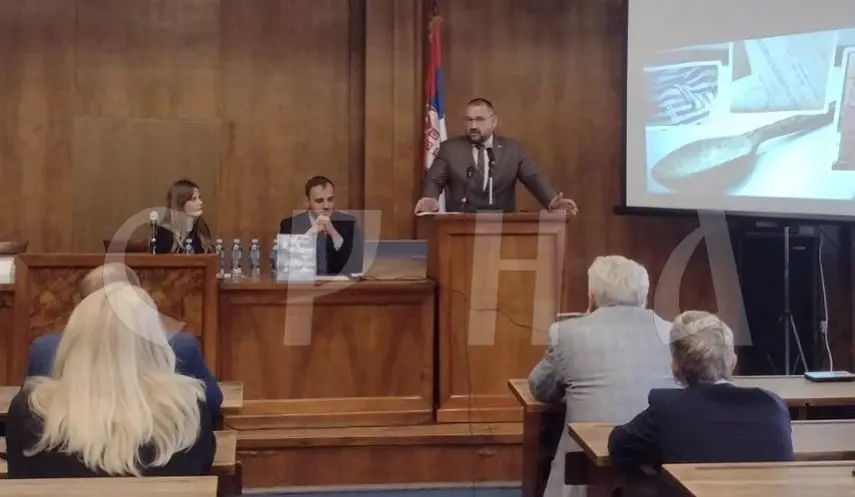
BELGRADE, APRIL 22 /SRNA/ - Director of the Republic Center for Research on War, War Crimes and Search for Missing Persons, Viktor Nuždić, said that the Serbian people need the truth today more than ever and that it is necessary to intensify the long-standing good cooperation between the Center and the Belgrade Museum of Genocide Victims.
At a gathering in Belgrade, on the occasion of Genocide Victims Museum Day, Nuždić said that the truth and facts can only preserve the lasting memory of the innocent victims, and assessed that Serbs in Republika Srpska and in Serbia are lucky that there are similar institutions in two Serbian states.
Director of the Museum of Genocide Victims, Bojan Arbutina, said that today Serbia celebrates the Day of Remembrance of the Victims of the Holocaust, Genocide and other victims of fascism in the Second World War and the Day of the Museum of Genocide Victims, which was founded in 1992 to permanently remember the victims of the genocide committed against Serbs, Jews and Roma.
"80 years ago, on April 22, in Jasenovac prisoners and martyrs, the two profound values of the Serbian being - freedom and struggle - met. Freedom, which was chained with prison camp wires, darkened in the bottomless pits, was the guiding thought and ideal of the Serbian people for four years. That's how around 600 Jasenovac prisoners attacked their executioners that morning with bare hands and wrote the page of history that we commemorate today," said Arbutina addressing the crowd.
Member of the Israeli Knesset, Sasson Guetta, said that it was a great honor for him to come to Serbia and represent the Israeli parliament at the meeting dedicated to the memory of the Holocaust.
He pointed out that Serbia is a true friend of Israel and that it stood by Israel in very challenging moments.
The director of the Archives of the Serbian Orthodox Church, Radovan Pilipović, said that Jasenovac is the largest execution site of the Serbian people in the territory of the Independent State of Croatia, but not the only one, and reminded of the numerous pits where the fascists - Ustasha executioners killed Serbs, as well as more than 12 Serbian churches, which became the execution sites of their believers.
"The crime against the Serbian people in 1941 was planned, and the scale was large - by the end of 1941, 174 priests were killed. The SCO was wiped out with the aim of decapitating the people," Pilipović said.