NJEGOŠ - PRINCE-BISHOP AND POET
Montenegro - ruler - anniversary
10/30/2026
09:18

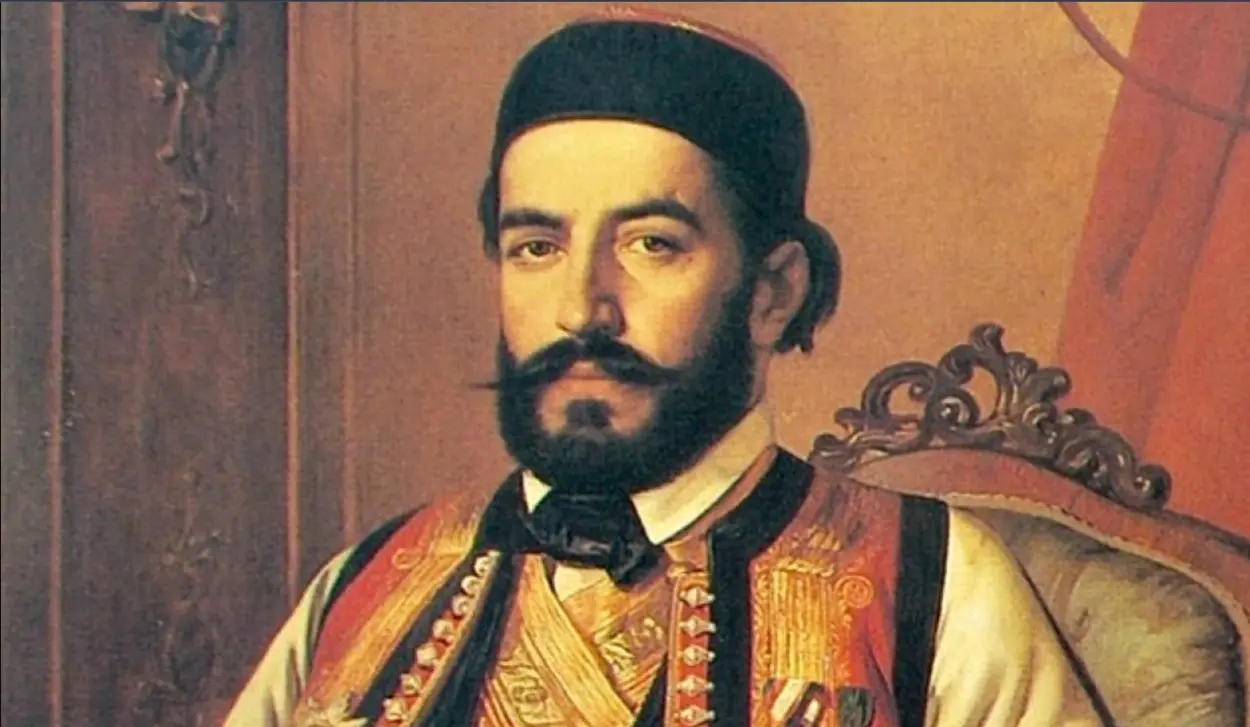
BIJELJINA, OCTOBER 30 /SRNA/ - Petar II Petrović Njegoš, one of the greatest Serbian poets, ruler and prince-bishop of Montenegro, whose crowning literary achievement is the epic poem "Gorski Vijenac", died on October 31, 1851.
Njegoš was born in the village of Njeguši near Cetinje, the second son of Tomo Markov Petrović, the youngest brother of Prince-Bishop Petar I, and Ivana Proroković. At his baptism he was named Radivoje, and he later became known among the people as Vladika Rade.
After becoming prince-bishop, Njegoš signed only with his monastic name Petar and his surname Petrović. Among the people, however, he was not known as Vladika Petar, but precisely as Vladika Rade.
The people used the name Vladika Petar for Njegoš’s uncle, while Njegoš himself never used “II” after the name Petar. It was added later, as was “I” after his uncle’s name, to distinguish the two.
After his uncle’s death in 1831, Njegoš became a monk at a very young age and took power over Montenegro, which Petar I had left him in his will, naming him his successor.
This right, however, was disputed by Governor Vukolaj Radonjić, who believed that power over Montenegro belonged to him.
Radonjić secretly maintained ties with Austria, and when this was discovered, the Montenegrin chieftains sentenced him to death, but Petar II commuted the sentence to exile and abolished the office of governor in Montenegro.
Njegoš was both the religious and secular leader of the Serb people in Montenegro, where national consciousness and patriarchal morals were strong, but tribal rivalry and blood feuds prevailed.
When he came to power, Vladika Rade immediately began to establish order and modernize society and the state. He built schools, established courts, built roads, gradually took all power into his own hands and introduced taxes.
Having removed all early domestic opponents of his rule, Njegoš focused on unifying the Montenegrin tribes and establishing a centralized state.
He introduced regular taxes and a series of new laws to replace those his predecessors had introduced long before. The introduction of taxes proved very unpopular among the Montenegrin tribes, and several revolts broke out during Njegoš's rule as a result.
Njegoš's reign was also marked by constant political and military conflict with the Ottoman Empire, and by his efforts to expand Montenegro's territory while gaining unconditional recognition from the Sublime Porte.
He advocated the liberation and unification of all Serbs and was ready to give up his secular powers for the sake of unification with Serbia.
In the spring of 1850, the prince-bishop fell ill with tuberculosis, for which he unsuccessfully sought a cure in Italy. He died in Cetinje on October 31, 1851, 21 years after becoming ruler of Montenegro.
In his final hours, Njegoš said: “Here I am at the threshold of the eternal home... Bury me on Lovćen, by the new church”.
The burial on Lovćen was postponed due to bad weather and fears that the Turks of Shkodra might desecrate the chapel on Lovćen, so the prince-bishop was temporarily buried in the monastery in Cetinje, in the grave of his uncle, St. Petar of Cetinje. It was not until August 26, 1855, that Njegoš's remains were ceremonially moved to Lovćen.
The chapel on Lovćen was demolished by the Austro-Hungarians and rebuilt by King Aleksandar Karađorđević. Njegoš's remains were moved to the Cetinje Monastery, and then to the restored chapel in 1925.
In 1974, with the support of the Yugoslav communist government of the time, the chapel was replaced by Meštrović's mausoleum.
Njegoš is also considered one of the greatest Serbian poets. His most influential works are “Gorski vijenac”, published in 1847, “Luča Mikrokozma” /1845/ and “Lažni car Šćepan Mali” /1851/.
During the constant battles with the Turks, Njegoš passionately loved folk songs, collected them, and later wrote new ones himself. In 1850, two of his shorter epic poems in the same spirit were published: “The Tower of the Đurišićs” and “The Watchtower of the Aleksićs”.
In 1854, Njegoš’s “Svobodijada” was published, an epic poem in 10 cantos celebrating Montenegrin victories over the Turks and the French.
Vuk Karadžić believed that other songs about new Montenegrin battles were also composed by Njegoš, who worked on collecting folk songs and published them in the collection “The Serbian Mirror” /1846/.
Petar II Petrović Njegoš was canonized in the Metropolitanate of Montenegro and the Littoral and numbered among the saints as Holy Metropolitan Petar II of Lovćen, the Seer of Mysteries.
At the level of the Metropolitanate, May 19 was established as the feast day of Holy Metropolitan Petar II of Lovćen, the Seer of Mysteries.
On the first icon depicting him, brought into the Cetinje Monastery on May 19, 2013, Njegoš is shown in bishop's vestments, holding the Lovćen church of St. Petar of Cetinje in his right hand and a scroll with verses from "Luča Mikrokozma" in his left.