NIKOLA TESLA – SERBIAN GENIUS ACROSS THE OCEAN
Serbia – science – anniversary
07/09/2026
09:24

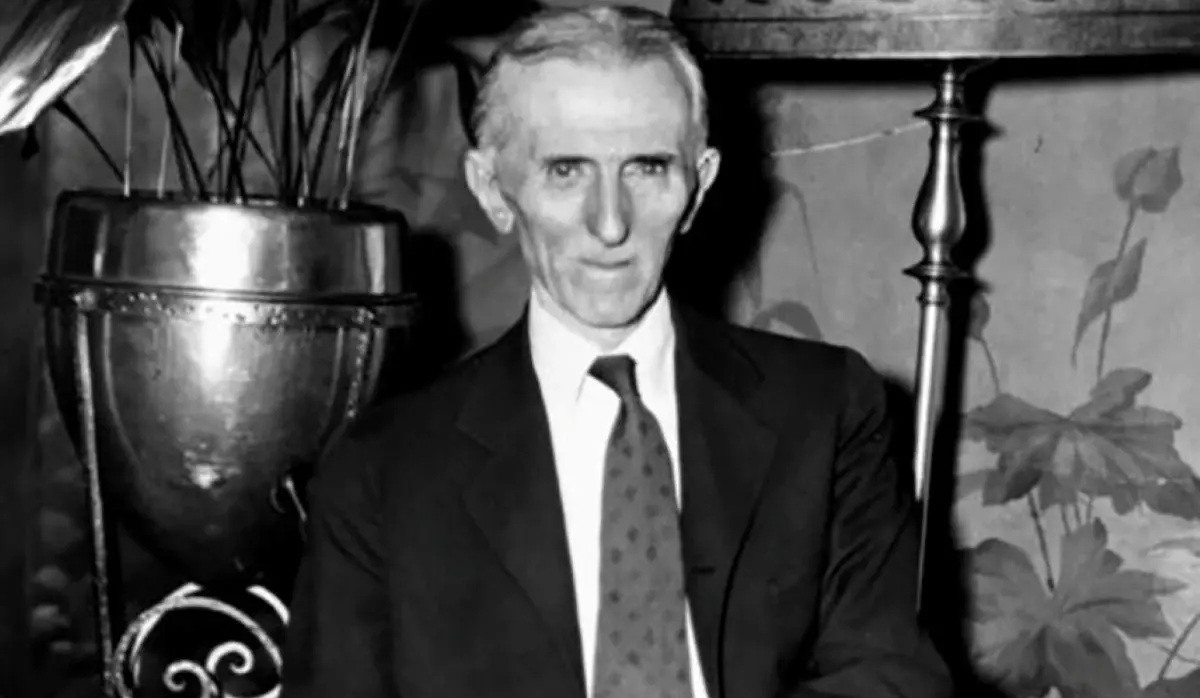
BIJELJINA, JULY 9 /SRNA/ - Nikola Tesla, a physicist and inventor of Serbian origin and one of the greatest minds in the history of world science, was born on July 10, 1856.
Tesla discovered the rotating magnetic field, the three-phase system for the transmission of electrical energy, the induction motor, the generator, and the transformer, as well as the phenomenon of electromagnetic resonance, and patented many inventions that form the basis of modern electronics.
He was a pioneer of radio technology, wireless telegraphy, and radar. Tesla's polyphase alternating current system demonstrated its value at the first hydropower plant at Niagara Falls.
Tesla patented around 700 inventions in the fields of alternating current, telecommunications, acoustics and mechanical engineering, many of which found widespread application.
After studying electrical engineering in Graz and completing brief internships in Budapest and Paris, Tesla moved to the United States, where he became a citizen in 1884. However, until he died in New York City on Orthodox Christmas in 1943, he maintained close ties with his homeland.
In the United States, Tesla achieved his greatest scientific accomplishments, having uncovered the secrets of the oscillatory movements of electricity and matter.
On the occasion of the centenary of his birth, the unit of measurement for high voltage was named after Tesla, as was the unit of magnetic field strength.
Nikola Tesla was born as the fourth child of Milutin and Đuka Tesla into an Orthodox Christian priestly family, in the Serbian village of Smiljan in Lika, then part of the Austrian Empire.
The great inventor and scientist emphasized his Serbian origin. When he arrived in Belgrade in June 1892, Tesla was awarded the Order of Saint Sava, second class.
During that visit, Tesla toured the National Museum of Serbia and the Great School, where he spoke about his work to students and professors. He also discussed the construction of the first electric power plant in Belgrade, which had already begun, with Serbian physicist Đorđe Stanojević.
"As you can see and hear, I have remained a Serb across the ocean as well, where I am engaged in research. You should do the same and, through your knowledge and work, raise the glory of Serbdom in the world," Tesla told the students.
After Tesla's death, his legacy arrived in Belgrade following a decision by the American courts, which declared his cousin Sava Kosanović his sole heir.
At Nikola Tesla's request, Kosanović transferred Tesla's documents and personal belongings to Belgrade in 1951.
The Nikola Tesla Museum holds more than 160,000 original documents, over 2,000 books and journals, and more than 1,200 historical and technical exhibits. The archival material from Tesla's legacy was entered into UNESCO's "Memory of the World" Register in 2003.
The international airport in Belgrade is named Nikola Tesla Airport. His name is also borne by the Nikola Tesla Institute of Electrical Engineering, founded in 1936, the Electrical Engineering School, the University Library in Niš, as well as two thermal power plants in Serbia.
Monuments to Tesla have been erected in front of the building of the technical faculties and at the airport in Belgrade.
The date of Tesla's birth, July 10, is observed in Serbia as Science Day.
The city of Philadelphia has declared the birthday of this great Serbian scientist an official holiday.
Tesla died on Orthodox Christmas, January 7, 1943.