LET US PRESERVE THE KOSOVO COVENANT, KEEP THE OATH IN OUR HEARTS AND KEEP A CLEAR HEAD
Serbia - Vidovdan - Ković - interview
06/26/2026
11:41
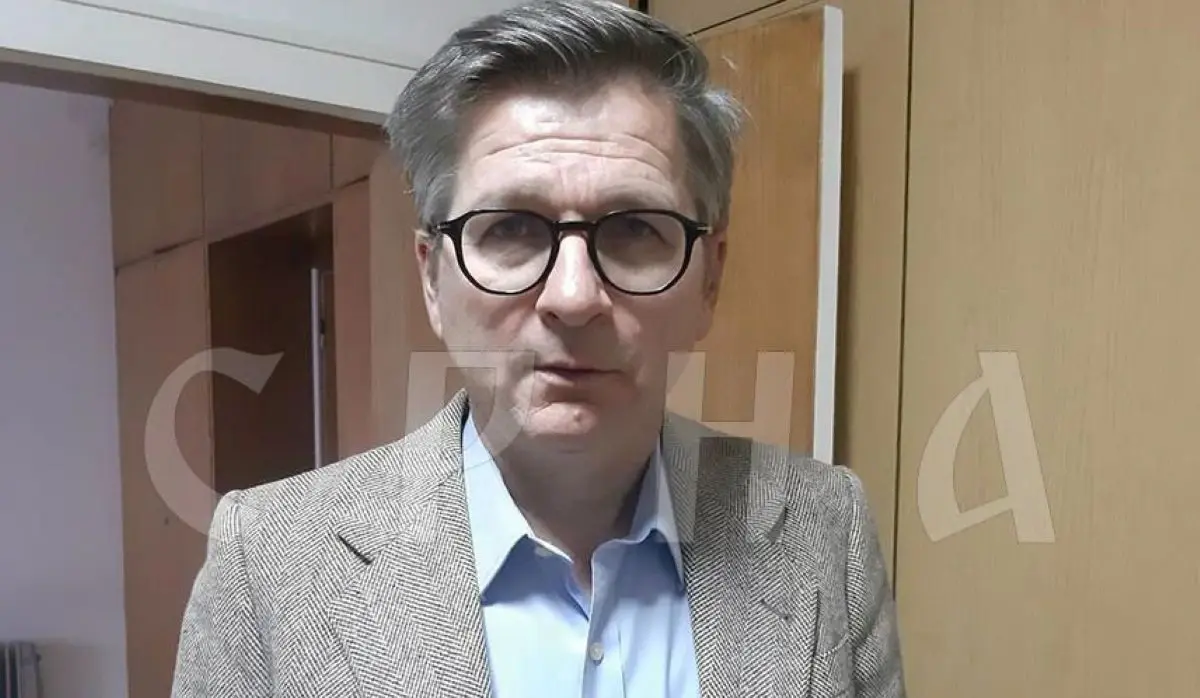
Ković pointed out that there are ambitions to appropriate Serbian sacred sites located in Kosovo and Metohija, such as Visoki Dečani, the Patriarchate of Peć, Gračanica, and the Church of the Virgin of Ljeviš, but that it is up to the present generations to preserve what their ancestors left behind.
Interview by: Vesna ŠURBAT
BELGRADE, JUNE 26 /SRNA/ - Historian Miloš Ković stated that the Vidovdan Kosovo covenant has preserved the Serbian people as a community for more than six centuries, warning that renouncing Kosovo and Metohija would endanger both Serbia and Republika Srpska.
"The main message to Serbs for Vidovdan would be: let us preserve the Kosovo covenant! Keep the vow in our hearts and keep a clear head," Ković said in an interview with SRNA.
Ković said that the Kosovo covenant represents a commitment to eternal values, and that the issue of Kosovo and Metohija today is simultaneously moral, national, and geopolitical. He also warned about attempts to appropriate Serbian cultural and spiritual heritage in Kosovo and Metohija, which, he said, has elements of classical genocide.
THE KOSOVO LEGACY HAS PRESERVED THE SERBIAN PEOPLE FOR CENTURIES
Ković emphasizes that the Kosovo legacy, referring to the events of the Battle of Kosovo in 1389, has in a historical and spiritual sense truly sustained the Serbian people as a community for at least 600 years, and that it is not easy to answer how it was preserved and transmitted from generation to generation for so long.
He stated that this is a historical fact, even though Serbs at the time lost all their own states, lived for centuries under foreign empires, endured occupation, migrations and resettlements, conversions to Islam and Roman Catholicism, and later genocide.
Ković says that the concept of the "Kosovo commitment" or "Kosovo covenant" has changed names throughout historical periods, also being referred to as "Vidovdan ethics" and the "Kosovo myth," but that its essence has remained the same.
"It is about what the Serbs called the choice of the Heavenly Kingdom over the earthly kingdom. It is a commitment to eternal values such as love, sacrifice, and truth, as opposed to hatred, cowardice, or lies," Ković stated.
Ković said that the Kosovo covenant represents a commitment to the Heavenly Kingdom, as established by Saint Sava and Holy Prince Lazar, and that it implies the preservation of the true faith, that is, Svetosavlje as a Serbian form and experience of Orthodoxy, adding that those who abandoned this covenant over time assimilated into other national, political, and religious communities.
KOSOVO AND METOHIJA MUST NOT BE RENOUNCED
Regarding demands that the Serbian people renounce Kosovo and Metohija, Ković said that Serbs today, as many times in the past, find themselves at a major historical and political crossroads, raising the essential question of whether to remain within the covenant in which their ancestors stood.
He noted that, apart from the Serbian Orthodox Church, the key bearer of this covenant was epic folk poetry sung to the accompaniment of the gusle, and that Kosovo was spoken of as a historical event and fact, then as a lore, and ultimately as a concrete territory, land, and space.
According to him, the moral question - "whether you will abandon your compatriots and your greatest holy sites" has now been transformed into an eminent geopolitical issue, because if Serbia allows the secession or appropriation of Kosovo and Metohija, it risks disintegration.
Ković stressed that the disintegration of Serbia would lead to a rapid weakening of Republika Srpska, placing it in an existential danger, adding that "Banja Luka is defended in Pristina, just as Belgrade is defended in Banja Luka".
He added that the position of Serbs in Montenegro is part of the same national issue.
"Everything that could happen in Republika Srpska would directly threaten the existence of Serbia. Republika Srpska is the defense of Serbia. That is the connection. Any playing with the fate of Kosovo and Metohija, all ideas about partition, so-called demarcation and similar concepts, would directly lead to an existential threat not only to Serbia, but also to Republika Srpska," Ković believes.
CLASSIC GENOCIDE PATTERNS IN ATTEMPTS TO APPROPRIATE THE KOSOVO LEGACY OF THE SERBIAN PEOPLE
When it comes to attempts by regional political actors to change the historical narrative of the Battle of Kosovo, Ković notes that the battle has entered all major history textbooks worldwide, as has the struggle to defend Kosovo and Metohija in 1999.
"Neighbouring peoples and peoples who are occupiers on the territory of Kosovo and Metohija, and I would also say Republika Srpska, are well aware of what kind of sacred heritage and how significant an event and legacy this is. There is an ambition by some to appropriate this valuable legacy and to erase all traces of it," Ković said, adding that this is most often done by those who, until recently, were Serbs.
He points out that there are also ambitions to appropriate the legacy embodied in the holy sites located in Kosovo and Metohija, such as Visoki Dečani, the Patriarchate of Peć, Gračanica, and the Church of the Virgin of Ljeviš.
"These are classic patterns of genocide. When you destroy a people, or attempt to destroy them, you also try to erase and appropriate their traces, their cultural and spiritual legacy. We are now witnessing obvious attempts to appropriate that legacy, but it is up to us to preserve what our ancestors left us," Ković stressed.
Ković said that Serbian cultural monuments in Kosovo and Metohija are also part of the world's cultural heritage and are under UNESCO protection, and that all peoples are invited to appreciate the richness of sites such as Visoki Dečani and the Patriarchate of Peć.