HE REMAINED SERB EVEN ACROSS OCEAN
Serbia - Tesla - anniversary
06/01/2026
10:02

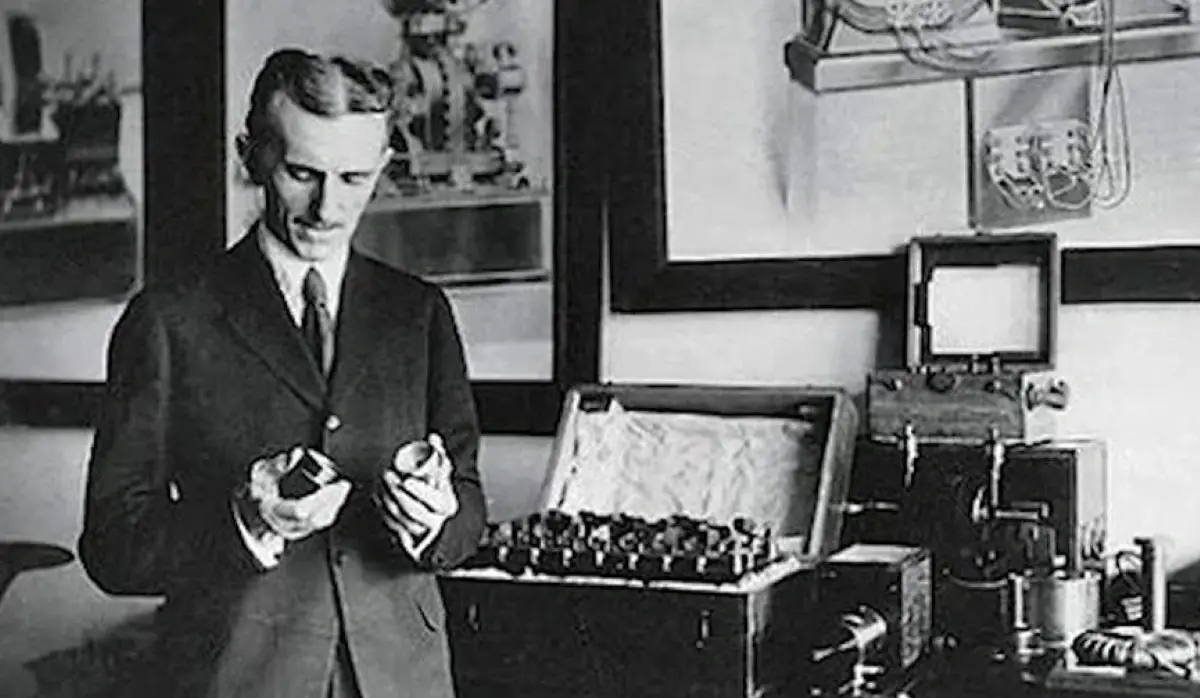
BIJELJINA, JUNE 1 /SRNA/ – The great Serbian and world-renowned scientist Nikola Tesla /1856–1943/ arrived in Belgrade on June 2, 1892, where he was awarded the Order of St. Sava, Second Class.
Accounts from that period state that he received a magnificent welcome at the railway station.
Together with then Minister of Education Andra Mitrović, he was received by king Aleksandar Obrenović.
Tesla also visited the National Museum of Serbia and the Great School, where he spoke about his work to students and professors. He also discussed the construction of Belgrade's first power plant with Serbian physicist Đorđe Stanojević.
"As you can see and hear, I have remained a Serb even across the ocean, where I am engaged in scientific research. You should do the same, and through your knowledge and work, elevate the glory of the Serbian people throughout the world," Tesla told the students.
A large celebration in his honor was organized on Topčider Hill, not far from the site of today’s Mostar interchange, most likely in a villa near Weifert's brewery.
On that occasion, the renowned Serbian poet and physician Jovan Jovanović Zmaj welcomed Tesla by reading a poem dedicated to the great Serbian inventor. Tesla was a great admirer of Zmaj and translated some of his works into English.
Tesla was born on July 10, 1856, in Smiljan, in the region of Lika, which at the time was part of the Military Frontier within the Austrian Empire. His father was an Orthodox priest, while his mother came from the old clerical Mandić family.
He began his education in Smiljan, continued in Gospić and Karlovac, and later studied in Graz and Prague. Before leaving for the United States, he worked in Maribor, Budapest, Strasbourg, and Paris.
He left Europe in 1884 hoping that in New York the famous inventor and industrialist Thomas Edison, for whose company he had already worked in Paris, would help him develop his technical innovations.
Tesla remained with Edison’s company for less than a year and in 1885 founded his own company, Tesla, where he began developing the first systems designed for the use of alternating current—an innovation that transformed the world.
Edison, however, was a strong opponent of Tesla's invention.
During those years, the Novi Sad newspaper Branik published the first article in the Serbian language about Tesla's inventions, describing him as the "Serbian Edison".
Tesla visited Europe twice afterward, in 1889 and 1892, and on both occasions stayed in his native Lika. In April 1892, he traveled to Gospić, where his seriously ill mother was living. She died in his presence on April 16.
A month and a half later, at the invitation of a delegation from the City of Belgrade and the Engineers’ Association, he arrived in Belgrade.
Nikola Tesla, a brilliant innovator and a devoted loner, died in the midst of World War II in New York City on January 7, 1943.
His ashes were later transferred to Belgrade, where they are preserved today at the Nikola Tesla Museum.